
 Priyanka Tiwari
 Share
Share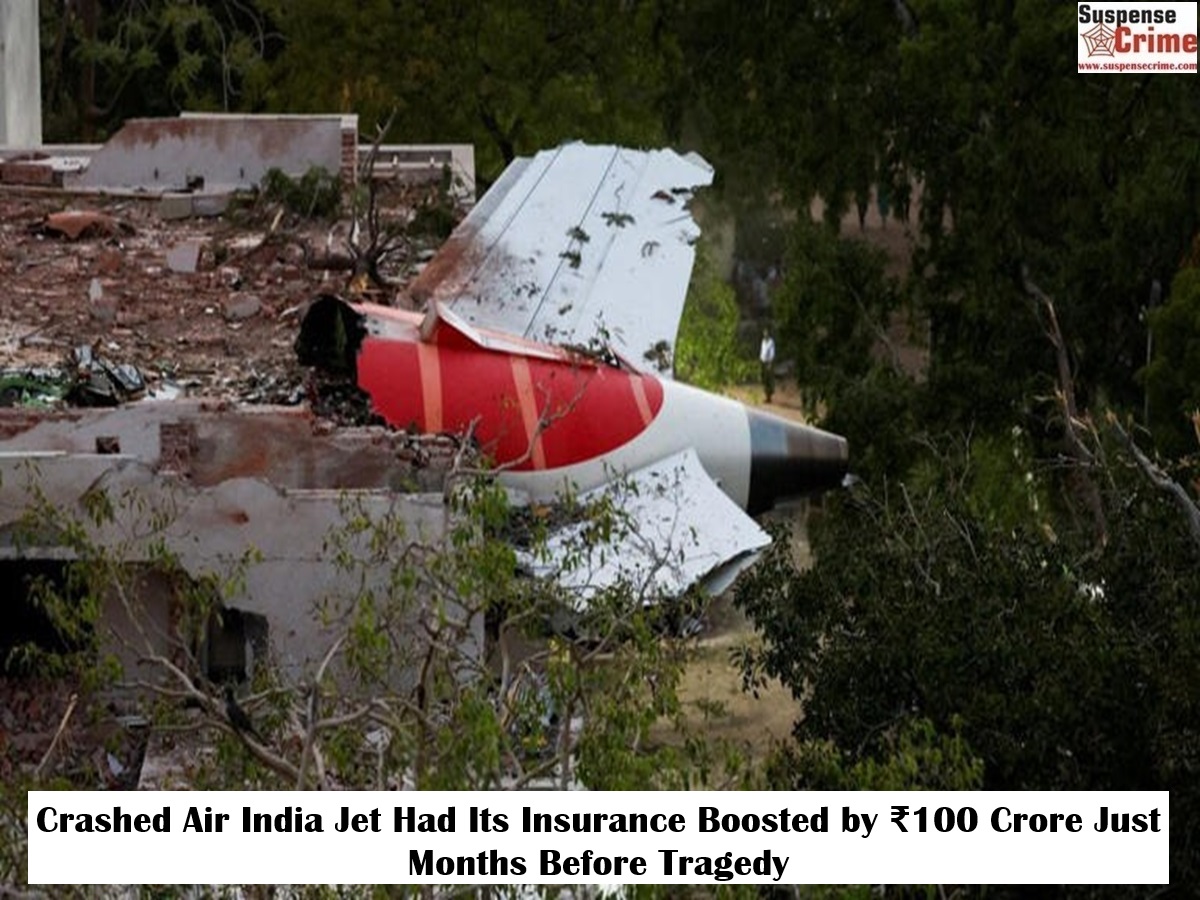
Suspense crime, Digital Desk : A Boeing 737-800 aircraft that tragically crashed at Kozhikode International Airport in August 2020 had its insurance coverage significantly increased by approximately ₹100 crore ($12.5 million) just four months prior to the incident, according to an industry report.
The aircraft, with registration VT-AXH and operated by Air India Express, was part of a fleet-wide insurance policy renewal in April 2020. During this routine annual review, the insured value of this specific plane—known as the "hull insurance"—was raised from $40 million to $52.5 million.
This fateful adjustment now means that the airline is set to claim the higher amount for the total loss of the aircraft.
The crash occurred on August 7, 2020, when Flight IX 1344, arriving from Dubai as part of the Vande Bharat Mission to repatriate Indians during the pandemic, overshot the tabletop runway in heavy rain. The aircraft fell into a gorge and broke into two pieces, resulting in the tragic deaths of 21 people, including both pilots, and injuring many of the 190 individuals on board.
The hike in the plane's value was reportedly based on a standard reassessment. At 13.5 years old, the aircraft was considered relatively young and well-maintained, justifying the higher valuation during the insurance renewal process. The total insurance premium paid by Air India Express for its entire fleet of 25 Boeing 737s, valued at $1.7 billion, was around ₹175 crore for the year.
The insurance policy for the Air India Express fleet is led by a consortium of Indian public sector insurers, including New India Assurance, Oriental Insurance Company, National Insurance Company, and United India Insurance. However, these companies retain only 5% of the risk. The remaining 95% is passed on to global reinsurers, with American International Group (AIG) being the lead reinsurer.
Following the crash, the claim for the aircraft's hull will be for the full insured value of $52.5 million. This is separate from the passenger liability claims, which are handled under a different section of the aviation policy and are also expected to be substantial. The incident stands as a stark reminder of the intersection between routine financial procedures and unforeseen tragedy in the aviation industry.
_891152136_100x75.jpg)
_934999377_100x75.jpg)
_297632329_100x75.jpg)
_1971369341_100x75.jpg)