
 Priyanka Tiwari
 Share
Share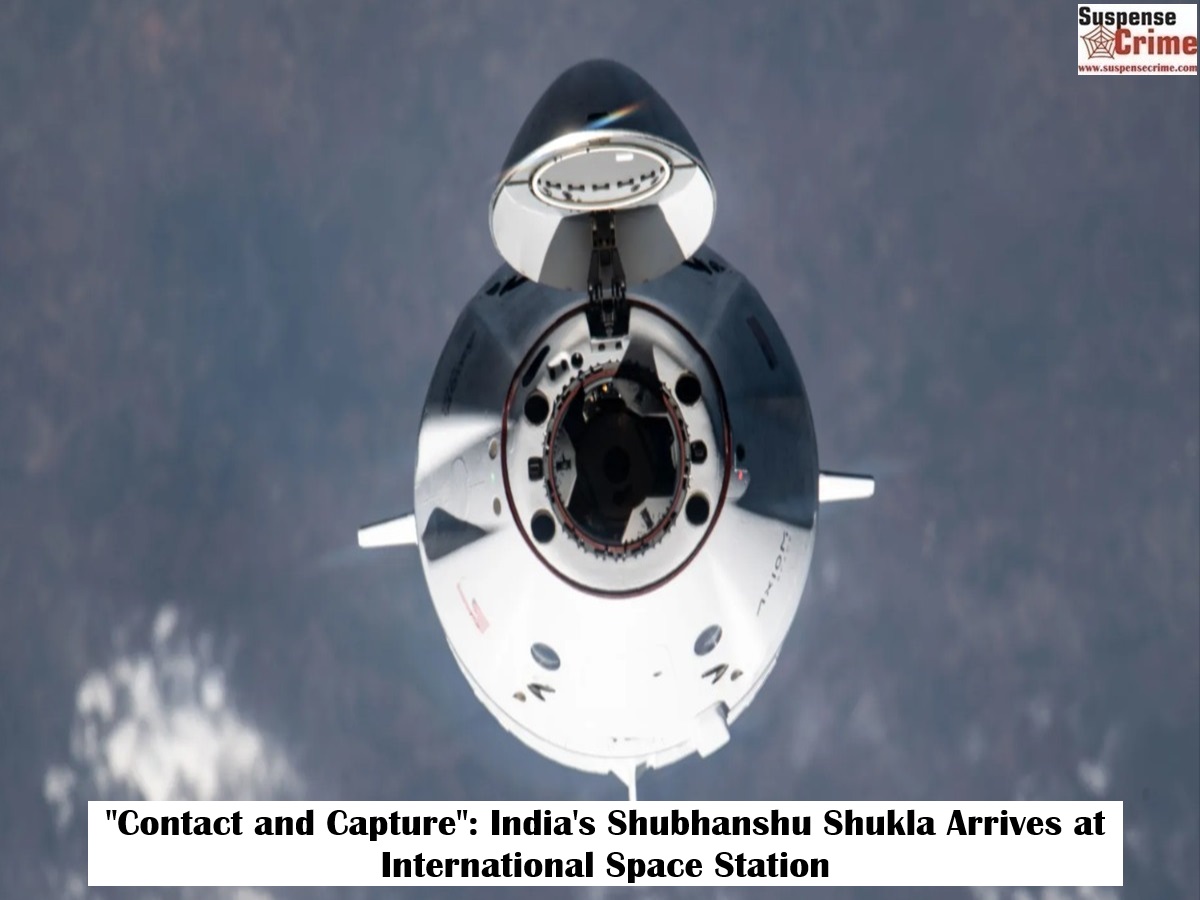
Suspense crime, Digital Desk : HOUSTON/MISSION CONTROL, INDIA – In a flawless display of precision engineering high above the Earth, Indian astronaut Shubhanshu Shukla and his international crewmates on the Axiom-4 (Ax-4) mission have successfully docked with the International Space Station (ISS). The event marks a monumental achievement for India's human spaceflight program and the beginning of a new chapter of scientific research in orbit.
The automated docking sequence unfolded perfectly after the spacecraft completed its journey to the orbiting laboratory. The moment of "contact and capture," when the spacecraft physically connected with the ISS docking port, was met with applause at mission control centers around the world.
Shukla is part of a diverse, privately funded astronaut crew, highlighting a new era of international collaboration in space. The Ax-4 mission also includes crew members from the United States, Poland, and Hungary.
Following the successful docking, the crew conducted a series of pressure and leak checks between the spacecraft and the station. The real moment of celebration came with the opening of the hatch, as Shukla and the Ax-4 crew floated into the ISS, where they were warmly welcomed with handshakes and zero-g hugs by the existing international crew of astronauts and cosmonauts already aboard the station.
Over the next two weeks, Shukla and his crewmates will live and work on the ISS, conducting a wide range of scientific experiments in the unique microgravity environment. Their research is expected to span fields from human health to materials science.
For India, this mission is a crucial stepping stone. It provides invaluable experience and data that will directly support ISRO's own ambitious Gaganyaan program, which aims to send an Indian crew into space on an Indian rocket. Shubhanshu Shukla's arrival at the ISS is more than just a personal milestone; it's a giant leap for a nation with its eyes set firmly on the stars.
Read More: BJP's Mega Gambit for Bengal: ₹3000 Monthly Allowance for Women and Youth Sparks Election Fever
_1297495186_100x75.jfif)
_340260878_100x75.jfif)
_1388856202_100x75.jfif)
_1404400382_100x75.jfif)
_19172846_100x75.jfif)