Priyanka Tiwari
 Share
Share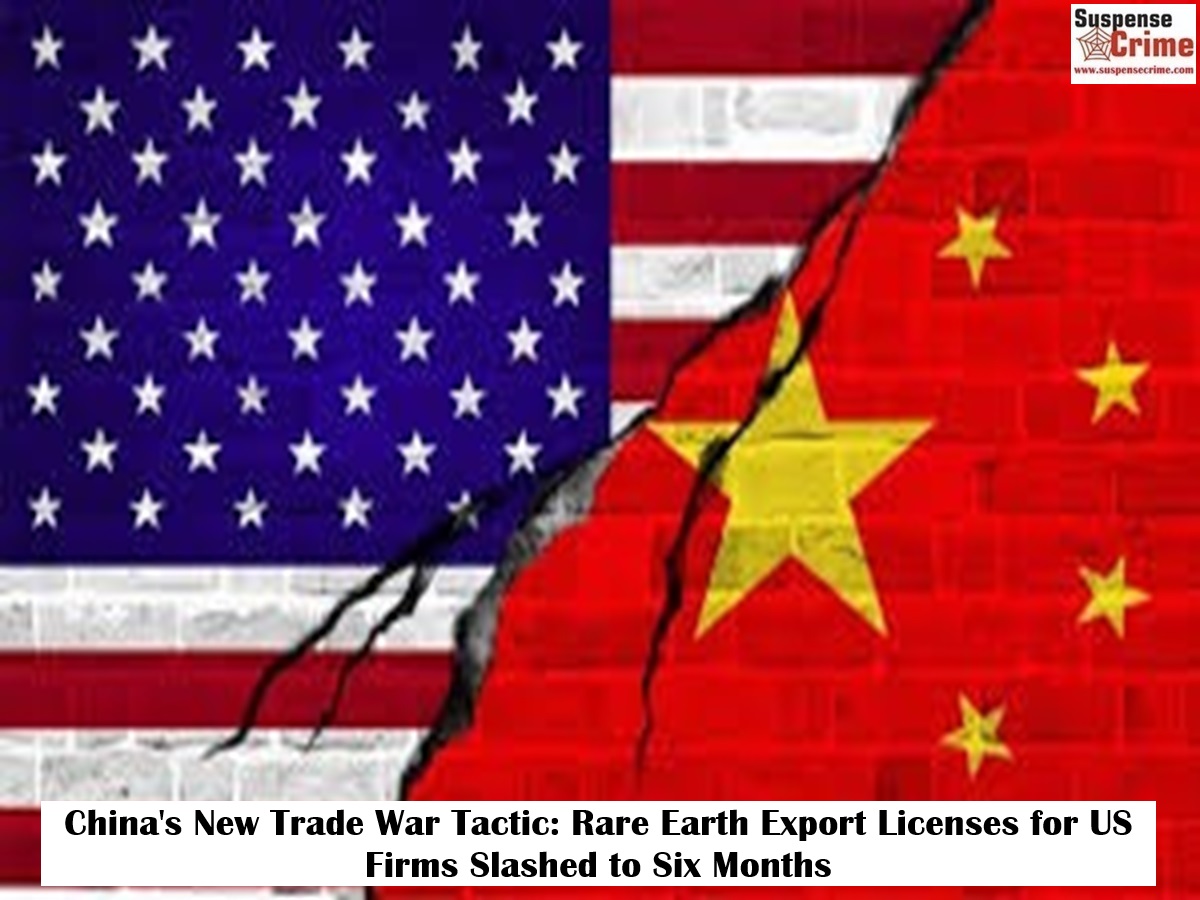
Suspense crime, Digital Desk : In a calculated move designed to exert maximum leverage in its ongoing trade dispute with the United States, China has begun restricting the duration of export licenses for rare earth elements granted to American companies. Instead of the typical one-to-two-year permits, US firms are now being issued licenses valid for only six months, creating significant operational uncertainty.
This policy shift is the latest salvo in the escalating economic conflict between the two global powers. It comes as a direct response to Washington's imposition of steep tariffs on a range of Chinese goods, including electric vehicles (EVs), solar cells, and batteries.
Rare earth elements (REEs) are a group of 17 minerals that are indispensable for a vast array of modern technologies. They are critical components in everything from smartphones and EV motors to sophisticated military hardware like F-35 fighter jets, guided missiles, and drone systems.
China's dominance in this sector is nearly absolute, controlling over 85% of the world's processing capacity. This gives Beijing a powerful economic weapon and highlights a critical vulnerability for the United States, which is heavily dependent on Chinese imports for these materials.
By shortening the license validity, China is not imposing an outright ban but is keeping US companies on a tight leash. This forces them into a constant cycle of reapplication, creating bureaucratic hurdles and allowing Beijing to approve or deny shipments based on the prevailing geopolitical climate. This "soft" control measure disrupts long-term planning for US manufacturers and defense contractors, effectively holding their supply chains hostage.
The move underscores China's willingness to weaponize its control over strategic resources and serves as a stark warning to Washington. For the US and its allies, it amplifies the urgent need to diversify their supply chains and invest in domestic mining and processing capabilities to reduce their reliance on a strategic rival.
Read More: Pakistan’s Telecom Crisis: Why UAE Giant Etisalat is Planning a Shock Exit from PTCL