










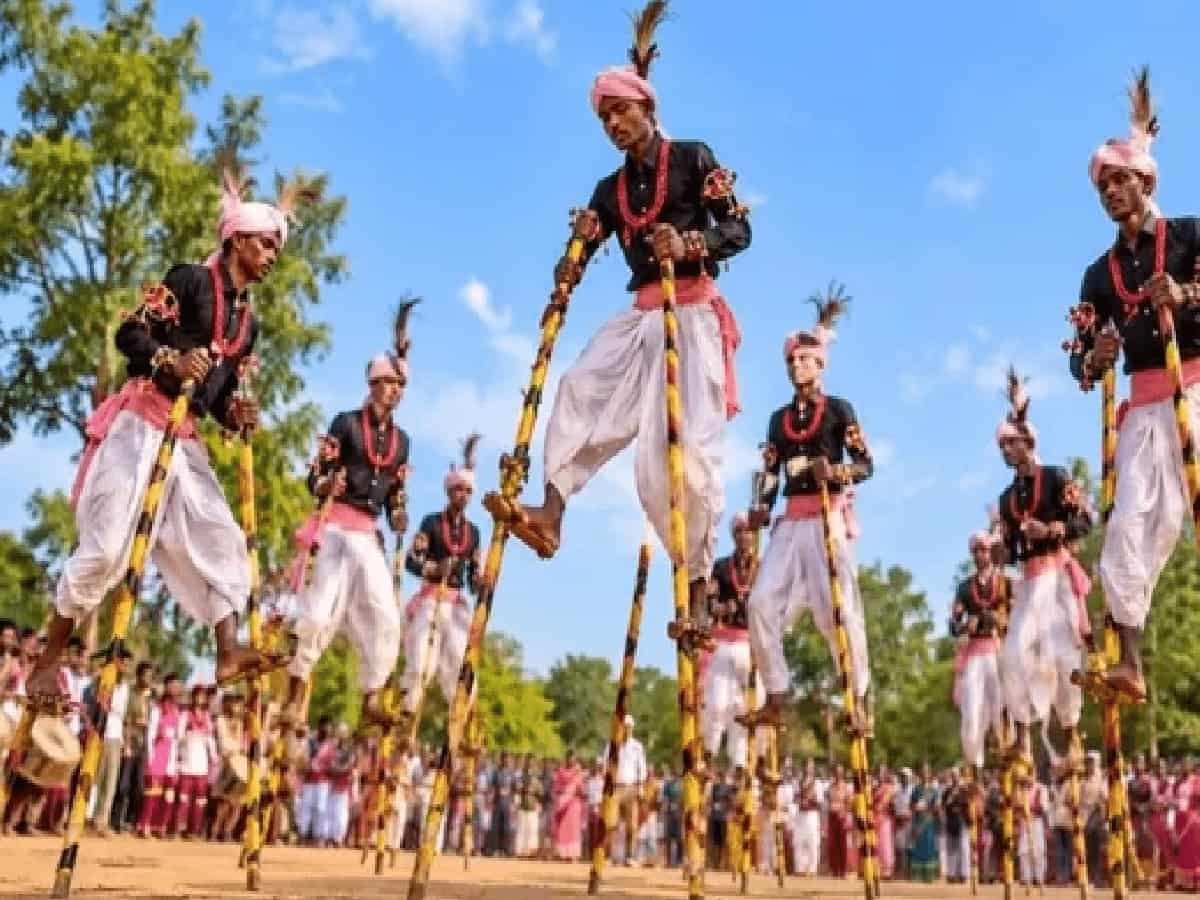
Chhattisgarh's Gendi Dance: Gond Tribals Dance on Bamboo Stilts
In the forested heartland of Bastar in Chhattisgarh—a state celebrated across central India for its living indigenous heritage—celebrating the rhythm of the seasons literally lifts dancers off the earth. For centuries, members of the Gond tribe and its Muria sub-community have kept alive Gendi (also widely spelled Gedi), an extraordinary acrobatic folk dance performed not on solid ground, but balanced high atop six-to-seven-foot-tall bamboo poles. Known affectionately among the Muria people as "Diton Pataya," this circular stilt dance blends rural athleticism, agricultural practicality, and deep reverence for nature into a spectacle that continues to captivate cultural observers across Chhattisgarh as well as neighboring tribal belts in Dindori and Chhindwara in Madhya Pradesh. What makes Gendi especially fascinating is its earthy origin: long before it became a festive stage and village-courtyard tradition, wooden and bamboo gedis were everyday monsoon tools used by farmers and villagers to walk safely across waterlogged paths and muddy paddy fields during the heavy rains of Sawan. For readers, students, and cultural enthusiasts across northern India—including audiences in Lucknow and neighboring Uttar Pradesh cities such as Unnao, Kanpur, Prayagraj, and Varanasi, where folk art festivals and tribal heritage showcases draw keen interest—the story of Bastar's Gendi dance offers a vivid window into how India's indigenous communities transform daily agrarian life into enduring art.
From Monsoon Mud-Walkers to Festive Acrobats: The Origins of Gendi
In the local dialects of Chhattisgarh and Gondwana, the word "Gendi" or "Gedi" refers directly to a sturdy wooden or bamboo staff equipped with a raised footrest. During peak monsoon months, when red laterite tracks and rice nurseries turned slick with mud, walking on elevated bamboo stilts kept villagers' feet clean and steady while tending paddy saplings. Over generations, young men and women turned that everyday balance skill into friendly village competitions—racing, hopping, and spinning in rhythmic unison until the practical monsoon implement evolved into a full-fledged celebratory folk dance.
Sacred Link With Hareli and Navakhani Harvest Festivals
For the Gond and Muria communities—whose spiritual calendar revolves around forests, soil fertility, and seasonal cycles—Gendi is closely bound to two cornerstone agrarian observances:
-
Hareli Festival (Sawan Amavasya): The Gendi season traditionally begins on Hariyali Amavasya, the new-moon day of the Hindu month of Sawan celebrated across Chhattisgarh as Hareli. On this auspicious day, farming families worship agricultural tools, cattle, and their Kuldevta (ancestral/family deity) while praying for abundant rainfall and a bountiful paddy harvest.
-
Navakhani (Bhadon Purnima): From the new moon of Sawan through the full moon of Bhadon—marked by Navakhani, the joyous thanksgiving festival celebrating the arrival of the new grain crop—village squares echo with stilt-dancing circles, communal feasts, and folk songs.
Anatomy of the Performance: 7-Foot Bamboo Stilts, 'Pauwa', and Tribal Percussion
Performing Gendi requires remarkable core strength, agility, and collective timing, as groups of eight to ten dancers move in a tight, unbroken circle without losing their footing on narrow bamboo poles:
| Cultural Element | Traditional Structure & Role in Bastar's Gendi Dance |
| Bamboo Stilt & 'Pauwa' | Each stilt stands roughly 6 to 7 feet tall, fitted with a horizontal wooden peg or bamboo crosspiece tied about 1 to 1.5 feet above the ground—locally called a "Pauwa"—on which the dancer plants their feet. |
| Circular Formation & Choreography | 8 to 10 performers form a moving ring; while individual upper-body postures, hops, and spins vary creatively, the circular geometry remains unbroken—symbolizing community unity and the cycle of nature. |
| Folk Singing & Traditional Instruments | Women accompany the circle with traditional Chhattisgarhi and Gondi folk songs, while musicians drive the tempo on Mandar (double-headed tribal drum), Tudbudi, Dhapla, Timki, Ramtula, and bamboo flute. |
Keeping Indigenous Heritage Alive for Future Generations
Today, whether performed in Bastar's forested villages during Hareli or showcased on national cultural stages across India, Gendi stands as a vibrant emblem of Chhattisgarh's tribal identity. By turning an ingenious response to monsoon mud into a joyous celebration of balance, music, and harvest gratitude, the Gond and Muria communities remind the world how deeply rooted—and remarkably resilient—India's living folk traditions remain.






