 Priyanka Tiwari
 Share
Share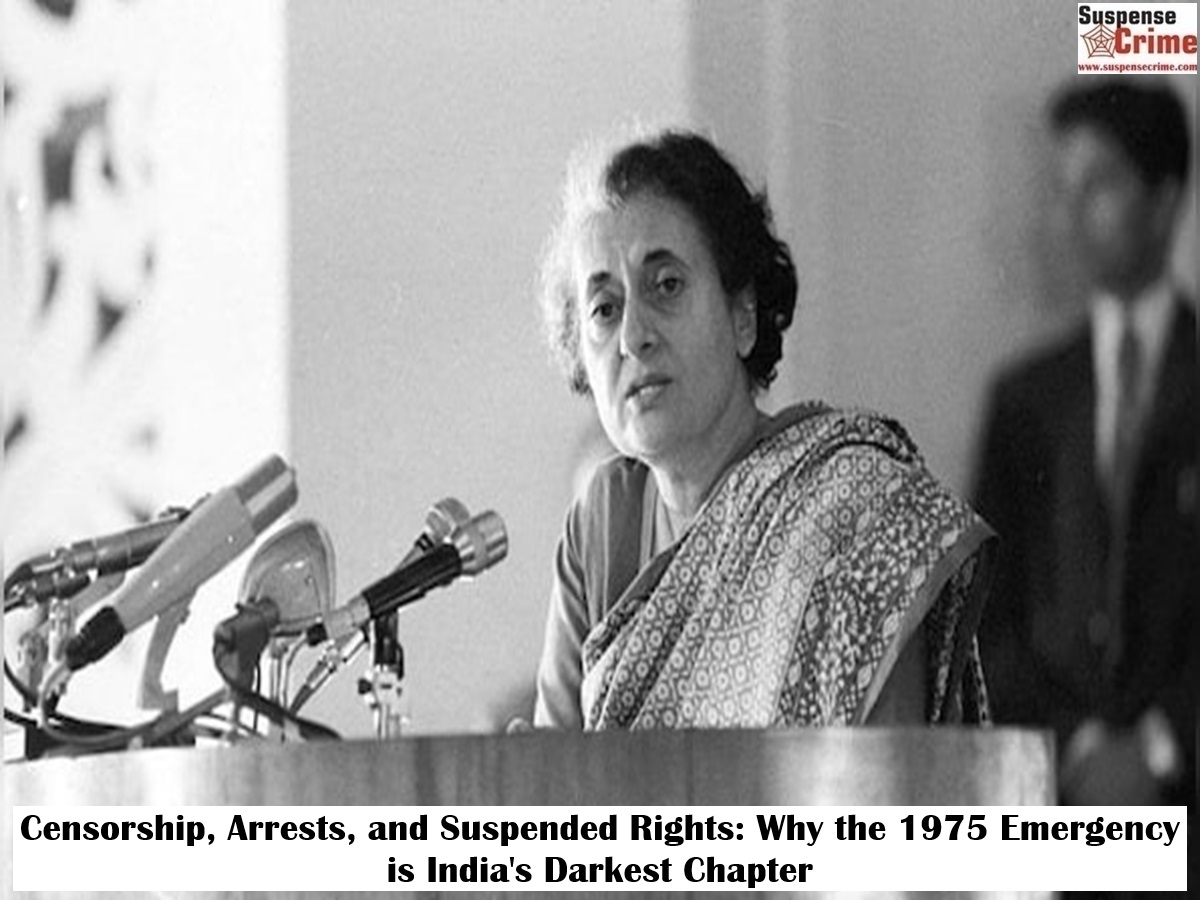
Suspense crime, Digital Desk : For 21 months, from 1975 to 1977, India's vibrant democracy was suspended. This period, known simply as "The Emergency," is widely considered the darkest chapter in the nation's post-independence history. But what led to this drastic step, and what happened during that time to earn it such a notorious reputation?
The Spark: A Court Verdict Against the Prime Minister
The immediate trigger for the Emergency was a court ruling. On June 12, 1975, the Allahabad High Court found Prime Minister Indira Gandhi guilty of electoral malpractice during her 1971 election campaign. The court declared her election void and barred her from holding any elected office for six years. This meant she would have to resign as Prime Minister.
Facing the loss of power and with political pressure mounting, Indira Gandhi chose a different path.
The Night Democracy Was Suspended
On the night of June 25, 1975, on the advice of Prime Minister Gandhi, President Fakhruddin Ali Ahmed declared a state of internal emergency, citing threats of "internal disturbances." In a broadcast to the nation, Gandhi argued that the move was necessary to protect India from instability.
However, the actions that followed suggested a different motive: the consolidation of power.
Life Under Authoritarian Rule: The 'Black Spot' on Democracy
The Emergency fundamentally altered the lives of Indian citizens. The government used its new, unchecked powers to launch a sweeping crackdown on all forms of opposition.
- Suspension of Fundamental Rights: The constitutional rights of citizens were suspended. People could no longer approach the courts to protect their basic freedoms, including the right to life and liberty.
- Mass Arrests of Political Opponents: In pre-dawn raids, thousands of political opponents, activists, and leaders were arrested and jailed without trial. This included prominent figures like Jayaprakash Narayan, Atal Bihari Vajpayee, and L.K. Advani.
- Censorship of the Press: A blanket of censorship was thrown over the media. Newspapers were required to have their articles approved by government censors before publication. In a powerful act of protest, some newspapers, like The Indian Express, published blank editorials.
- Undermining the Judiciary: The government passed constitutional amendments, most notably the 42nd Amendment, which drastically increased the power of the executive branch and severely limited the judiciary's power of review.
- Forced Sterilization Programs: In one of the most infamous and brutal aspects of the Emergency, a massive, coercive sterilization campaign was launched, allegedly spearheaded by Sanjay Gandhi, the Prime Minister's son. Millions were forcibly sterilized as part of a population control drive.
The End of the Nightmare
In early 1977, believing her popularity was still high, Indira Gandhi called for fresh elections. The result was a stunning and historic defeat. The Indian people voted overwhelmingly against her and the Congress party, electing the newly formed Janata Party coalition to power. Democracy was restored.
Today, the Emergency serves as a powerful and chilling reminder of how fragile democracy can be and stands as a cautionary tale against the dangers of unchecked political power.