Priyanka Tiwari
 Share
Share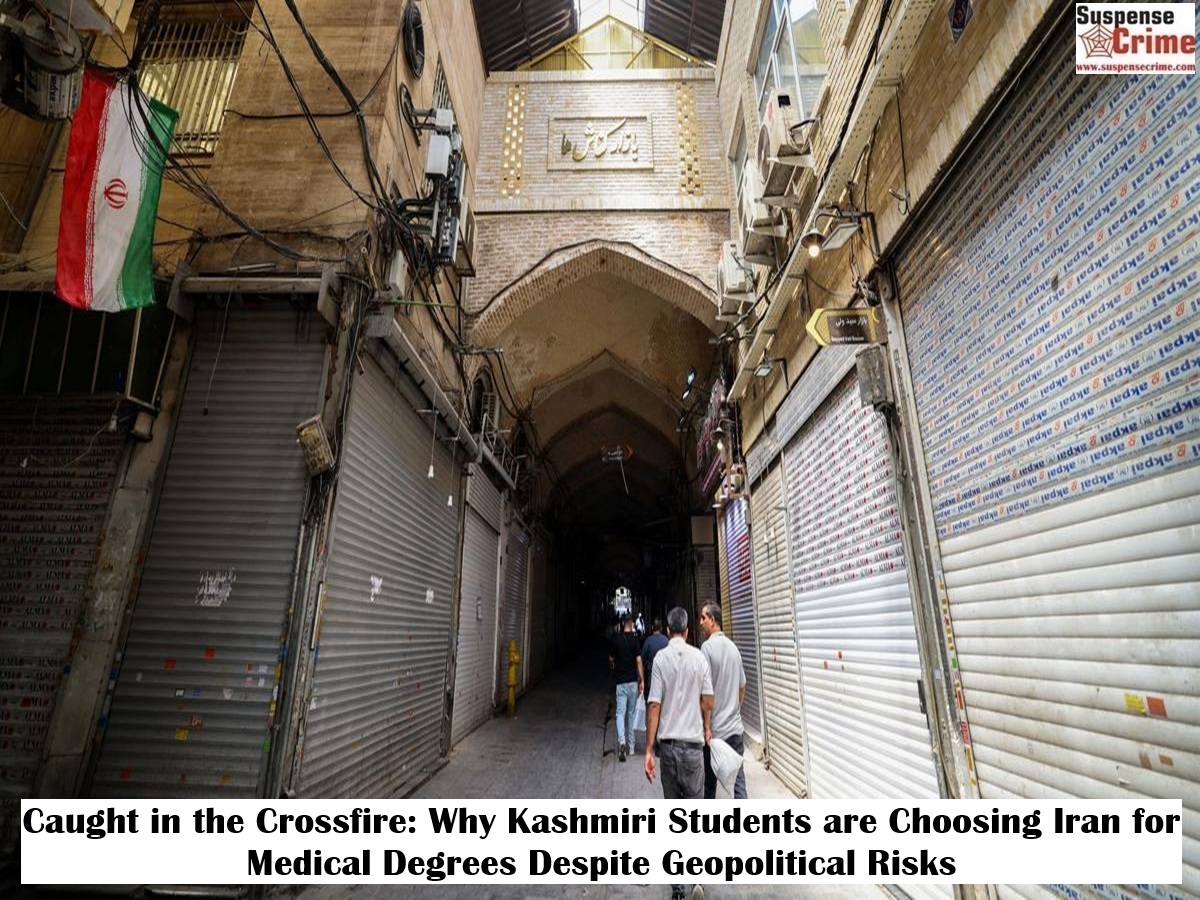
Suspense crime, Digital Desk : As tensions between Iran and Israel recently escalated into direct military strikes, a community of nearly 1,000 Indian students found themselves caught in the middle. These students, hailing predominantly from the Kashmir Valley, are pursuing their dreams of becoming doctors in Iran, and the recent conflict has left their families back home filled with anxiety.
Despite frantic calls and the issuance of travel advisories from the Indian embassy in Tehran, these students remain, highlighting a crucial question: why has Iran become such a popular destination for aspiring Kashmiri medics?
The answer lies in a combination of affordability, accessibility, and cultural familiarity that presents a compelling alternative to the challenges of medical education in India.
A Path Around India's Hurdles
For many, the primary driver is economic. The cost of a full MBBS degree in Iran is estimated to be around ₹30-35 lakh ($36,000 -
42,000).ThisisafractionofthecostatprivatemedicalcollegesinIndia,wherefeescaneasilyexceed₹1crore(42,000). This is a fraction of the cost at private medical colleges in India, where fees can easily exceed ₹1 crore (42,000).ThisisafractionofthecostatprivatemedicalcollegesinIndia,wherefeescaneasilyexceed₹1crore( 120,000).
"It is a cheaper alternative for students who want to become doctors but cannot afford the hefty fees of private colleges in India," explains G.N. Var, a prominent education consultant in the region.
Beyond the cost, there is the immense challenge of securing a spot in the first place. India's national medical entrance exam, NEET, is notoriously competitive. Millions of students vie for a limited number of government-subsidized seats, making the odds of success incredibly slim. Iran offers a more accessible route for those who don't make the cut but still have the passion and aptitude for medicine.
Cultural Comfort and Recognized Degrees
Iran also offers a degree of cultural comfort. Its proximity to India and shared cultural and religious ties, particularly for students from Kashmir's Shia community, make the transition easier. Furthermore, medical degrees from top-tier institutions like the Tehran University of Medical Sciences are recognized by India's National Medical Commission (NMC), ensuring that students can return home and practice medicine after clearing the required Foreign Medical Graduate Examination (FMGE).
This blend of factors has created a steady flow of students from the Kashmir Valley to Iranian universities. However, the recent geopolitical flare-up serves as a stark reminder of the risks involved. While the Indian embassy remains in close contact with the student community, offering support and guidance, the situation underscores the difficult trade-off these young students and their families have made—balancing the pursuit of an affordable dream against the backdrop of regional instability.
_1359883337_100x75.jpg)
_1550774716_100x75.jpg)
_518702411_100x75.jpg)