










New Financial Rules From Dec 1, 2026: SBI Card, Pensions & EMIs
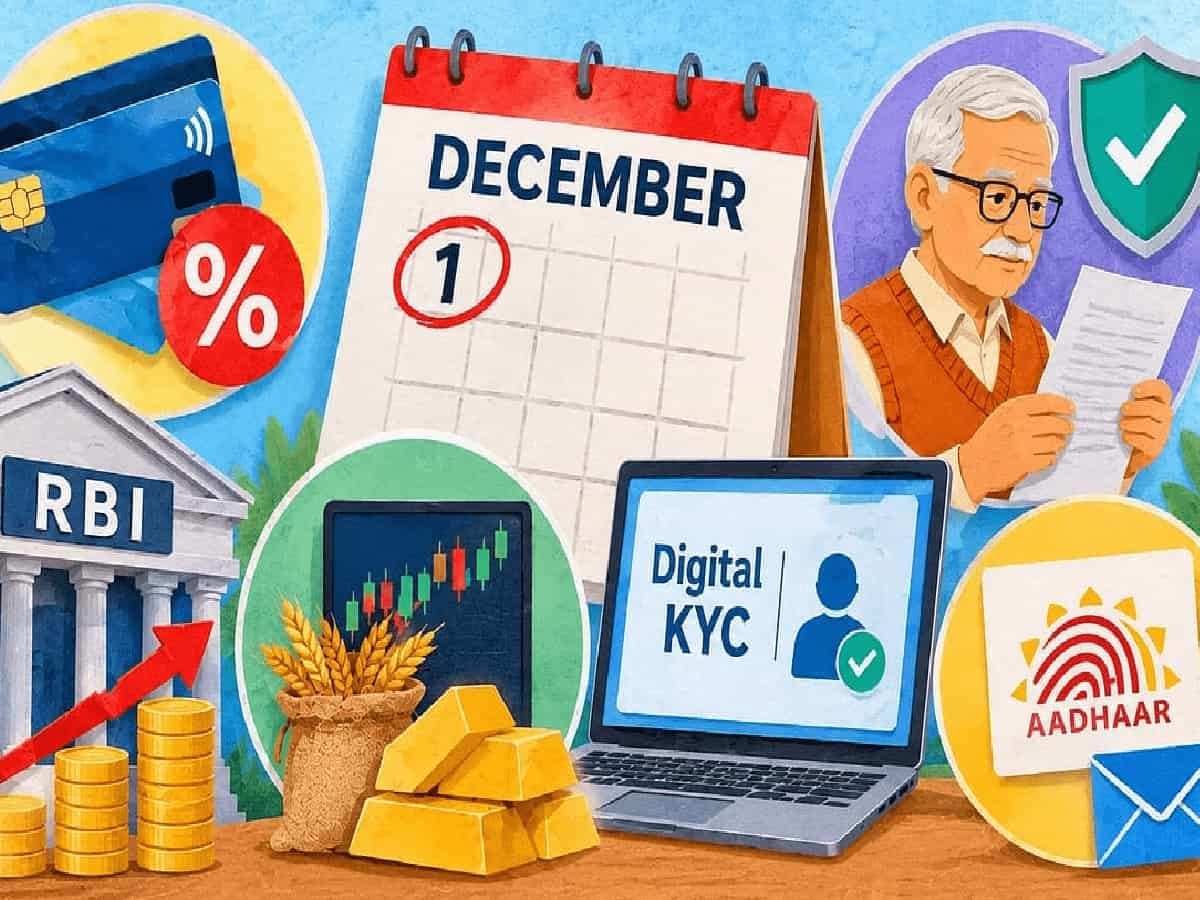
As December 2026 begins, a wave of regulatory updates and critical compliance deadlines will reshape everyday household finances, digital transactions, market trading, and retirement payouts across India. From Tuesday, December 1, 2026, SBI Card is introducing a new 1 percent fee on high-value transportation payments and heavy billing-cycle fuel spends, while the Securities and Exchange Board of India (SEBI) is revising minimum initial margin requirements (6%, 8%, and 10%) in the commodity derivatives segment. Just two days later, on December 3, eligible NRIs, OCI cardholders, and foreign nationals in FATF-compliant jurisdictions gain the ability to complete securities KYC digitally from abroad without traveling to India, alongside the Reserve Bank of India's (RBI) Monetary Policy Committee (MPC) meeting from December 2 to 4 that could influence floating-rate home and auto loan EMIs. Meanwhile, November 30 marks the final cutoff for central government pensioners to submit their annual Life Certificate (Jeevan Pramaan) without risking pension delays, and December 31, 2026 closes the UIDAI fee-waiver window for updating email addresses through the Aadhaar mobile app. For salaried employees, pensioners, small traders, and retail investors across Uttar Pradesh—including households in Lucknow and neighboring commercial centers such as Unnao, Kanpur, Prayagraj, and Varanasi, where bank branches, pension treasuries, and digital payment usage see heavy year-end activity—reviewing these six dates and rules early helps prevent unexpected fees or service interruptions.
Complete Summary of Financial Rule Changes & Deadlines Around December 1, 2026
| Area / Institution | Effective Date / Deadline | What Changes & Who Is Impacted |
| SBI Credit Card Fuel & Transport Fee | December 1, 2026 | 1% fee (plus applicable GST) on single transportation payments above ₹30,000 (MCCs 4111, 4784, 4131) and 1% on total billing-cycle fuel spend once cumulative fuel transactions exceed ₹50,000 (MCCs 5172, 5541, 5542, 5983). |
| SEBI Commodity Derivatives Margin | December 1, 2026 | Revised minimum initial margin rates of 6% (low volatility), 8% (medium volatility), and 10% (high volatility)—cutting agricultural derivatives margins by 2 percentage points to align with non-agri commodities. |
| NRI / OCI Digital Securities KYC | December 3, 2026 | Individual NRIs, OCI cardholders, and foreign nationals residing in FATF-compliant countries can complete securities/mutual-fund KYC digitally via Video In-Person Verification (VIPV) without being physically present in India. |
| RBI MPC Repo Rate & Loan EMIs | December 2–4, 2026 (Policy decision on Dec 4) | Six-member MPC reviews the 5.50% policy repo rate amid elevated retail inflation; any rate adjustment directly affects repo-linked floating home, auto, and MSME loan interest rates and EMIs. |
| Pensioners' Annual Life Certificate | November 30, 2026 (Ahead of Dec 1 pension cycle) | Central government pensioners must submit Jeevan Pramaan (digitally via face authentication, doorstep banking, or bank branch) by November 30 to avoid December pension hold-ups. |
| Free Aadhaar Email Update Window | Until December 31, 2026 | UIDAI waives the standard fee for updating an email address through the official Aadhaar mobile application until year-end (normal charges apply to other demographic/biometric updates). |
How the New SBI Credit Card Fee and SEBI Margin Rules Affect Everyday Spends and Trades
Under SBI Card's revised schedule effective December 1, 2026, everyday commuters who spend modestly on fuel or transit remain unaffected, while heavy fleet, travel, or multi-vehicle users face two clear thresholds. First, any single transportation transaction exceeding ₹30,000 (covering commuter transit, tolls/bridges, and bus services) attracts a 1% fee on that payment. Second, if cumulative eligible fuel purchases in a single billing cycle cross ₹50,000, SBI Card will levy a 1% charge on the entire cycle's fuel spend (for instance, spending ₹60,000 in a cycle incurs a ₹600 fee plus applicable GST). Cardholders can avoid the surcharge by keeping single transit payments at or below ₹30,000 and capping monthly fuel card usage at ₹50,000.
Meanwhile, in commodity markets, SEBI's November 17, 2026 circular takes effect on December 1, standardizing minimum initial margins across volatility tiers at 6 percent for low-volatility, 8 percent for medium-volatility, and 10 percent for high-volatility commodity derivatives—lowering upfront margin deposits on agricultural contracts by two percentage points so they match metals and energy contracts while preserving position-risk discipline.
Overseas Digital KYC, RBI Policy Watch, and Year-End Citizen Deadlines
For the global Indian diaspora, SEBI's November 4, 2026 circular removes the long-standing requirement for NRIs, OCI cardholders, and eligible foreign investors in FATF-compliant nations to be physically present in India during digital KYC onboarding from December 3, 2026, provided live Video In-Person Verification (VIPV) and document attestation norms are met. Closer to home, borrowers tracking EMIs should watch the RBI Monetary Policy Committee's December 2–4 meeting—with economists widely anticipating a 25-basis-point repo rate hike from 5.50% to 5.75% after retail inflation breached 6%—which would nudge floating home-loan rates upward depending on each lender's reset cycle. Finally, ensuring pensioners submit their Life Certificate by November 30 and updating email IDs free of cost on the Aadhaar mobile app before December 31 will help households close out 2026 without administrative hiccups.






