










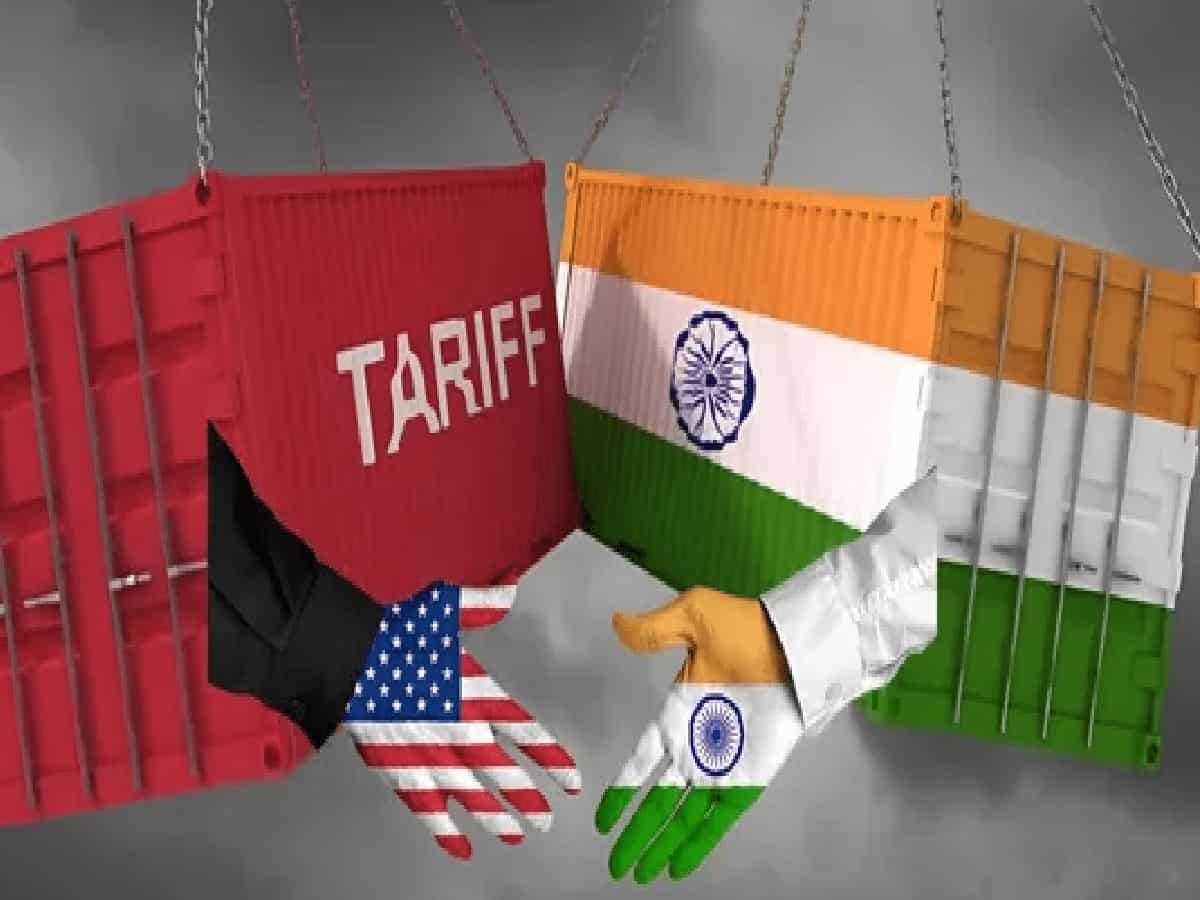
India-US Trade Deal: 6 Strategic Options Against 17% US Tariff
As bilateral negotiations between New Delhi and Washington enter a decisive phase after roughly a year and a half of sustained talks, the United States Trade Representative (USTR) has unveiled a new tariff framework that presents both an immediate commercial opening and a deeper strategic test for Indian policymakers. Under the latest US proposal following its Section 301 excess-capacity review, Indian goods face a proposed 25% tariff if no bilateral agreement is concluded, whereas sealing an Agreement on Reciprocal Trade would cap the additional US duty at 17%—a meaningful 8-percentage-point differential that also places India slightly ahead of several Asian manufacturing competitors. Yet as international trade economist Professor Dr. Ram Singh observes in his analytical assessment of the deal, an immediate tariff concession alone does not guarantee durable trade security. If New Delhi accepts binding market-access commitments today without ironclad legal guardrails, what prevents Washington from altering executive tariff terms unilaterally tomorrow? Rather than treating the 17% rate as the finish line or rushing into a hasty commercial compromise, Dr. Singh outlines six concrete strategic options—anchored in Most-Favoured-Nation (MFN) parity, a five-year review clause, strict "snap-back" limits, and calibrated Tariff-Rate Quotas (TRQs) for agriculture—to safeguard India's long-term economic interests. For exporters, agricultural stakeholders, MSME manufacturers, and policy watchers across Uttar Pradesh—including commercial and export hubs in Lucknow and neighboring centers such as Unnao, Kanpur, Prayagraj, and Varanasi, where leather, textiles, handicrafts, engineering goods, and agri-processing industries rely heavily on predictable US market access—these six negotiating pillars define how India can secure lasting stability rather than temporary relief.
Summary of the 6 Strategic Options Recommended for India in the US Trade Talks
| Strategic Option | Core Policy Mechanism | Primary Objective for India |
| 1. Future Trade MFN Clause | Automatic pass-through if the US grants lower tariffs to any other partner country in the future. | Converts the 17% tariff from a temporary concession into a durable, non-discriminatory right without repeated renegotiation. |
| 2. Investment MFN & Tech Flow | Equal treatment for Indian investors in the US alongside structured US FDI into India. | Channels US capital and technology into semiconductors, defense, electronics, critical minerals, and clean energy. |
| 3. Mandatory 5-Year Sunset Review | Built-in five-year review clause to evaluate trade flows, benefits, and domestic development goals. | Prevents executive-order tariff deals from locking India into rigid, unreviewed obligations amid shifting global conditions. |
| 4. Strict 'Snap-Back' Tariff Rules | Mandatory notice, moratorium, consultation, independent review, and capped proportionality before any duty hike. | Blocks arbitrary unilateral revocation of tariff concessions based on unproven administrative allegations. |
| 5. Product-Specific Farm TRQs | Tariff-Rate Quotas (TRQs) allowing capped volumes of select US farm goods at lower duty, with steep out-of-quota tariffs. | Enhances market efficiency while shielding Indian farmers and sensitive rural sectors from import surges. |
| 6. Trade–Autonomy Balance | Aligning open export access with domestic policy space and mutual legal clarity. | Ensures neither party can unilaterally reinterpret treaty terms after signing. |
Locking In MFN Protections for Trade and Investment, Plus a 5-Year Review
The first three pillars of Dr. Ram Singh's roadmap focus on eliminating future policy uncertainty. First, India should press for a forward-looking Most-Favoured-Nation (MFN) clause on goods so that if Washington subsequently grants a lower tariff rate to another trading partner, Indian exporters automatically receive the identical benefit without having to return to the negotiating table. Without such an MFN anchor, today's 8-percentage-point advantage over the 25% baseline risks remaining a revocable privilege rather than a permanent commercial right. Second, New Delhi should extend MFN protections to bilateral investment, guaranteeing Indian enterprises non-discriminatory treatment in the United States while encouraging American firms to invest in high-priority Indian sectors—specifically semiconductors, defense manufacturing, electronics, critical minerals, and clean energy—backed by transparent domestic rules and streamlined clearances. Third, because tariff arrangements rooted in presidential executive actions can shift abruptly, India should seek a mandatory five-year review (sunset) clause—not as an instrument for arbitrary exit, but as a structured checkpoint to assess bilateral trade gains and verify alignment with India's industrial development priorities.
Guardrails on Tariff 'Snap-Backs', Calibrated Farm Quotas, and Strategic Autonomy
Equally vital are clear rules governing dispute resolution, agricultural market access, and sovereign policy space. Under the fourth option, Dr. Singh emphasizes codifying strict procedural discipline around "snap-back" tariff reimpositions: before either side can withdraw concessions over an alleged breach, the agreement must mandate a cooling-off moratorium, bilateral consultations, a transparent inquiry, due opportunity to be heard, independent review, and a strict cap ensuring retaliatory duties remain proportionate. Fifth, on the politically sensitive front of agricultural market access, India can consider carefully calibrated Tariff-Rate Quotas (TRQs) for select US farm commodities rather than blanket tariff cuts. Under a product-by-product TRQ regime—subject to periodic review without automatic expansion—a capped volume enters at a concessional duty while shipments above that threshold face higher protective tariffs, fostering healthy competition without jeopardizing Indian farmers. Finally, balancing global trade integration with strategic autonomy means viewing the 17% tariff offer as the opening framework rather than the final destination: a genuinely successful India–US trade agreement will be measured not by short-term headlines, but by clear, binding terms that neither nation can unilaterally rewrite once signed.






