
 Priyanka Tiwari
 Share
Share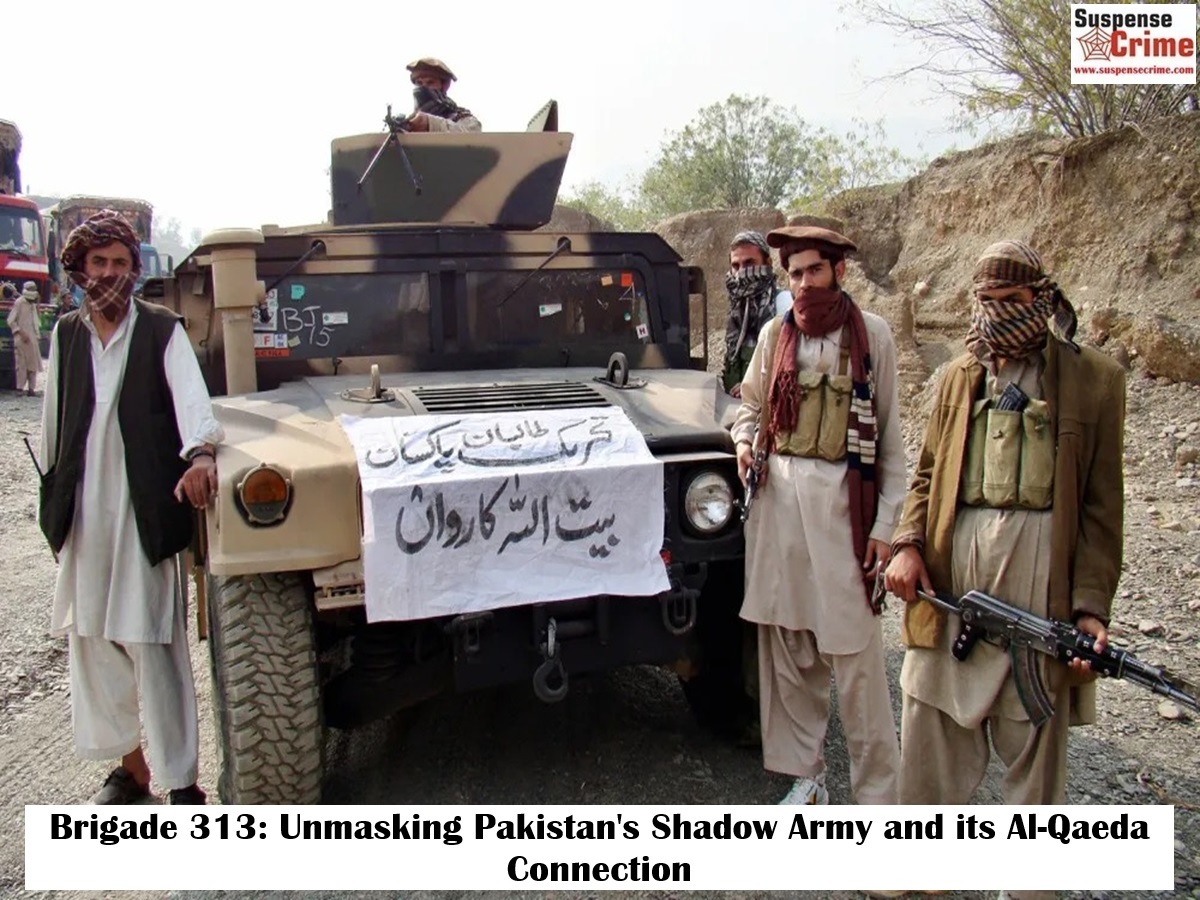
Suspense crime, Digital Desk : In the complex and often murky world of counter-terrorism, some threats are more elusive than others. One of the most enigmatic and dangerous is Brigade 313, a clandestine terrorist organization with deep roots in Al-Qaeda and strong, albeit deniable, links to the Pakistani state establishment. While Pakistan officially denies its existence, evidence suggests Brigade 313 acts as a strategic asset and a lethal proxy force.
Origins and Ideological Significance
The name "313" is potent in Islamic history and eschatology, referencing the 313 soldiers who fought alongside Prophet Muhammad in the pivotal Battle of Badr. This number carries immense symbolic weight, used to inspire and recruit jihadists for a holy cause. The group was reportedly founded by the infamous Al-Qaeda commander Ilyas Kashmiri to serve as a specialized, elite unit capable of executing high-impact attacks.
A Web of Terror Groups
Brigade 313 is not just a single entity but an umbrella organization, a syndicate of some of the region's most violent terrorist groups. It functions as a coordination hub, bringing together factions of Lashkar-e-Taiba (LeT), Jaish-e-Mohammed (JeM), and Harkat-ul-Jihad-al-Islami (HUJI), among others. This structure allows it to pool resources, share intelligence, and leverage the specific skills of different groups for complex operations, making it incredibly versatile and dangerous.
The State Connection and Plausible Deniability
The most alarming aspect of Brigade 313 is its alleged connection to Pakistan's intelligence agency, the Inter-Services Intelligence (ISI). The group is believed to operate with a degree of protection and guidance from elements within the Pakistani deep state. This relationship provides the state with a powerful tool: plausible deniability. By operating through a seemingly independent "invisible army," the Pakistani establishment can wage a proxy war and advance its strategic interests, particularly against India, without direct attribution.
Brigade 313 has been implicated in some of the most devastating attacks in the region, including logistical support for the 2008 Mumbai (26/11) attacks and strikes on Pakistani military and intelligence facilities. Its ability to operate in the seams between state and non-state actors makes it a formidable threat to regional and global security. Unmasking and neutralizing this shadow army remains a critical challenge for the international community.
Read More: BLA Forms Own Navy? Balochistan Liberation Army Claims First-Ever Naval Strike in Major Escalation