 Priyanka Tiwari
 Share
Share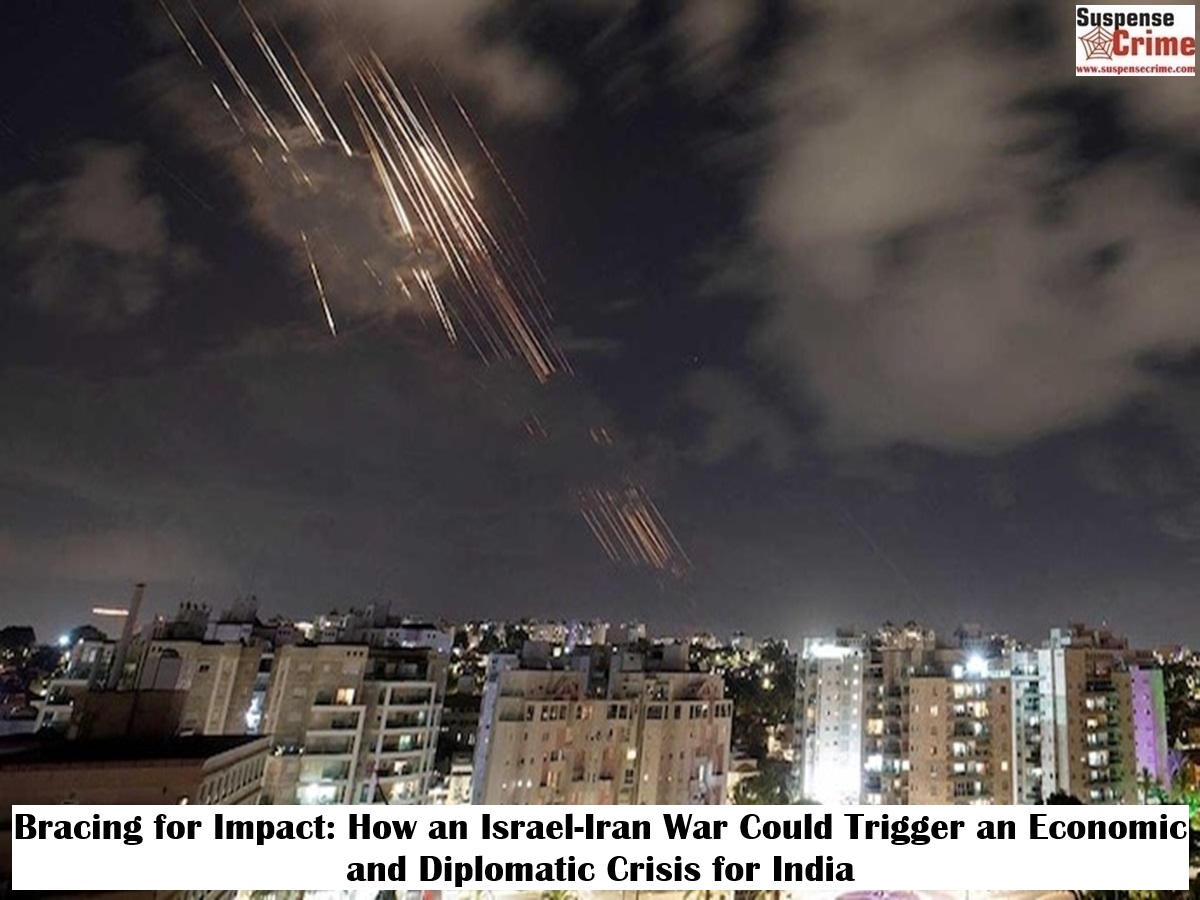
Suspense crime, Digital Desk : As tensions between Israel and Iran escalate to dangerous new levels, India finds itself in a precarious position. While geographically removed from the immediate conflict, a full-scale war between the two Middle Eastern powers would send devastating shockwaves through the Indian economy, disrupt its strategic ambitions, and endanger millions of its citizens.
Here’s a breakdown of the four key areas where India would be hit the hardest.
1. The Oil Price Shock
At the heart of the economic threat is oil. India is the world's third-largest oil importer, sourcing over 85% of its crude from abroad, with a significant portion passing through the volatile Strait of Hormuz. Iran holds the power to disrupt or even close this critical maritime chokepoint, through which a fifth of the world's oil supply travels.
Any blockade or military action in the Strait would cause global oil prices to skyrocket. For India, this translates directly into higher fuel prices for consumers, increased inflation across the board, and immense pressure on the government's budget, potentially derailing its economic growth targets.
2. Strangled Trade and Broken Supply Chains
The conflict would cripple vital international trade routes. The recent Houthi attacks in the Red Sea have already demonstrated how regional instability can increase shipping costs and insurance premiums. A wider war would make this situation far worse, severely impacting India's exports and imports.
Furthermore, it would jeopardize two of India's cornerstone strategic projects. The Chabahar Port in Iran, which is India's gateway to Afghanistan and Central Asia, would become unusable. The ambitious India-Middle East-Europe Economic Corridor (IMEC), designed to connect India to Europe via the Arabian Peninsula and Israel, would be dead on arrival.
3. Millions of Indians in the Danger Zone
Perhaps the most immediate human cost would be the risk to the massive Indian diaspora in the Gulf. Nearly nine million Indians live and work in countries like the UAE, Saudi Arabia, Qatar, and Kuwait. They are a vital source of foreign exchange for India, sending home billions in remittances each year.
A regional war would put their lives in danger, potentially triggering a humanitarian crisis and forcing India to undertake a massive and complex evacuation effort. The safety and well-being of this community is a top priority for New Delhi.
4. A Diplomatic Tightrope Act
For years, India has masterfully balanced its relationships in the Middle East, maintaining strong ties with Israel (a key defense and technology partner), Iran (a strategic neighbor), and the Arab Gulf states (crucial energy and trade partners).
A full-blown war would shatter this delicate equilibrium. India would be under immense pressure from all sides, making its policy of "multi-alignment" nearly impossible to maintain. Being forced to choose sides could damage decades of diplomatic work and undermine India's standing as a neutral and influential global player.
In short, while the world watches the military exchanges between Israel and Iran, for India, the stakes are profoundly personal—threatening its energy security, economic stability, strategic projects, and the safety of its people. De-escalation is not just a hope; for India, it's a necessity.
Read More: Why the Silence? Activist Arif Aajakia Slams Global Apathy on Pahalgam Terror Attack Anniversary