Monsoon Indifference Plunges Saran Agriculture into Crisis: Rainfall Deficit Hits 72.70%, Stalling Paddy Transplantation
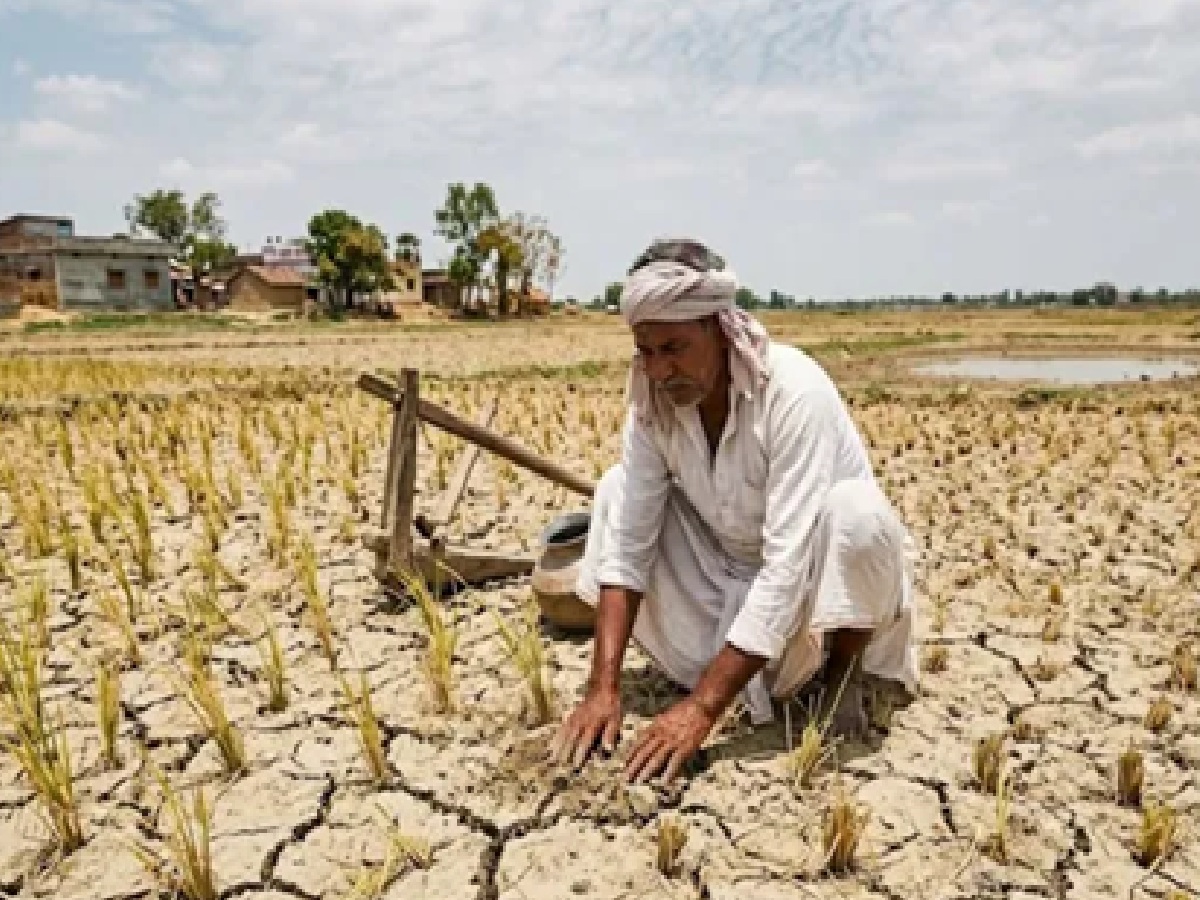
Agricultural prospects across the Saran district have faced a formidable setback as a persistently weak monsoon creates severe drought-like conditions for the ongoing 2026-27 Kharif season. Official meteorological and agricultural records from June through July 13 indicate an alarming rainfall deficit of 72.70 percent, threatening the livelihood of local farming communities who rely heavily on timely precipitation for successful crop yields. While rice nurseries have been successfully cultivated across nearly the entire targeted acreage, bone-dry fields have effectively paralyzed the crucial paddy transplantation phase, prompting immediate administrative and advisory intervention from regional agriculture authorities.
Staggering Rainfall Shortfalls Across June and July
According to comprehensive performance metrics released by the District Agriculture Office, the region was expected to receive a cumulative normal average of 452.20 mm of rainfall during June and July. Instead, rain gauges have managed to capture a meager 123.44 mm. Breaking down the seasonal timeline reveals an acute shortage, with June registering a 73.03 percent shortfall after recording only 36.01 mm against the expected 133.50 mm. The deficit extended further into July, where just 87.43 mm of rain fell by the 13th against a normal benchmark of 318.70 mm—a 72.57 percent drop. This year's dry spell outstrips previous monsoon deficits of 68.46 percent in 2024-25 and 54.23 percent in 2025-26, compounding systemic dry conditions in the region.
Seedlings Ready Yet Stranded by Lack of Field Moisture
Despite the heavy deficiency in atmospheric rainfall, local farmers displayed commendable enterprise by successfully preparing rice nurseries to near-perfection. Out of the district's ambitious target to cover 10,021.99 hectares for seedling preparation, nurseries were safely established across 9,991.01 hectares, achieving an impressive 99.69 percent completion rate. However, the absence of standing water or adequate soil moisture in open fields has stalled active paddy transplantation. Against an overall sowing goal of 100,219 hectares designated for paddy, only 16,253 hectares have been successfully planted, translating to a sluggish 16.22 percent achievement rate that leaves fields vulnerable unless secondary irrigation is aggressively deployed.
Maize Cultivation Proves Resilient Amid Dry Spells
Contrasting sharply with the grim statistics surrounding rice transplantation, the district's maize cultivation has demonstrated greater resilience against adverse weather conditions. Out of a dedicated coverage target of 15,608 hectares for maize, sowing operations have already wrapped up across 12,830 hectares, representing a robust 82.20 percent realization of the administrative goal. Minor spells of intermittent moisture from recent light showers also provided temporary physical relief, infusing localized vitality into surviving pigeon pea, maize, and wilting rice beds, while inspiring cultivators in pockets like Bela and Bajrahian to cautiously resume secondary sowing activities.
Agriculture Department Issues Advisory on Alternative Irrigation
Amid mounting concerns over a prolonged dry corridor, District Agriculture Officer Madhurendra Kumar Singh confirmed that agricultural administrative teams are continuously evaluating the evolving situation on the ground. To safeguard farming incomes, local authorities are aggressively counseling cultivators to adopt alternative irrigation techniques, prioritize localized water conservation, and pivot toward hardier alternate crops suited to deficient rainfall states. As local farmers wait for a stronger monsoon depression to revive field operations, the regional strategy remains centered on minimizing structural crop losses across western Bihar.



_487203557_351x234.jpg)