
 Priyanka Tiwari
 Share
Share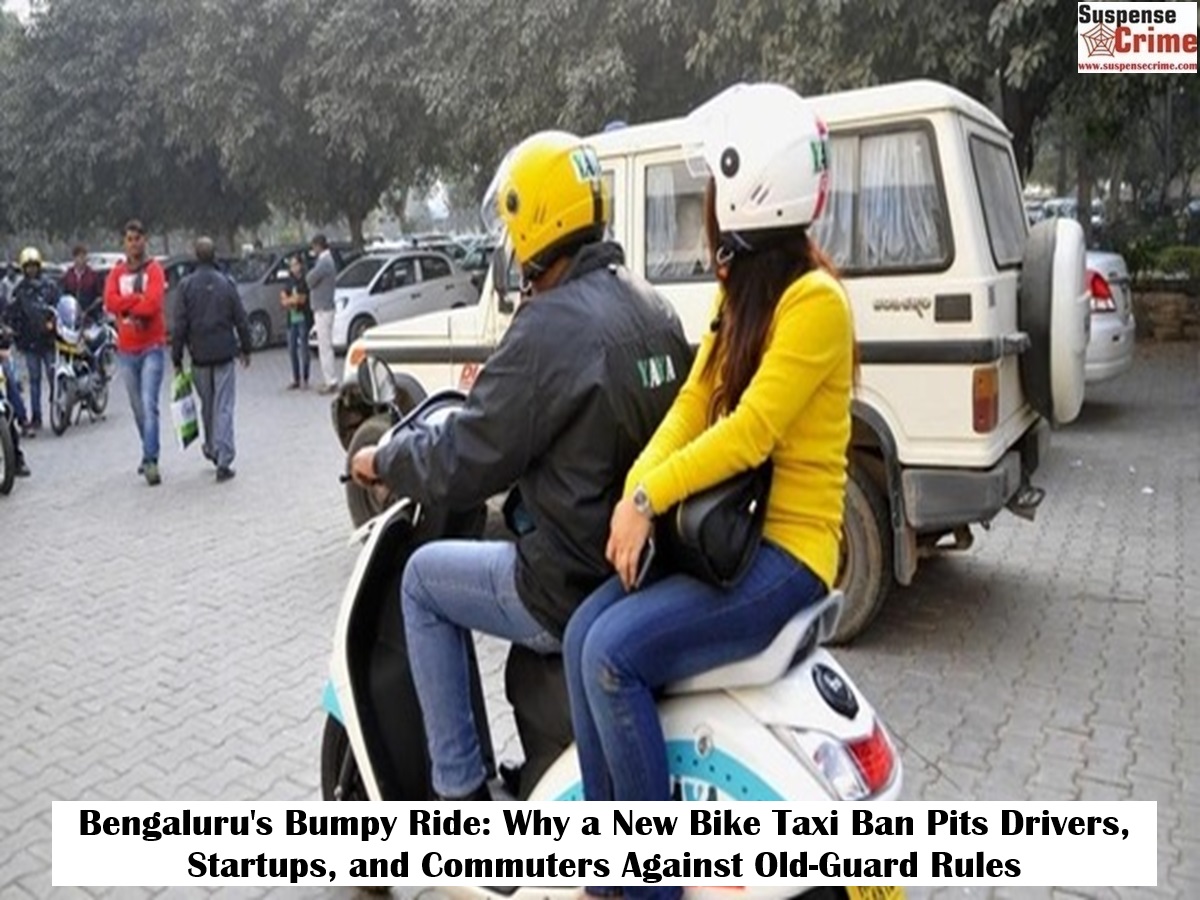
Suspense crime, Digital Desk : In a city famed for its crippling traffic, Bengaluru’s commuters just lost a popular and affordable way to get around. The Karnataka government has slammed the brakes on non-electric bike taxis, reigniting a fierce debate that pits technological innovation and the gig economy against traditional transport lobbies and rigid government policies.
This move by the state's transport department effectively bans popular services from companies like Rapido, Uber, and Ola, which primarily use petrol-powered motorcycles. The government's official justification rests on the Karnataka Electric Bike Taxi (KEBT) Scheme of 2021, a policy that exclusively permits electric vehicles to operate as bike taxis. By enforcing this rule, authorities have begun impounding bikes and levying fines, leaving thousands of riders and millions of users in the lurch.
For the drivers, or "captains," this ban is a direct threat to their livelihood. Many depend on the daily income from these rides to support their families. They argue that the government's push for an all-electric fleet is unrealistic. The high cost of electric bikes and the city's still-developing charging infrastructure make a sudden switch impossible for the average gig worker.
On the other side of the conflict are the powerful auto-rickshaw unions. For years, they have protested against bike taxis, viewing them as an illegal form of competition that undercuts their state-regulated fares. These unions have exerted significant pressure on the government, and this latest clampdown is seen by many as a victory for their long-standing campaign.
This situation creates a paradox in Bengaluru, celebrated as India's "Startup Capital." The city that nurtures cutting-edge technology is now stifling a tech-based solution that addressed a real-world problem: last-mile connectivity. Aggregators argue that they were operating under a High Court stay that allowed them to function while final rules were being framed. However, this new government notification bypasses that temporary relief, creating immense uncertainty.
The conflict highlights a larger issue plaguing India's innovation ecosystem. Startups offering disruptive solutions often find themselves entangled in outdated regulations designed for a pre-digital world. Instead of creating a framework that accommodates new models, the government's rigid stance is seen as favoring established interests over public convenience and new-age employment.
As Bengaluru's streets remain as congested as ever, the ban leaves a critical question unanswered: Can India's tech hub find a middle ground that supports innovation, protects livelihoods, and serves its citizens, or will regulatory roadblocks continue to stall the city's progress?