
 Priyanka Tiwari
 Share
Share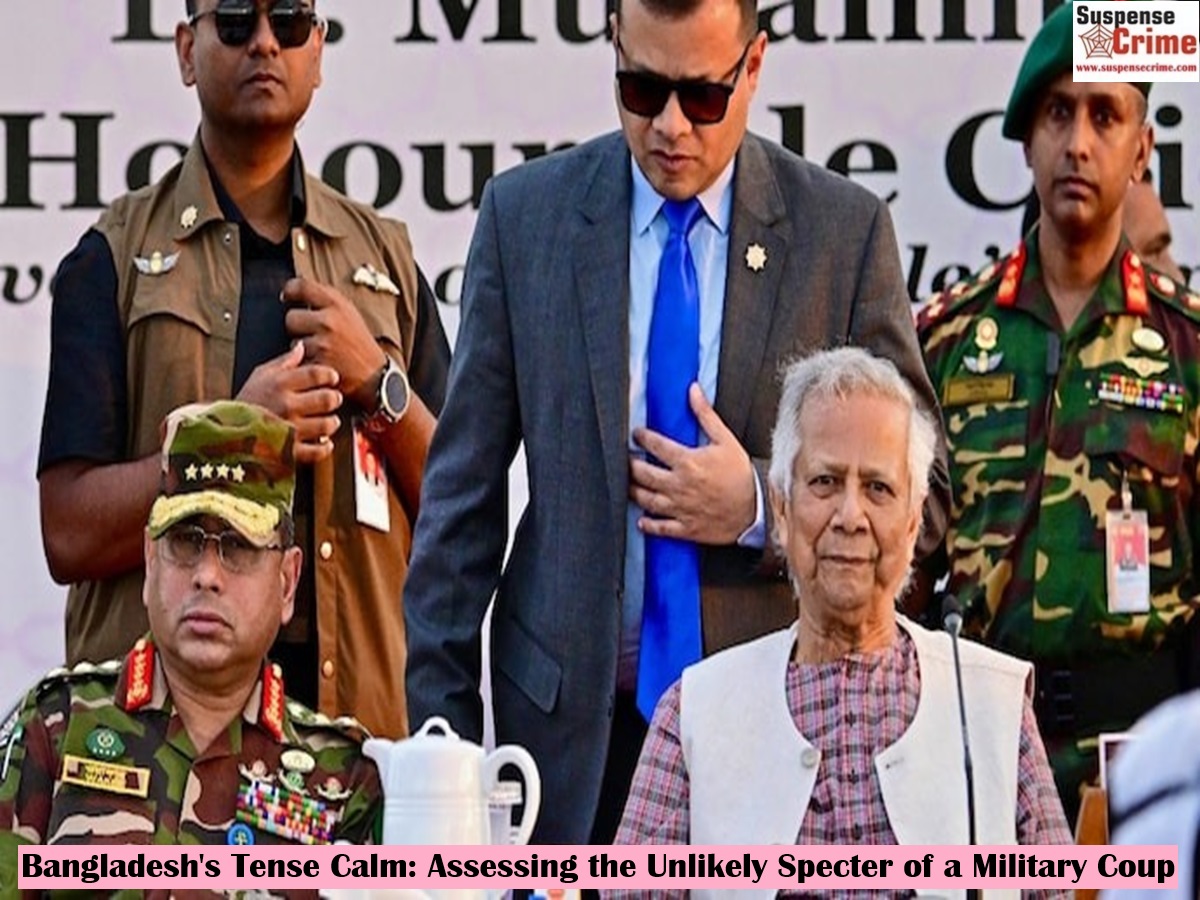
Suspense crime, Digital Desk : Following Sheikh Hasina's recent landslide election victory – a win significantly shaped by the opposition Bangladesh Nationalist Party's (BNP) boycott and widespread allegations of a controlled political environment – questions about the nation's long-term stability invariably arise. While Hasina and her Awami League party appear firmly entrenched, the shadow of Bangladesh's history, marked by several military coups, lingers in the background. So, how real is the threat of military intervention today?
Historically, Bangladesh has experienced periods of direct military rule and politically influential army chiefs. However, the current consensus suggests the Bangladesh Army has evolved into a more professional force, seemingly content with its significant constitutional role, involvement in UN peacekeeping missions (a source of pride and revenue), and various commercial enterprises. Under Hasina's long tenure, the military has generally benefited from modernization and a stable, if not entirely democratic, environment.
The primary arguments against an imminent coup center on the army's current disposition. They appear to have little appetite for direct governance, recognizing the complexities and potential international condemnation it would bring. Furthermore, Sheikh Hasina has cultivated a strong relationship with the armed forces, ensuring their interests are largely met. India, a key regional power and a staunch ally of Hasina, would also likely view any military takeover unfavorably, preferring the predictability of her rule.
However, this doesn't mean the situation is without potential triggers. Severe economic distress could be a major destabilizing factor. Bangladesh is currently grappling with high inflation, dwindling foreign exchange reserves, and is in negotiations with the IMF for support. If these economic woes escalate into widespread, unmanageable public unrest that threatens the state's core stability, the military might be compelled to act, less out of political ambition and more as a last resort to restore order.
The opposition, particularly the BNP, remains weakened and fragmented, lacking the capacity to mount a challenge that could necessitate military intervention to resolve a political deadlock. The international community, including the United States, has expressed concerns over democratic backsliding, but this pressure is unlikely to directly instigate a coup.
In essence, while the ingredients for military intervention – a history of such actions and potential socio-economic triggers – exist, the current calculus makes a coup improbable. The army seems to favor the status quo, where its influence is maintained without the burden of direct rule. A significant deterioration in the economic situation leading to mass civil unrest appears to be the most plausible, though still unlikely, scenario that could force the military's hand. For now, despite the political undercurrents, an army takeover remains a distant possibility rather than an immediate threat.
Read More: High-Stakes Drama at Sea Pakistani Oil Tanker Shalamar Defies US Blockade in Strait of Hormuz
_891152136_100x75.jpg)
_934999377_100x75.jpg)
_297632329_100x75.jpg)
_1971369341_100x75.jpg)