Priyanka Tiwari
 Share
Share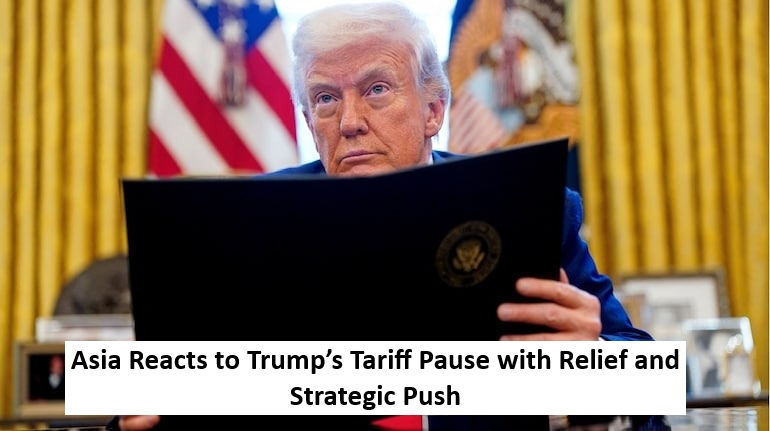
Asian governments responded with a blend of relief, skepticism, and humor to U.S. President Donald Trump’s decision to pause heightened tariffs for dozens of trading partners. While some nations moved to secure permanent trade relief, others criticized the unpredictability of the U.S. approach.
Mixed Responses Across Asia
Countries like Vietnam and Japan are taking proactive steps following the temporary pause in tariff increases. Vietnam, previously facing a 46% levy, and Japan, facing a 24% surtax, are engaging U.S. officials to push for lasting agreements. Vietnam’s Deputy Prime Minister Ho Duc Phoc met with U.S. Trade Representative Jamieson Greer and agreed to begin talks on a mutual trade deal. The news caused a surge in Vietnamese stocks on Thursday.
Japan, while welcoming the tariff pause, emphasized the continuation of its efforts to negotiate fairer trade terms. Ryosei Akazawa, the country’s lead trade official, reaffirmed Japan’s position and indicated no shift in its policy stance.
Criticism from China and Australia
China’s state-run People’s Daily urged the U.S. to revoke its unilateral tariffs and advocated for cooperative economic ties. The U.S., however, increased tariffs on Chinese imports to 125% in response to China’s retaliatory 84% duty on American goods.
Australia’s Prime Minister Anthony Albanese openly criticized the tariff strategy, calling it an economic misstep. He also mocked tariffs on territories like Heard Island and McDonald Islands, highlighting their irrelevance to trade. Albanese stressed the importance of honoring trade agreements, noting that Australia does not apply tariffs on U.S. goods.
U.S. Faces Pressure to Adjust Tariff Policy
Trump’s reversal came hours after new tariffs on 56 nations and the European Union took effect, triggering financial market turbulence and investor concerns. Business leaders urged the administration to reconsider the approach.
As part of the revised policy, most nations will now return to a 10% tariff rate, excluding China, which remains subject to a higher rate. U.S. Treasury Secretary Scott Bessent plans to speak with officials from Japan, Vietnam, India, and South Korea to address next steps in trade discussions.
Strategic Regional Moves
Japan, still facing tariffs on key exports such as vehicles and metals, will continue to advocate for a broader tariff review. Akazawa, recently appointed to lead trade talks, confirmed Japan’s plan to prioritize negotiations with the U.S.
Meanwhile, New Zealand's Prime Minister Christopher Luxon proposed a new trade initiative. He suggested expanding the Comprehensive and Progressive Agreement for Trans-Pacific Partnership (CPTPP) into a larger, rules-based bloc involving the EU, aiming to reinforce global free trade.
Read More: Germany vs Trump: Calls to Expel 40,000 US Troops Grow as Iran War Tensions Explode