
 Priyanka Tiwari
 Share
Share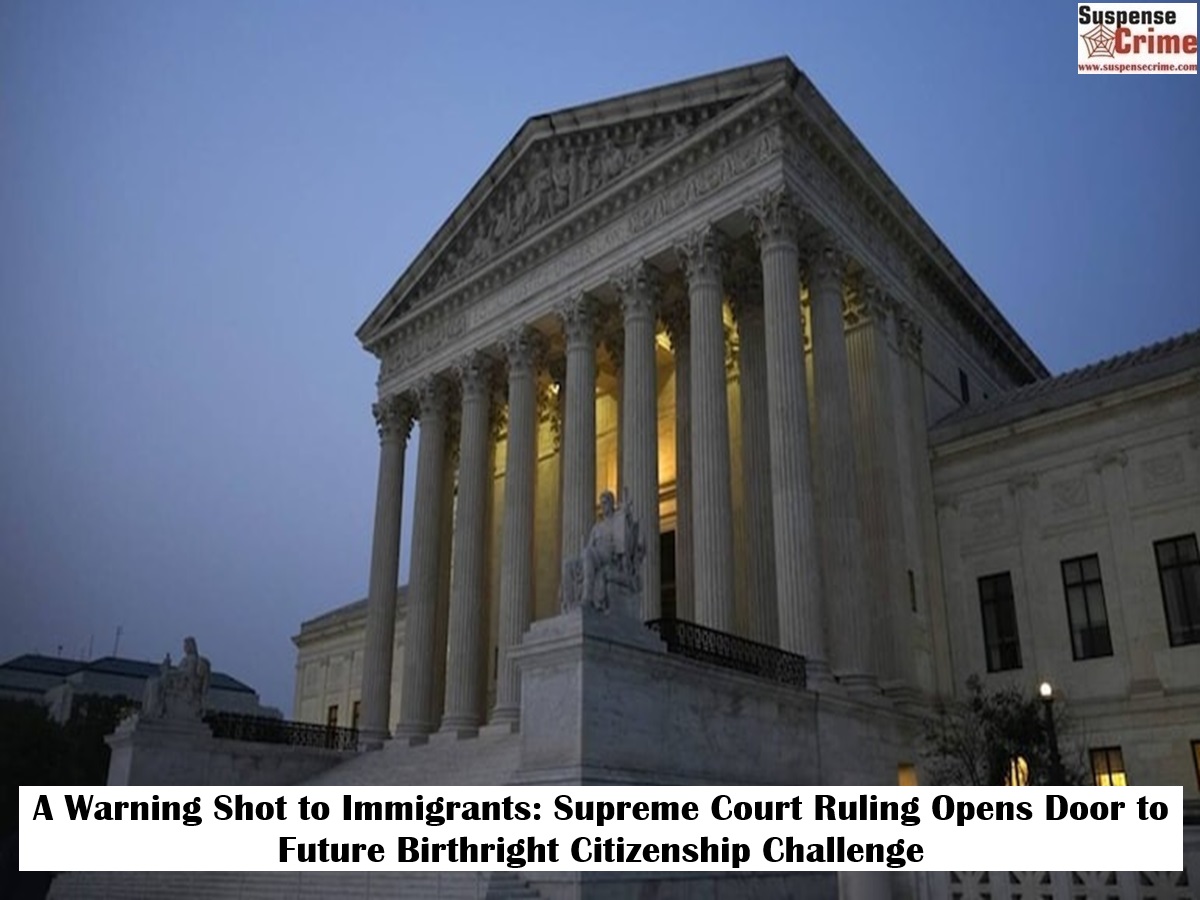
Suspense crime, Digital Desk : In a decision with immediate and potentially far-reaching consequences for immigrants, the U.S. Supreme Court has handed the government a victory in a deportation case while simultaneously signaling that the constitutional guarantee of birthright citizenship could be in future jeopardy.
The court's 5-4 ruling in Campos-Chaves v. Garland dealt with a technical but crucial issue: the notification process for deportation proceedings. The court decided that the government does not have to provide all the necessary information in a single "notice to appear." Instead, it can send the details in multiple documents. This decision effectively closes a legal loophole that some non-citizens had used to challenge their deportation orders, making it harder for them to fight removal from the country.
However, the most explosive part of the ruling came not from the decision itself, but from a concurring opinion written by conservative Justice Neil Gorsuch. While he agreed with the outcome, he used the opportunity to launch a direct challenge against the long-standing principle of birthright citizenship.
Gorsuch questioned the validity of the landmark 1898 Supreme Court case, United States v. Wong Kim Ark, which affirmed that the 14th Amendment grants citizenship to nearly all individuals born on U.S. soil, regardless of their parents' immigration status. He described the precedent as being on "shaky ground" and suggested it was an open question that the court should reconsider.
This "warning shot" from a sitting justice gives a potential legal roadmap to political movements aiming to end birthright citizenship. It aligns with campaign promises from figures like Donald Trump, who has vowed to end the practice via executive order if elected.
Justice Ketanji Brown Jackson, writing for the dissenting liberal justices, sharply rebuked Gorsuch's opinion. She called his commentary "startling" and a profound "disruption" of a core constitutional principle that has been settled for over a century.
The ruling, therefore, has a dual impact: an immediate tightening of deportation rules for some immigrants and, more alarmingly, the opening of a new front in the battle over the very definition of what it means to be an American citizen.
Read More: Diplomatic Deadlock? Suspense Deepens as Iran Denies Secret Talks with U.S. in Islamabad