

 Priyanka Tiwari
 Share
Share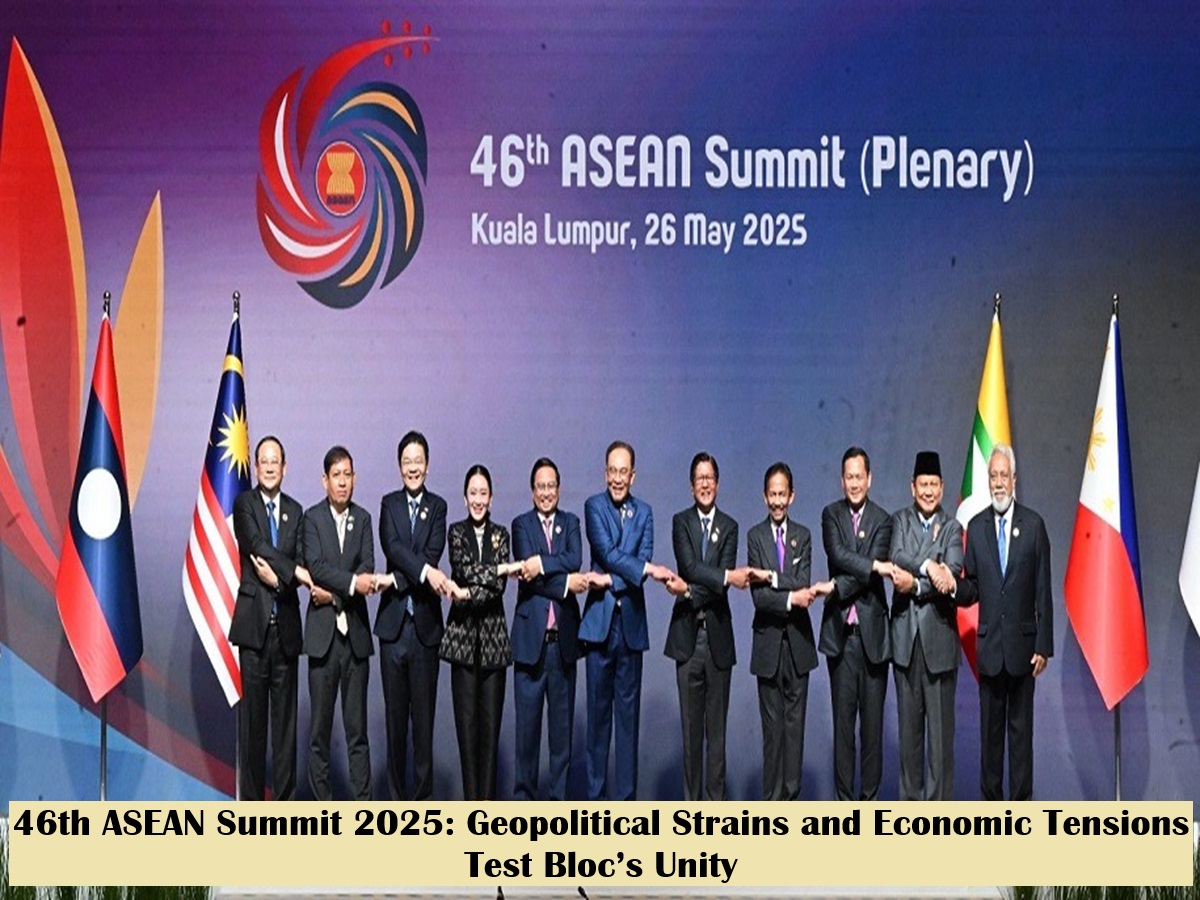
Suspense crime, Digital Desk : The 46th ASEAN Summit was held from 9 to 11 August, 2023 in Kuala Lumpur amid escalating geopolitical tensions, internal conflicts, and economic challenges. Alongside the bloc’s motto “One Vision, One Identity, One Community”, the turning point for ASEAN is predicted to be the 2025 summit, effectively deeming it the last resort for ASEAN’s future prospects.
Strategic Outlook: Conflicts Remain Tactical Priority
ASEAN centrality: Malaysia hosted the biannual summit after a decade, using the opportunity to steer ASEAN’s political-security cooperation, economic integration, and cultural relations. These elements were to be discussed within the wider context of regional security, but were heavily impacted by the ongoing South China Sea naval skirmishes.
Recent Southeast Asian escalatory incidents have included a Chinese water cannon attack on a Philipino vessel, as well as the deployment of the NMESIS missile system by the US to the Northern Phillipines. KAMANDAG multilateral military exercises between the US, Phillipines, Japan and South Korea underscore the relentless militarization of the surrounding waters.
ASEAN has long been held back by their inability to reach consensus on the unfulfilled South China Sea Code of Conduct showcasing the dire need for a pro-active shift in the bloc’s approach to diplomacy. While ASEAN Laos and Cambodia lean towards a pro-China defiance, Vietnam and the Philippines regard the fostering of defense collaboration with the US as constructive.
Economic Friction: The Tariff Challenge
U.S. tariffs imposed under President Trump are adding to security concerns contradictions towards ASEAN’s economic stability. Cambodia faces tariffs as high as 49% while Singapore incurs 10%, primarily affecting exports of electronics, textiles and agriculture. These policies threaten years of cooperation within the regional supply chain.
Malaysia, under the leadership of Prime Minister Anwar Ibrahim, has proposed collective ASEAN action to counter the tariffs. While some ASEAN members seek bilateral talks, others pursue new trading relationships, especially with China, India, and the EU. Malaysia is also advancing alongside RCEP and other initiatives, along with the framework documents for the national development vision to aid regional cohesion.
ASEAN’s paralysis on Myanmar
The summit once more revealed ASEAN’s inability to deal constructively with the Myanmar crisis. After many attempts to propose some form of negotiation between the military junta and the sides in opposition, the creation of a permanent ASEAN representative is no widely accepted proposition. The confrontational situation and active armed conflict in Myanmar has worsened to full-scale civil war leaving over 3.5 million people displaced alongside hundreds of drowning in refugee maritime incidents.
Thailand backs “constructive engagement”, whereas Malaysia is more in favor of a delicate ceasefire. Malaysian foreign Minister Mohamad Hasan is set to travel to Myanmar to kickstart negotiations. ASEAN remains decisively divided with their lack of coordinated effort.
Europe Expands Focus On The Indo-Pacific
Europe is expanding its presence in the Indo-pacific, all while the US and China compete with each other. After Macron's visit with Vietnam, France issued 14 agreements which further asserted Vietnam's emerging role in the countries regional diplomacy. Macron is also visiting Indonesia and Singapore, before his address at the Shangri-La Dialogue. It looks like he is attempting to shift the perception of France and Italy as counterbalancing powers in the region.
Germany appears to be joining the race as well, forging more relationships with ASEAN. They recently signed a defense agreement with the Philippines. Canada has shown interest for the region too and is considering changing focus for regional defense cooperation in ASEAN, which goes beyond traditional economic interests.
Read More: Donald Trump Sparks Fury After Sharing Controversial Hellhole Post Targeting India