Trump, Putin, Xi Set for High-Stakes Trilateral Talks
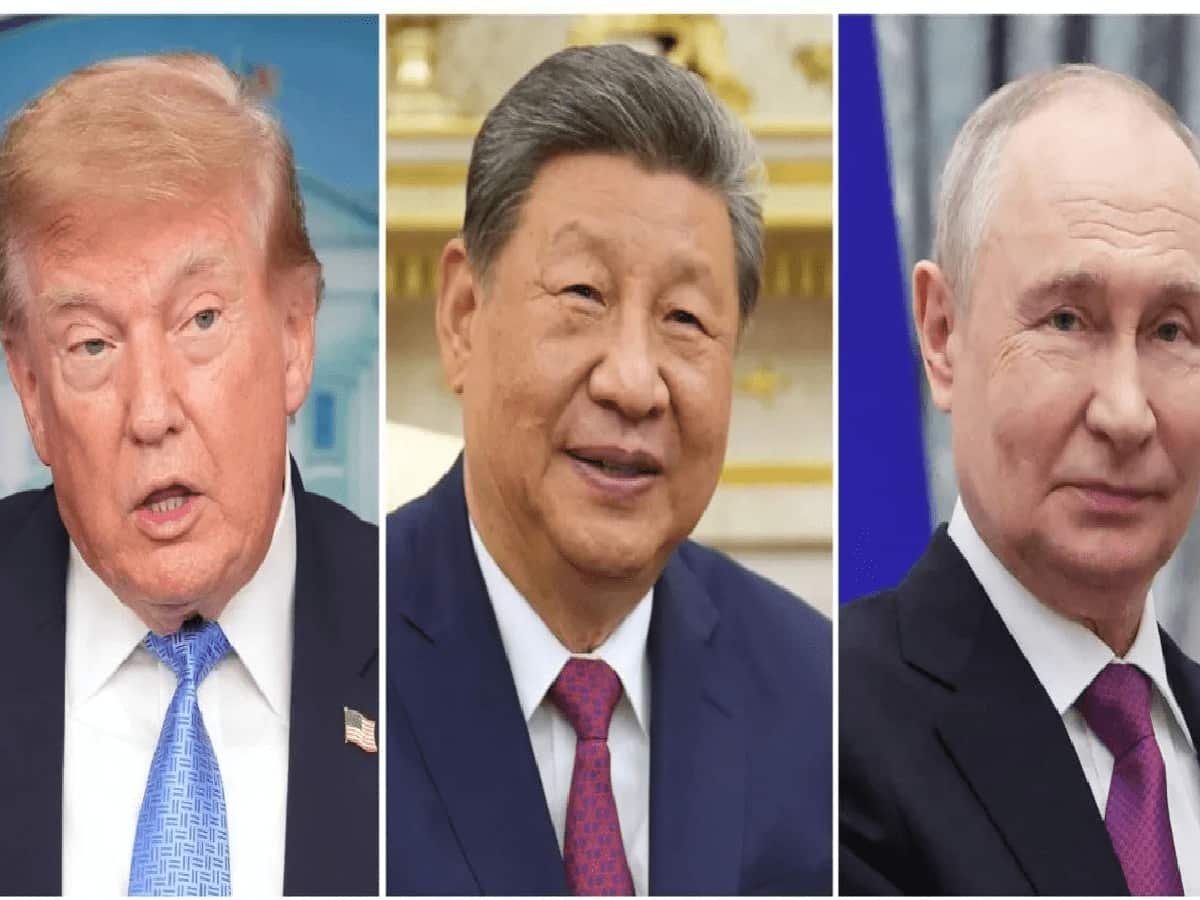
Global geopolitics is set to witness a defining moment as leaders from three of the world's most influential superpowers prepare to sit across the table. US President Donald Trump, Russian President Vladimir Putin, and Chinese President Xi Jinping are scheduled to hold high-stakes trilateral discussions on the sidelines of the Asia-Pacific Economic Cooperation (APEC) summit hosted in Shenzhen, China. As international diplomacy navigates intense turbulence caused by escalating conflicts in the Middle East and shifting strategic alignments, this rare summit has captured the undivided attention of global policymakers, security experts, and financial markets alike.
While observers anticipated a sweeping agenda covering every major geopolitical flashpoint, senior diplomatic sources have confirmed a focused and strategic scope for the meeting. The leaders will concentrate heavily on the ongoing war involving Iran, regional stability in West Asia, and critical frameworks for global nuclear arms control. However, diplomatic insiders have explicitly ruled out any discussion regarding the protracted conflict in Ukraine during this specific trilateral forum.
Why the Ukraine Conflict Will Not Feature on the Agenda
The exclusion of the Ukraine conflict from the Shenzhen trilateral agenda has sparked intense debate among international relations analysts. Just prior to these meetings, high-level diplomatic tracks involving the United States, Ukraine, and Russia took place in Abu Dhabi in a bid to find a diplomatic off-ramp for the European war that began in February 2022. Recent reports indicate that complex territorial proposals—including discussions surrounding the mineral-rich eastern Donbas region in exchange for security frameworks—remain intensely contentious, with Ukrainian President Volodymyr Zelenskyy firmly opposing any cession of sovereign territory without robust international security guarantees.
Despite Beijing repeatedly offering to act as a mediator between Moscow and Kyiv—an overture welcomed by Russia—China remains outside the primary diplomatic negotiation framework for the European crisis. Highlighting this diplomatic reality, a senior US official speaking to AFP explained the deliberate omission: "I think the president does intend to talk about Iran in the trilateral meeting with Xi Jinping and Vladimir Putin. China is not really a part of that track [Ukraine], so it doesn't seem appropriate to have the Ukraine discussion there." By streamlining the agenda, Washington aims to focus the trilateral summit strictly on arenas where all three nations hold direct stakes and overlapping strategic interests.
The Centerpiece: Navigating the Iran War and West Asian Stability
With the Middle East grappling with a severe security and humanitarian crisis following the outbreak of hostilities involving Iran earlier this year, the conflict will serve as the primary geopolitical anchor of the Shenzhen talks. Both China and Russia maintain deep economic, diplomatic, and strategic ties with Tehran, viewing Iran as a vital partner in countering Western influence across the Eurasian and West Asian landscapes.
Since the military escalation began, Beijing and Moscow have consistently urged immediate de-escalation, opposing unilateral military actions while pursuing diplomatic channels. While Russia has adopted a vocal, highly proactive posture regarding regional security architectures, China has consistently championed multilateral diplomatic resolutions. Because both superpowers possess substantial diplomatic leverage with Tehran and critical energy stakes in the region, US and allied leadership view direct trilateral engagement as essential to preventing further spillover and stabilizing global petroleum supply lines.
Nuclear Arms Control and AI Regulation on the Global Stage
Beyond active regional conflicts, the trilateral summit will venture into the critical realm of global strategic stability and non-proliferation. White House spokeswoman Olivia Wales confirmed that President Trump intends to press for substantive dialogues on reducing global nuclear arsenals. "The president has made it clear that, among other topics, he will discuss the reduction of nuclear weapons in the world, whose proliferation President Trump believes is very dangerous," Wales noted, as cited by international news outlets.
Furthermore, discussions are expected to break new ground by addressing the intersection of modern technology and military deterrence. As artificial intelligence rapidly reshapes defense infrastructure, the three nuclear-armed superpowers will explore preliminary guardrails and regulatory frameworks concerning the integration of AI into nuclear command, control, and communication systems. Preventing automated miscalculations and establishing clear protocols for AI-driven defense mechanisms represent an urgent priority for global security.
A Pivotal Turning Point for Multilateral Diplomacy
As Donald Trump, Vladimir Putin, and Xi Jinping convene in Shenzhen, the outcome of their dialogue will reverberate far beyond the Asia-Pacific region. By tackling high-consequence issues like the Iran war and nuclear risk reduction while pragmatically sidelining deadlocked European tracks, the trilateral summit offers a rare window for superpower pragmatism. Whether this high-level engagement translates into concrete diplomatic breakthroughs or merely establishes vital communication channels amidst global turmoil, the world will be watching closely as these three leaders shape the trajectory of twenty-first-century geopolitics.