










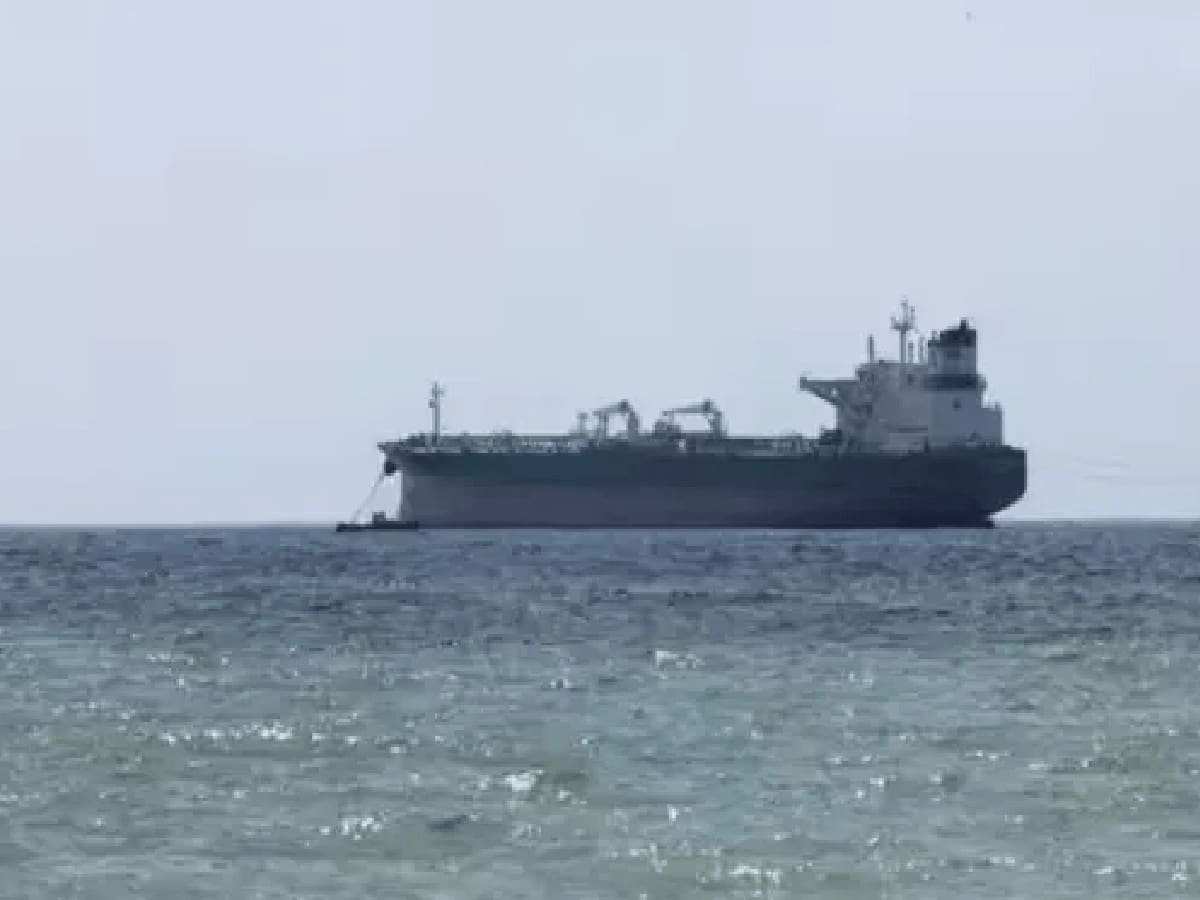
Strait of Hormuz Tensions Flare: Ship Struck Off UAE Coast
Security alerts across the Gulf of Oman and the Strait of Hormuz escalated sharply on Tuesday, November 24, 2026, after the United Kingdom Maritime Trade Operations (UKMTO) confirmed that an anchored bulk carrier caught fire after being struck by an unidentified projectile off the coast of the United Arab Emirates. According to UKMTO's advisory, the strike hit the vessel's port (left) side while it was anchored at the Dibba Outer Port Limits (OPL), roughly 23 nautical miles northeast of Khor Fakkan. Although the impact sparked an onboard blaze, crew members escaped without reported casualties, and regional maritime authorities launched an investigation while advising passing merchant ships to transit with heightened caution. The incident unfolded just hours after Iran's Islamic Revolutionary Guard Corps (IRGC) Navy claimed that three oil tankers suffered explosions and fires after hitting naval mines in the Strait of Hormuz—and issued a stark warning that commercial vessels ignoring Iranian maritime traffic instructions would face severe consequences even under US military escort. For Indian energy markets, exporters, and diaspora families across northern India—including households in Lucknow and neighboring Uttar Pradesh cities such as Unnao, Kanpur, Prayagraj, and Varanasi, where millions have relatives working across the UAE and Gulf states and where any disruption in Hormuz shipping directly influences crude oil prices and remittance corridors—events along this vital sea lane carry immediate economic and personal relevance.
Details of the Khor Fakkan Strike and Unverified IRGC Mine Claims
The latest sequence of maritime incidents underscores how precarious commercial navigation has become near the southern approaches to the Strait of Hormuz—a narrow chokepoint through which roughly a fifth of global seaborne petroleum liquids transit:
| Maritime Development | Reported Location & Key Facts | Verification & Official Status |
| Bulk Carrier Projectile Strike | 23 nautical miles northeast of Khor Fakkan, UAE (Dibba Outer Port Limits); unknown projectile struck port side of anchored bulk carrier, causing an onboard fire. | Reported by UKMTO; no crew casualties confirmed; investigation underway and vessels urged to exercise caution. |
| IRGC Claim of Three Mined Tankers | Strait of Hormuz (reportedly southern and eastern stretches); IRGC Navy claimed three "violating" oil tankers struck naval mines and caught fire despite US aerial/naval escort. | Broadcast via Iranian state media (IRNA / Tasnim); not independently verified by international naval coalitions or ship-tracking registries. |
| IRGC Navigation Warning | Issued to shipping companies, vessel owners, and ship masters transiting the Strait of Hormuz. | IRGC warned that using unauthorized corridors or ignoring its naval traffic control instructions—even with US escort—will be treated as hostile collusion. |
Why Iran's Warning Raises Stakes for Global Shipping and Energy Markets
In its statement carried by state media, the IRGC Navy insisted that relying on American military protection does not exempt merchant ships from complying with Iranian maritime directives in the Strait of Hormuz, warning that non-compliance would be met with decisive action. Maritime risk analysts point out that the waters off Khor Fakkan and Fujairah serve as one of the world's busiest anchorage, bunkering, and crew-change hubs just outside the Strait—meaning even isolated projectile strikes or mine warnings can drive up war-risk insurance premiums, delay tanker schedules, and inject fresh volatility into global crude oil benchmarks.
Parallel Diplomatic Push: Eighth Qatar–US Strategic Dialogue in Washington
As maritime friction intensified in the Gulf, top diplomats convened in Washington, D.C. on November 23 to co-chair the Eighth Qatar–United States Strategic Dialogue. Qatar's Prime Minister and Minister of Foreign Affairs Sheikh Mohammed bin Abdulrahman Al-Thani and US Secretary of State Marco Rubio reviewed rapidly evolving regional security developments, reaffirmed defense and energy cooperation—including liquefied natural gas supply resilience—and emphasized closer diplomatic coordination to deter threats, revive de-escalation channels, and safeguard stability across the Middle East.






