










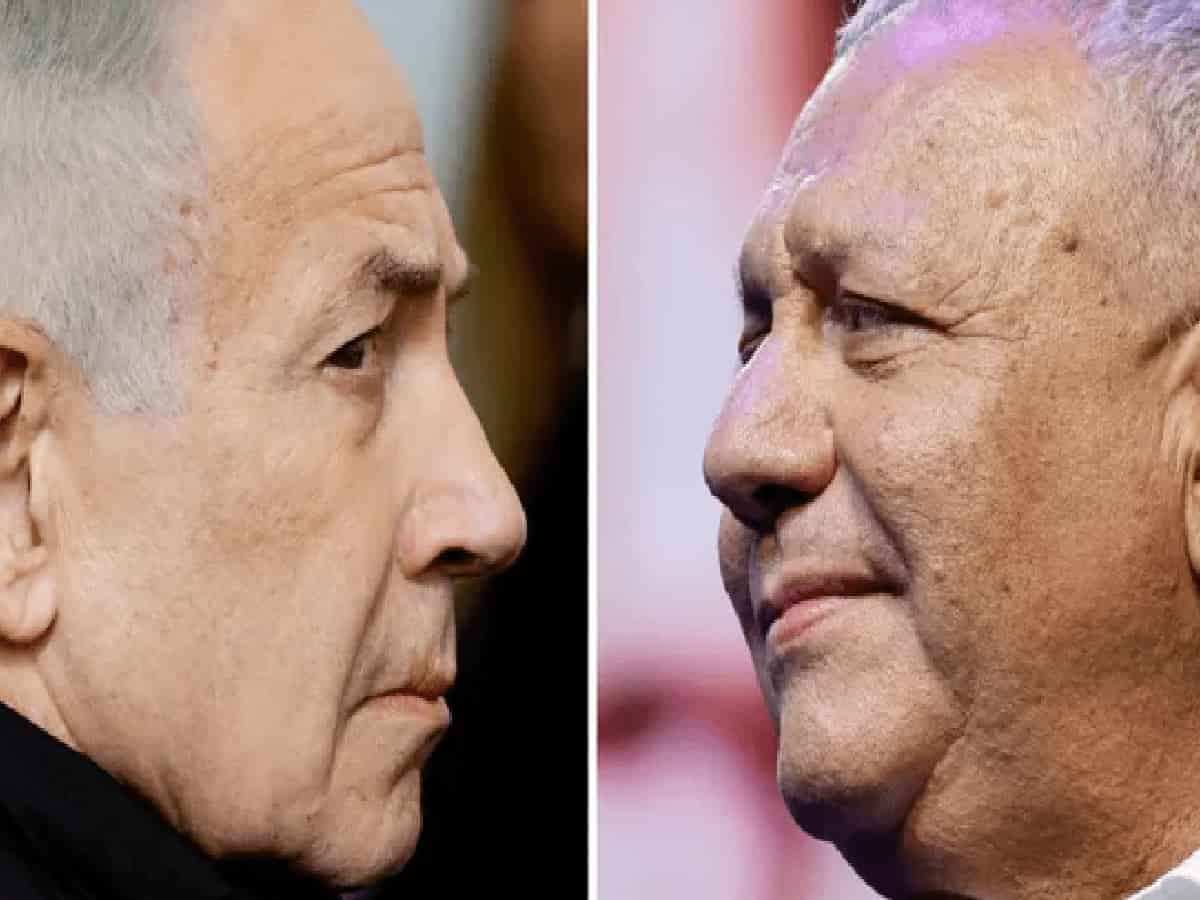
Netanyahu Floats 'Second PM' Rotation Offer to Break Israel Deadlock
A month after Israel's October 27, 2026 general election produced a hung parliament, Israeli politics has entered a tense endgame as Prime Minister Benjamin Netanyahu reportedly weighs an extraordinary power-sharing concession: offering Yashar Party Chairman Gadi Eisenkot the premiership first under a rotation agreement, while Netanyahu himself steps into the role of second prime minister. According to reports by Israeli outlets Channel 13 and The Times of Israel, the potential unity-government formula is emerging as caretaker Prime Minister Netanyahu faces narrowing paths to retain power. State broadcaster Kan reported that the feeler was routed to Eisenkot through informal channels—a backchannel approach analysts say gives Netanyahu's Likud party plausible deniability if talks collapse, even as officials in the Prime Minister's Office acknowledge sharp divisions inside Netanyahu's own inner circle over the terms. With Eisenkot's 28-day mandate from President Isaac Herzog set to expire on December 6, 2026 (unless extended by 14 days), the central question gripping Tel Aviv and Jerusalem is whether Eisenkot will take the bait—or whether years of broken political bargains and fundamental policy clashes over an October 7 state commission of inquiry and universal military conscription will sink the deal. Across Uttar Pradesh—especially in state capital Lucknow and neighboring centers such as Unnao, Kanpur, Prayagraj, and Varanasi, where readers closely follow Middle East geopolitics and India's strategic ties with Israel—the outcome of this coalition chess match will shape regional diplomacy heading into 2027.
Knesset Seat Mathematics and the December 6 Coalition Deadline
Following the October 27, 2026 election, neither Netanyahu's right-wing bloc (53 seats) nor Eisenkot's opposition camp (48 seats) secured the 61 seats required for a majority in the 120-member Knesset, leaving Arab-led parties (19 seats) holding decisive parliamentary arithmetic:
| Political Bloc / Factor | Parliamentary Numbers & Coalition Dynamics |
| Majority Threshold | 61 seats required in the 120-member Knesset to swear in a new Israeli government. |
| Eisenkot's Four-Party Bloc | Commands 48 seats across Yashar (21 seats), Avigdor Lieberman's Yisrael Beytenu (7 seats), Yair Golan's The Democrats, and Naftali Bennett's B'Yachad. |
| Netanyahu's Right-Wing Bloc | Holds 53 seats—short of 61 unless Likud splits the opposition or brings in new partners. |
| Eisenkot's Alternative Paths | Without Likud, reaching 61 requires backing from Arab-majority parties (such as Ra'am), ultra-Orthodox (Haredi) factions, or both. |
| Constitutional Clock | Eisenkot's mandate runs until December 6, 2026, with a possible 14-day extension from President Isaac Herzog; if he fails, Netanyahu gets a turn before repeat elections are triggered. |
Ploy or Breakthrough? Opposition Skepticism Meets Pressure From Naftali Bennett
Within the anti-Netanyahu camp, news of the informal "second PM" offer has been met with fierce suspicion. Yisrael Beytenu Chairman Avigdor Lieberman—who already signed a bilateral coalition deal with Eisenkot alongside The Democrats leader Yair Golan—warned on social media platform X that Netanyahu's proposal is a calculated political trap designed to stall Eisenkot's coalition-building until December 6 and force another election. While Eisenkot has assured both Lieberman and Golan that he will not enter a government with Netanyahu without their consent, internal pressure is building from former Prime Minister Naftali Bennett, whose B'Yachad party favors exhausting every avenue for a broad unity government with Likud—with Channel 13 reporting Bennett could even vote against an Eisenkot-led coalition if serious unity negotiations are bypassed.
Eisenkot's Red Lines: October 7 State Inquiry, Ultra-Orthodox Draft, and No 'Sham' Deal
On Friday, November 27, 2026, Gadi Eisenkot—a former IDF Chief of Staff—made clear that while he remains open in principle to a genuine unity government, Likud has shown no serious intent, holding only five negotiating sessions over two weeks. Rejecting Likud's current framework as "the same old government and the same old partners" with no real policy shift, Eisenkot declared he will not lend his name to a "sham" arrangement and laid down three non-negotiable conditions:
-
State Commission of Inquiry Into October 7: Establishing an independent, statutory state commission of inquiry into the political and security failures surrounding the October 7, 2023 Hamas attack—a step Likud has consistently resisted.
-
Universal Mandatory Military or National Service: Passing binding legislation requiring mandatory military or national service for all Israeli citizens, ending sweeping exemptions for ultra-Orthodox (Haredi) yeshiva students—a demand Likud has struggled to accept because it refuses to abandon its ultra-Orthodox allies.
-
Excluding Extremist Factions: Removing hardline extremist elements from key governing portfolios to restore institutional stability.
With memories still fresh of previous Israeli rotation agreements that collapsed before the second partner ever took office, the standoff in Jerusalem hinges less on parliamentary arithmetic than on credibility. Unless Netanyahu agrees to substantive concessions on conscription and an October 7 inquiry—or Eisenkot bridges the gap with Arab-led or ultra-Orthodox factions before December 6—Israel risks sliding straight back toward another costly election cycle.






