UP BJP Chief Pankaj Chaudhary Issues Warning to Rebels
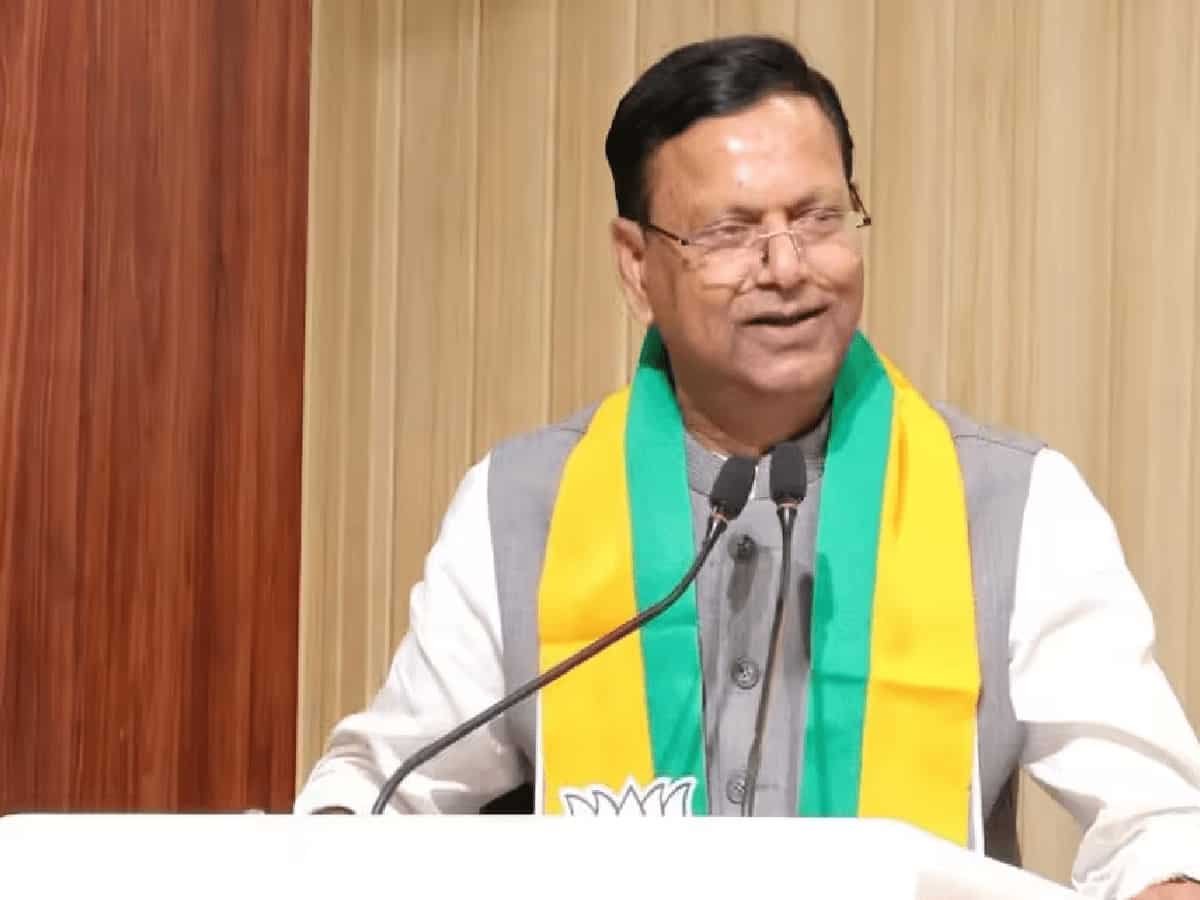
As political temperatures steadily rise across Uttar Pradesh in anticipation of upcoming electoral battles, political posturing and internal party discipline have taken center stage. Addressing potential dissent and rumors of internal factionalism, Uttar Pradesh Bharatiya Janata Party (BJP) President and Union Minister of State for Finance Pankaj Chaudhary has issued an unyielding, direct message to anyone contemplating internal rebellion or leaving the party fold.
In a candid interaction with journalists during his visit to Kannauj, Chaudhary asserted that the BJP operates on a rigorous ideological foundation distinct from conventional dynastic parties. Delivering a blunt assessment of political history, he declared that any leader who chooses to break away from the BJP organization inevitably witnesses the collapse of their political existence.
The Ideological Anchor: Why BJP Rebels Fail
Pankaj Chaudhary's stern remarks were rooted in the unique structural and philosophical framework of the ruling party. Emphasizing that the BJP is fundamentally an "ideology-based party" powered by grassroots volunteers and dedicated cadres, he contrasted its survival mechanism with other regional and national formations.
"Look at the existence of those who have separated from the organization and formed parties," Chaudhary challenged reporters. Pointing to the broader Indian political landscape, he noted that while splinter groups originating from other traditional parties—such as the Trinamool Congress (TMC) or the Nationalist Congress Party (NCP)—managed to carve out independent spaces, the political trajectory for individuals cutting ties with the BJP tells a starkly different story.
According to the UP BJP chief, personal ambition detached from collective organizational discipline cannot endure in the long run. "The Bharatiya Janata Party is an ideology-based party. Our workers work on ideas. If you deviate from that ideology, you will not be able to survive," he added, underscoring that within the BJP's ecosystem, the organization always remains paramount above any individual leader.
Dismissing Rumors Over the Alleged "209 Seats" Candidate List
Beyond addressing internal discipline, Pankaj Chaudhary took direct aim at swirling media rumors regarding purported candidate lists for the upcoming state assembly elections. Recent speculation had suggested that a tentative list featuring 209 candidates was already circulating within political circles, triggering intense anxiety and speculation among aspirants.
Categorically dismissing the reports as completely baseless, Chaudhary stated that he had no knowledge of the origin of such claims. "This is completely untrue. As the state president, I have not had any meeting regarding this," he clarified firmly.
By putting the rumors to rest, the state leadership sought to preempt premature factional lobbying and maintain focus on grassroots governance and organizational consolidation.
Transparent Ticket Distribution: The BJP's Structured Process
To counter notions of arbitrary decision-making, Chaudhary elaborated on the democratic and multi-layered protocol the BJP follows when selecting election candidates. Unlike family-run political outfits where leadership tickets are distributed through centralized family fiat, the BJP relies on institutionalized collective deliberation.
Detailing the procedural roadmap, Chaudhary explained:
Grassroots Feedback: The selection process begins at the foundational level, gathering feedback, local inputs, and suggestions directly from district units.
Regional Review: Recommendations from districts are forwarded to regional committees for deeper evaluation of winnability and local equations.
State Core Committee: The proposals are subsequently vetted by the state-level core committee and election committee through extensive consultations.
Central Parliamentary Board: Final recommendations are transmitted to New Delhi, where the party's apex parliamentary board grants final approval.
"The Bharatiya Janata Party is not a family party where one person can make decisions. Here, decisions are made collectively after consultation and discussion with everyone," Chaudhary emphasized, framing institutional transparency as the party's core strength.
Reinforcing Party Unity Ahead of Elections
Pankaj Chaudhary’s dual message—combining a sharp ideological warning against political desertion with a transparent walkthrough of the candidate selection process—serves a vital strategic purpose. As Uttar Pradesh marches toward high-stakes electoral contests, the state leadership is moving aggressively to enforce party discipline, minimize internal friction, and project a united, organized front capable of weathering any political storm.