Prayagraj Khusrobag Water Plant Goes Solar to Cut Costs
In a major milestone toward sustainable urban infrastructure and fiscal prudence, the Jalkal Department in Prayagraj has initiated a transformative green energy project. The vital Khusrobag Water Treatment Plant is transitioning to solar power, a move designed to slash exorbitant monthly electricity overheads, reduce carbon footprints, and ensure that clean drinking water reaches hundreds of thousands of residents without disruption, even during unexpected grid power outages.
The ambitious initiative highlights how municipal bodies across Uttar Pradesh are increasingly leveraging renewable energy technologies to optimize resource management, insulate civic services from power fluctuations, and deliver sustainable governance to local communities.
A 1.2 Megawatt Solar Plant Project Nears Completion
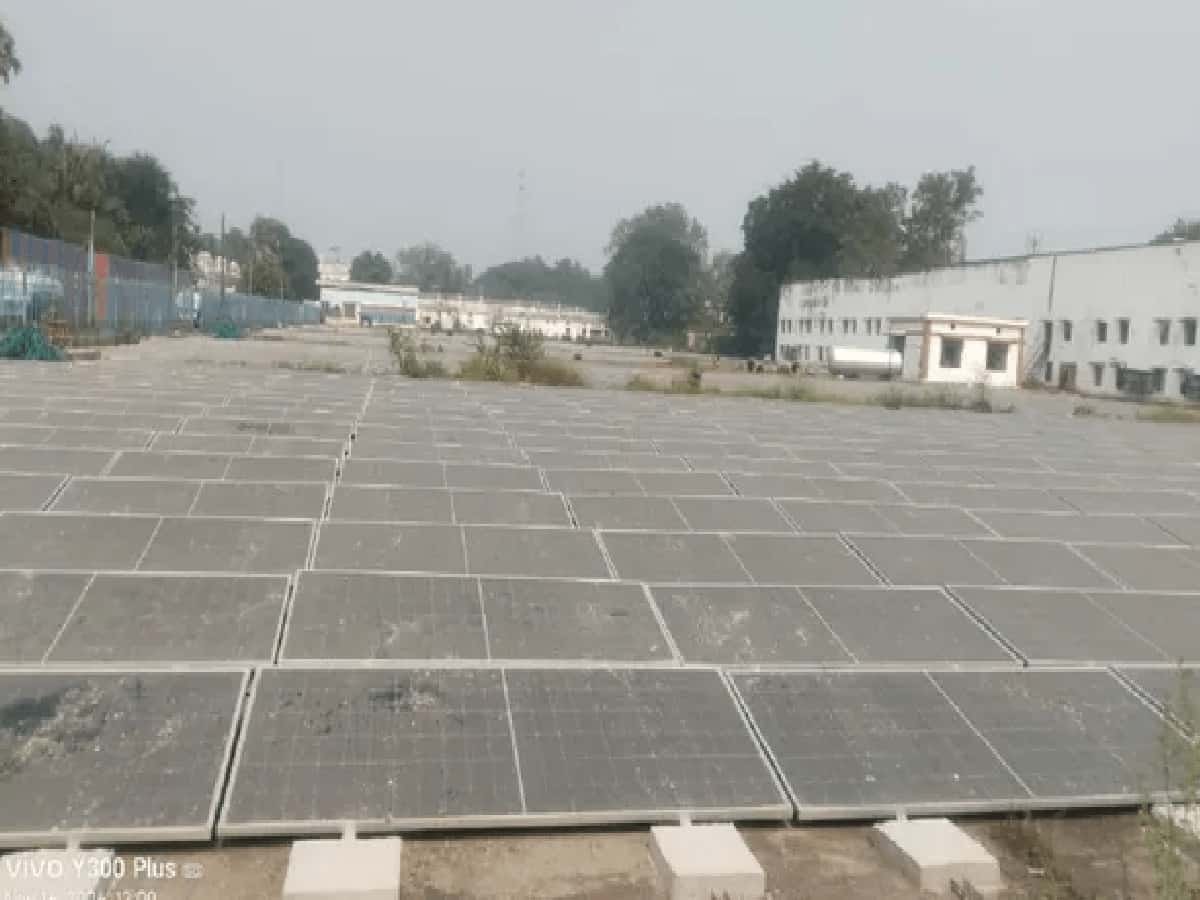
To power the sprawling water treatment facility efficiently, a robust 1.2 megawatt (MW) solar plant is currently being installed on the premises. According to municipal authorities, installation work is progressing at a rapid pace, with solar panels already erected across an expansive area spanning more than five bighas of land located directly in front of the Khusrobag water treatment complex.
Project engineers have confirmed that the transition phase is in its final stages. The solar-powered water treatment plant is slated to become fully operational within the next one to one and a half months, marking a new chapter in smart municipal management for the historic city of Prayagraj.
Massive Financial Savings and Relief for the Jalkal Department
Operating a massive municipal water purification plant entails continuous, heavy-duty pumping and filtration machinery, resulting in staggering monthly electricity bills. By shifting the primary energy burden from conventional grid electricity to clean solar generation, the Jalkal Department anticipates unprecedented savings.
Industry estimates and departmental projections indicate that the solar transition will yield recurring savings of approximately ₹20 lakh to ₹30 lakh every single month in electricity expenditures. These substantial financial savings can subsequently be reallocated toward expanding water pipeline networks, repairing aging infrastructure, and enhancing overall civic amenities across Prayagraj.
Furthermore, under the operational framework of the project, the specialized agency contracted to install the solar infrastructure will also manage its upkeep and operation for an impressive span of 25 years, guaranteeing long-term technical reliability and seamless performance without imposing immediate maintenance burdens on the municipal corporation.
Serving 250,000 Residents Across 30 Wards in Prayagraj
To understand the immense scale and strategic importance of this upgrade, one must look at the water distribution metrics of Prayagraj. The city registers a total daily water consumption of approximately 403 MLD (Million Litres per Day). While the Jalkal Department operates over 650 tube wells across urban pockets, the centralized Khusrobag facility serves as a primary pillar of the municipal distribution architecture.
Plant Capacity: The water treatment plant possesses a total purification capacity of 130 MLD.
Daily Supply Volume: The facility routinely pumps and supplies around 80 MLD of purified drinking water.
Coverage Area: Treated water from the Khusrobag plant is piped directly to 30 distinct administrative wards, catering to a massive population of over 250,000 residents.
Because the plant supports a quarter of a million citizens, any disruption in its operation historically caused widespread inconvenience. With the integration of solar power backed by advanced energy storage or direct daytime generation syncing, the facility achieves complete operational resilience.
Uninterrupted Water Supply Even During Power Cuts
One of the most significant practical benefits for local residents is the elimination of water supply disruptions caused by frequent grid failures, transformer faults, or scheduled maintenance shutdowns by power distribution companies.
Traditionally, whenever a grid outage occurred, pumping operations ground to a temporary halt, affecting pressure levels across connected wards. With the new 1.2 MW solar installation providing clean, captive energy on-site, the plant can maintain continuous operational flow.
Sanjeev Kumar, General Manager of the Jalkal Department in Prayagraj, emphasized the long-term vision behind the project: "The Khusrobag Water Treatment Plant will begin operating on solar energy in a month or so. This is expected to save approximately 20 to 30 lakh rupees in electricity bills each month, while ensuring that our citizens receive an unhindered, reliable water supply regardless of external power grid fluctuations."
As Prayagraj continues to modernize its civic infrastructure ahead of major regional milestones, the successful commissioning of the Khusrobag solar water plant sets a stellar benchmark for urban municipal bodies nationwide, proving that ecological sustainability and fiscal efficiency can go hand in hand.