

Historical Reality: Johar Was a Supporter of the Caliphate, Not India's Independence
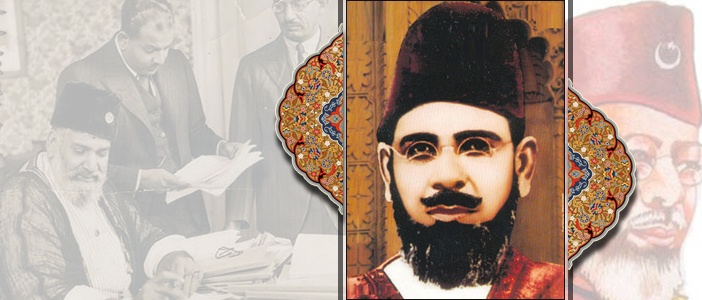
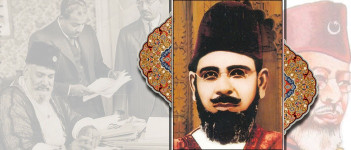
Dr. Kaustubh Aryavanshi:The university built in Rampur on the foundations of fear and corruption bears the name of a historical figure whose legacy remains deeply controversial. Many young people may not know that Maulana Mohammad Ali Johar, after whom the university was named and who is often portrayed in history books as a great freedom fighter, journalist, poet, and educationist, played a key role in bringing the Turkish Khilafat Movement into India's freedom struggle, an act that laid the groundwork for the country's eventual partition.
Born on December 10, 1878, in Rampur, Uttar Pradesh, Maulana Mohammad Ali Johar and his brother, Maulana Shaukat Ali (collectively known as the Ali Brothers), occupy a significant yet debated place in the history of both the Khilafat Movement and India's freedom struggle. At the height of the independence movement, the Khilafat Movement was merged with the Non-Cooperation Movement, with the stated objective of strengthening Hindu-Muslim unity and increasing pressure on the British government. However, historical evidence, according to this viewpoint, suggests that linking a religious movement with the national freedom struggle inflicted serious and long-term damage on both the country and the independence movement.
Religion Enters National Politics
The Khilafat Movement was active in India between 1919 and 1924. After the First World War, the British weakened the authority and empire of the Ottoman Sultan (the Caliph). Like Muslims across the world, many Indian Muslims wished to preserve the institution of the Caliphate. Maulana Mohammad Ali Johar and his brother Maulana Shaukat Ali brought the Khilafat Movement to India and became its leading figures.
It is well known that the movement's primary objective was to safeguard the position and authority of the Turkish Caliph, the spiritual leader of Islam, which was essentially a religious and international Muslim issue. When this religious cause was brought to the center of India's freedom struggle, its most significant consequence, according to this argument, was the deep penetration of religion into Indian politics. As a result, the independence movement, which had largely focused on secular and national issues such as the Rowlatt Act, the Salt Act, the Jallianwala Bagh massacre, and Swaraj, increasingly became divided along religious lines.
The Beginning of Appeasement Politics
Mahatma Gandhi and senior Congress leaders openly supported the Khilafat Movement in the hope of bringing Indian Muslims into the mainstream of the national movement. However, from this perspective, the long-term consequences proved controversial. It encouraged a culture of 'appeasement' in Indian politics, particularly within the Congress Party. The practice of giving prominence to religious issues on the national political stage for electoral or political gains took root during this period and continued to influence Indian politics for decades.
The Congress Party became so deeply entrenched in this approach that it has never fully moved away from it. Over time, regional parties such as the Samajwadi Party and the Rashtriya Janata Dal allegedly carried this tradition forward, eventually capturing the Muslim vote bank from the Congress.
The Moplah Rebellion and Communal Violence
As the Khilafat Movement gained momentum, it also witnessed several regional and violent consequences that, negatively affected Indian nationalism. The 1921 Moplah Rebellion in Kerala is cited as the most prominent example. Initially emerging as a combination of the Khilafat and peasant movements, it soon turned into violent communal riots in which Hindus were targeted. The incident, according to this perspective, created a deep and lasting mistrust between the two communities.
Diversion and End of the Non-Cooperation Movement
The merger of the Khilafat and Non-Cooperation Movements shifted the movement's focus away from securing India's independence from British rule toward restoring the Turkish Caliph. After Mahatma Gandhi withdrew the Non-Cooperation Movement following the Chauri Chaura incident in 1922, the Khilafat Movement in India also began to lose momentum.
In 1924, Mustafa Kemal Pasha, the modern leader of Turkey, abolished the institution of the Caliphate altogether. Consequently, the very objective for which Indian Muslims had been mobilized ceased to exist in Turkey itself. According to this viewpoint, India's freedom struggle gained no diplomatic or political advantage from its association with the Khilafat Movement, except that it deepened the divide between Hindus and Muslims.
Eventually Leading to Partition
The Khilafat Movement was never intended to secure India's freedom but rather to protect the position of the Turkish Caliph. For this reason, many historians have considered it a serious mistake to link India's freedom struggle with the religious-political issue of another country.
It further contends that the Khilafat Movement dealt a significant setback to Mohammad Ali Jinnah's efforts to establish himself as the undisputed leader of Indian Muslims during the freedom movement. Jinnah openly criticized Gandhi's decision to support the movement. As differences between them widened, Jinnah distanced himself from the Congress and began building an independent political base. According to this interpretation, the subsequent political developments severely damaged India's communal fabric, ultimately paving the way for the Two-Nation Theory and the partition of the country.
Why Name a University After Johar?
When history itself describes it as a grave mistake, it raises the question of whether it was appropriate to name a university in Rampur after Maulana Mohammad Ali Johar, who introduced a foreign religious movement into India simply because of his Muslim identity.
The decision reflected nothing more than the hardline ideology of Samajwadi Party leader Azam Khan. It argues that, had this not been the case, names such as Abul Kalam Azad, Param Vir Chakra awardee Abdul Hamid, or former President and Bharat Ratna Dr. A. P. J. Abdul Kalam would have been considered for the university instead.
_1785662057_351x234.jpg)