Priyanka Tiwari
 Share
Share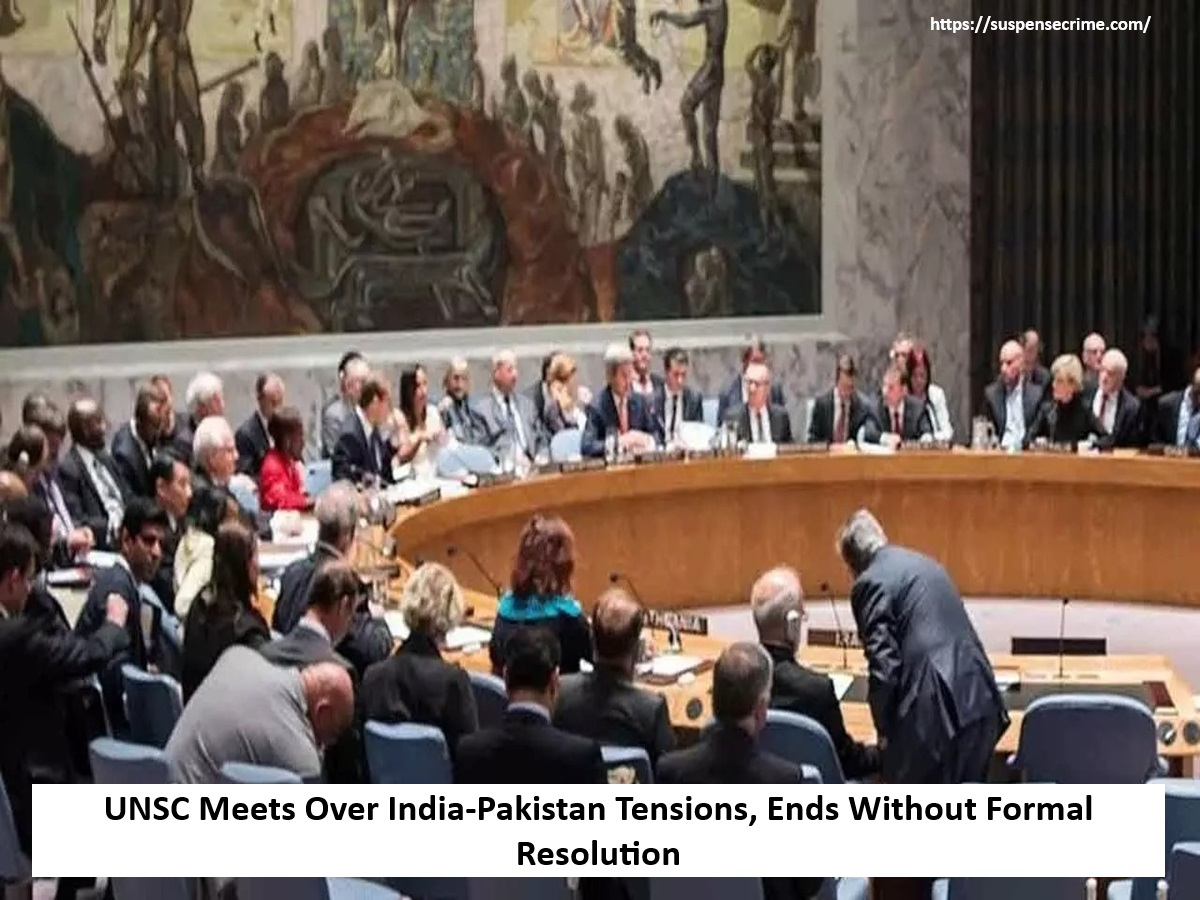
Suspense crime, Digital Desk : To consider the deteriorating relations between India and Pakistan, The United Nations Security Council held a private meeting. This meeting, colloquially termed as informal, did not result in any outcomes – statements, resolutions, or otherwise.
Pakistan’s efforts to draw the Security Council's attention did not succeed as anticipated, as former indian UN representative Syed Akbaruddin highlighted. Noting the lack of response, he praised Indian diplomacy for averting the Pakistan attempt to bring the issue to the global arena.
De-Escalation Is The Name Of The Game In The Eyes Of The Council President And UN Officials
Greek and current representative of the UNSC Evangelos Sekeris noted the meeting was “constructive and beneficial”, yet offered no tangible results. He underlined the necessity for the council to act towards de-escalation.
This session was held in a consultation room, away from the main chamber, adding to its non-official and non-agenda nature. The dialogue generated no documentation or decision.
Khiari, the UN Assistant Secretary-General who spoke to the members, relayed that all nations agreed on the need for diminished tension. The conversation did not place any blame or support in Pakistan's assertions.
Pakistan Claims India as the Cause of Tensions with Urging Action
Pakistan, which is part of the UN Security Council on a rotational basis at this time, is the one who called for the session. His representative Asim Iftikhar Ahmad focused on controlling the damage of the situation as well as strategizing how to effectively prevent further escalation.
Suspecting he could face backlash from the Pakistani side, the Indian military’s recent expansion has been a source of controversy, one that is completely succumbed to the ever-suffocating patriotism of the “Proud Indian” mindset.
UN Chief Angry at Pahalgam Terror Act
The terror act committed at Pahalgam in the Jammu and Kashmir region that took 26 lives out of which the prominent being a Nepali here drew ire from UN's chief Antonio Guterres. His speech didn't lack the fierceness of a fervent diplomat calling on both countries to keep calm.
The civilians must endure no violence inflicted on them in any form was the additional demand that bubbled to the surface making Guterres serve the agenda without even sternly suggesting military confrontation, which is definitely out of the question.
India Demands Responsibility from Global Allies
Right before the UNSC meeting Jaishankar who serves as External Affairs Minister for India, interacted with the remaining members of the Security Council apart from China and Pakistan. Strikingly while it is his responsibility to renounce violence, he summoned mandatory measures for eradication of the perpetrators amplifying violence around Pahalgam.
For context, these are the Ministers from the France, UK and USA who should suffer for assuming they can command an easy free world. That is where they should allow themselves to be called out on not putting the architects of the attacks done in Pahalgam for all us to see untouched.
Read More: Diplomatic Deadlock? Suspense Deepens as Iran Denies Secret Talks with U.S. in Islamabad