 Priyanka Tiwari
 Share
Share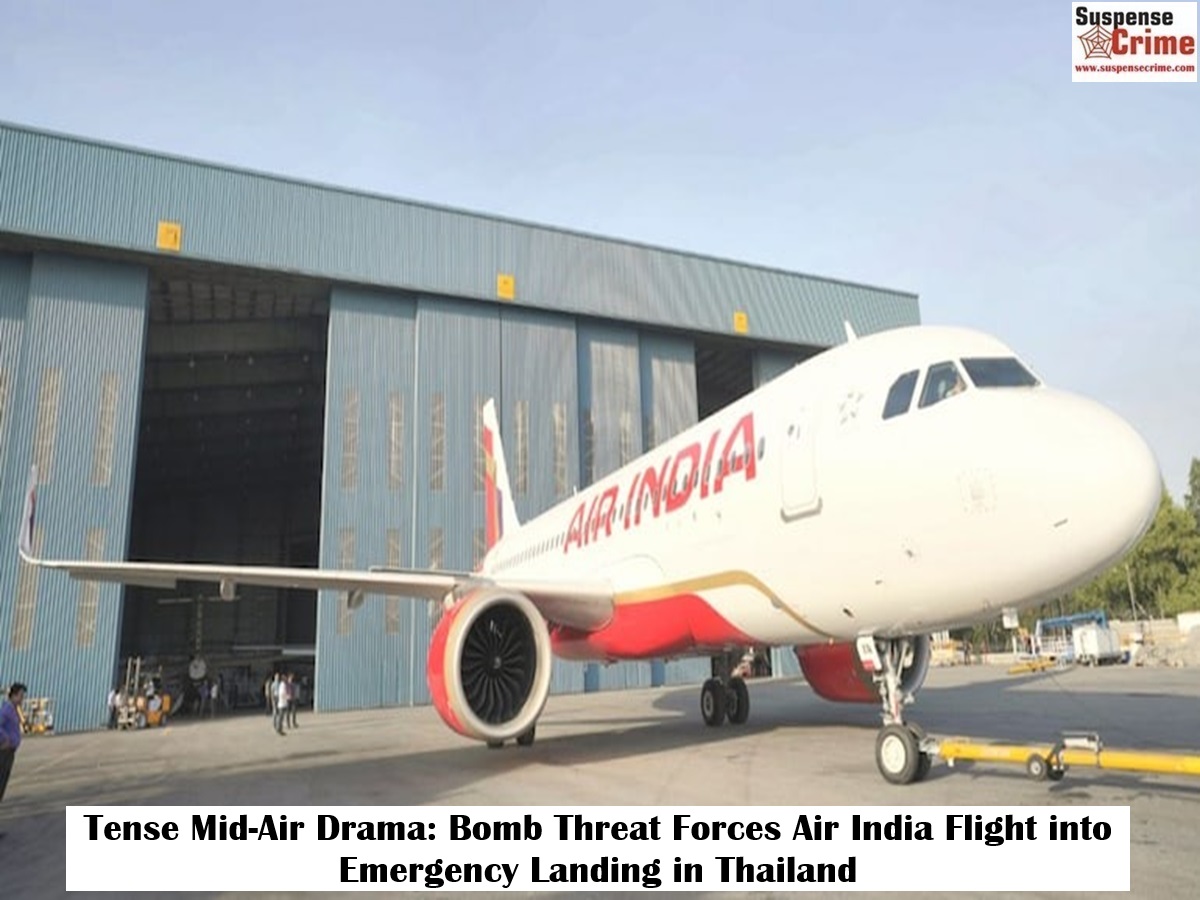
Suspense crime, Digital Desk : Passengers aboard an Air India flight from Mumbai to Bangkok experienced a harrowing ordeal on Tuesday night when a mid-air bomb threat forced the aircraft into an emergency landing in Phuket, Thailand. The swift action highlighted the rigorous safety protocols that govern international aviation, turning a potentially catastrophic situation into a safely managed, albeit disruptive, event.
The flight, AI-191, was cruising towards its destination when the crew received a notification of a possible bomb on board. In such high-stakes scenarios, there is no room for hesitation. The pilot immediately declared an emergency and diverted the plane to the nearest suitable airport, Phuket International Airport.
Upon landing safely, the aircraft wasn't directed to a typical passenger gate. Instead, following standard security procedure, it was taxied to an isolated, remote bay—a crucial step designed to contain any potential threat and protect the main airport terminal and other aircraft from harm.
All 241 passengers and 16 crew members were evacuated from the plane. On the ground, a full-scale security operation swung into action. Highly trained Explosive Ordnance Disposal (EOD) teams, alongside airport security, began a meticulous search of the entire aircraft, as well as all passenger luggage and cabin baggage.
After a thorough and painstaking inspection, the security teams found no explosives or any suspicious items. The threat was officially declared a hoax, allowing a collective sigh of relief for everyone involved. While such false alarms cause significant disruption and anxiety, the incident underscores the effectiveness of the aviation industry's safety-first approach.
Once the all-clear was given, the Air India flight was cleared to continue its journey, finally taking off for its original destination, Bangkok's Suvarnabhumi Airport, with everyone safe and sound.
Read More: Diplomatic Deadlock? Suspense Deepens as Iran Denies Secret Talks with U.S. in Islamabad