Why Does Lord Jagannath Take the Elephant Form... The Divine Legend of the 'Gaja Vesha'
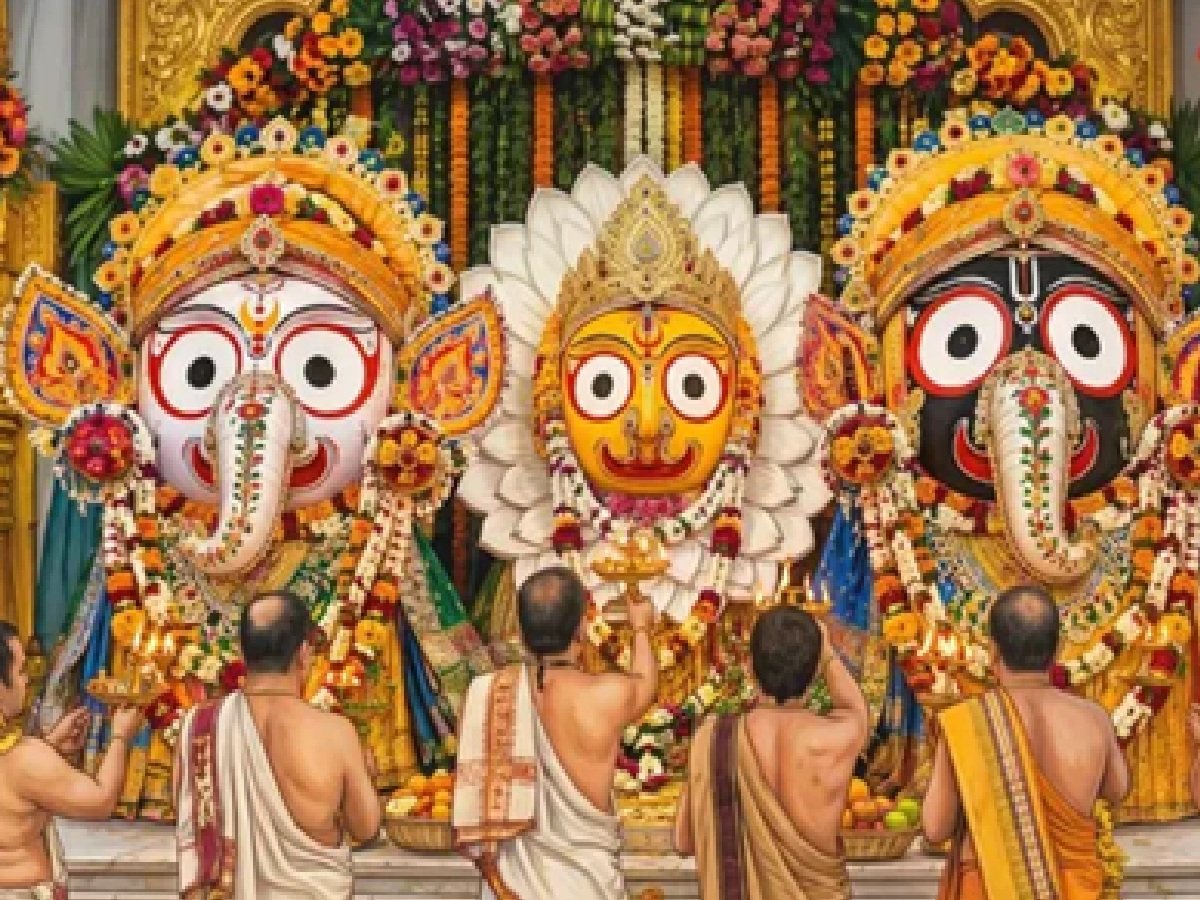
In the sacred city of Puri, the Jagannath Dham is home to traditions that are as mystical as they are ancient. Among the most revered is the Gaja Vesha—a breathtaking ritual performed annually on Dev Snan Purnima. As lakhs of devotees gather from across the globe to witness the spectacle, the deities Lord Jagannath and Balabhadra are adorned in magnificent elephant costumes, while Goddess Subhadra is beautifully dressed as a lotus. This ritual is not merely a costume change; it is a profound testament to the Lord’s infinite love for His devotees.
The Ritual of Snan Purnima
The Gaja Vesha follows the spectacular Mahabhishek (the grand bathing ritual). On Dev Snan Purnima, the triad—Lord Jagannath, Balabhadra, and Subhadra—are brought to the temple’s bathing pavilion (Snana Mandap). Here, priests perform an elaborate ritual using 108 pots of sacred water. It is only after this purifying bath that the deities are adorned in their iconic elephant attire, signifying a divine transition that attracts pilgrims who travel great distances just for a single glimpse.
The Legend of Ganapati Bhatta: A Devotee's Wish
The story behind this tradition dates back to the 15th century. A renowned scholar named Ganapati Bhatta, a staunch devotee of Lord Ganesha, traveled to Puri hoping to see his beloved deity. Upon arriving during the Snan Purnima festivities, he was disheartened to find Lord Jagannath instead of Lord Ganesha. Sensing his devotee's deep disappointment, the Lord—who is Bhaktavatsala (the one who loves His devotees)—decided to manifest in the form that his devotee craved most.
The Miraculous Manifestation
When Ganapati Bhatta returned to the temple the following morning, he was overcome with awe. Lord Jagannath had transformed into the black Gajanana (Ganesha), Lord Balabhadra appeared as a white elephant, and Goddess Subhadra sat atop a divine lotus. This miracle profoundly changed the scholar, as he realized that the Divine is formless and can assume any shape to satisfy the sincere longing of a true heart. Since that day, the tradition of Gaja Vesha has been strictly observed, reminding all of humanity that God does not care for outer appearances, but only for the purity of one's devotion.
Spiritual Significance in Sanatan Dharma
The Gaja Vesha remains a living symbol of faith, representing the core tenet of Sanatan Dharma: that while the Supreme is one, His forms are infinite. The annual event serves as a bridge between the mortal and the divine, proving that for those who offer unwavering love, the Lord is always ready to manifest in whatever form provides them peace. Today, this centuries-old tradition continues to draw millions, serving as a powerful reminder of the deep, compassionate bond between the Creator and the devotee.