










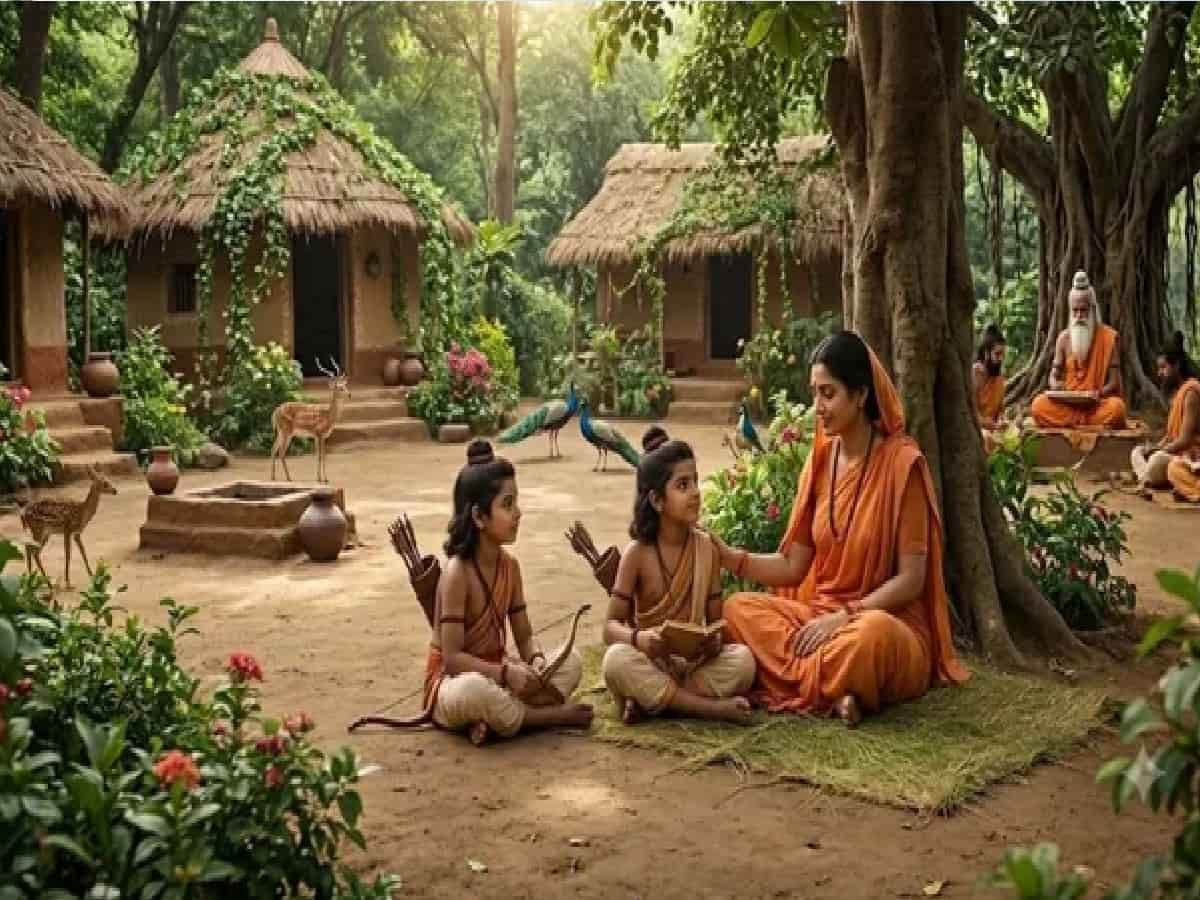
Why Ayodhya Princes Luv & Kush Grew Up in Valmiki's Ashram
Born as the direct royal heirs to the illustrious Ikshvaku dynasty of Ayodhya and sons of Maryada Purushottam Lord Shri Ram and Mata Sita, twin princes Luv and Kush could rightfully have grown up amidst gilded palace courtyards, royal chariots, and courtly tutors. Yet one of the most poignant chapters of the Valmiki Ramayana's Uttarakanda chronicles how both princes spent their formative childhood inside a humble thatched hut within the tranquil forest hermitage of Maharishi Valmiki along the banks of the Tamasa River. Shared across spiritual and cultural desks on Sunday, November 22, 2026, this timeless scriptural episode traces how the uncompromising demands of royal duty (Rajdharma), the compassion of a revered sage, and the sacred traditions of the ancient gurukul system converged to shape two extraordinary warriors and scholars. Following Lord Ram's victory over Ravana in Lanka and His grand coronation in Ayodhya, the kingdom entered a golden era of peace and prosperity, during which Mata Sita conceived. However, when whispers of public gossip and unmerited suspicion regarding Sita's prolonged captivity in Lanka reached the royal court, Lord Ram—bound by His vow as ruler to place public perception and kingly duty above personal happiness—made the agonizing decision to send Sita away, instructing His younger brother Lakshmana to escort her to the forest near Maharishi Valmiki's hermitage. Finding Sita weeping alone in the wilderness, Maharishi Valmiki welcomed her with paternal warmth as his own adopted daughter and offered her dignified sanctuary inside his ashram. As recorded in Uttarakanda, Sarga (Canto) 66 of the Valmiki Ramayana, it was inside that serene hermitage that Mata Sita gave birth to radiant twin boys, whom Maharishi Valmiki blessed with protective Vedic rites using sacred Kusha grass—bestowing the names Kush (from the upper blades of kusha) and Luv (from the lower stems). Under Valmiki's direct tutelage, the ashram hut became both home and academy, where Luv and Kush mastered the Vedas, ethics, music, and the complete Ramayana alongside advanced archery and martial arts. For devotees, heritage travelers visiting Ayodhya, Bithoor (near Kanpur), Chitrakoot, and Sitamarhi, and readers across Lucknow, Unnao, Kanpur, Ayodhya, Varanasi, and New Delhi, the story of Luv and Kush in Valmiki's ashram remains an enduring testament to resilience, humility, and holistic education.
Luv and Kush in Maharishi Valmiki's Ashram: Valmiki Ramayana (Uttarakanda) Scriptural Guide
To bring together the verified scriptural sequence from the Uttarakanda of the Valmiki Ramayana (including Sarga 66), the sacred naming ritual of Luv and Kush, and the dual spiritual and martial education they received in Maharishi Valmiki's hermitage, the tables below summarize the core facts:
Chronology of Events Recorded in the Uttarakanda of the Valmiki Ramayana
| Stage in Uttarakanda | Key Figures & Locations | Verified Scriptural Details & Significance |
| 1. Coronation & Public Rumors in Ayodhya | Lord Shri Ram & Mata Sita (Ayodhya) | After returning from Lanka and ascending Ayodhya's throne, Lord Ram learned of public gossip questioning Sita's stay in Lanka just as Sita became pregnant. |
| 2. Departure to the Forest & Valmiki's Sanctuary | Lakshmana, Mata Sita & Maharishi Valmiki (Tamasa River / Bithoor tradition) | Acting on Lord Ram's royal command, Lakshmana escorted Sita to the forest edge; Maharishi Valmiki sheltered her like his own daughter inside his ashram. |
| 3. Birth of Twin Princes (Uttarakanda, Sarga 66) | Mata Sita, Luv & Kush | Inside Valmiki's hermitage, Mata Sita gave birth to twin sons amid joyous hermitage celebrations and protective Vedic rituals performed by the sage. |
| 4. Sacred Naming With Kusha Grass | Maharishi Valmiki | Performing protective rites (Raksha Vidhan) with sacred Kusha grass, Valmiki named the elder-blessed twin Kush and the other Luv. |
| 5. Gurukul Education & Mastery of Ramayana | Maharishi Valmiki, Luv & Kush | Trained from childhood in the Vedas, Dharma, music, archery (Dhanurveda), and warfare, and taught to sing the Ramayana composed by Valmiki. |
Royal Palace Upbringing vs. Maharishi Valmiki's Ashram Gurukul Training
| Aspect of Upbringing | What Ayodhya's Palace Offered | What Maharishi Valmiki's Ashram Bestowed |
| Environment & Daily Discipline | Royal luxury, courtly comfort, and aristocratic privilege. | Simple life in a forest hut, self-reliance, humility, and harmony with nature. |
| Intellectual & Spiritual Learning | Instruction by royal preceptors in statecraft. | Direct mentorship by Maharishi Valmiki in the Vedas, ethics (Niti), scripture, and sacred music. |
| Martial & Heroic Prowess | Traditional Kshatriya weapons training. | Mastery of archery and divine weapons (astras), enabling Luv and Kush to stand undefeated even against Ayodhya's Ashwamedha army. |
How Rajdharma and Maharishi Valmiki's Compassion Brought Sita to the Hermitage
In the Uttarakanda of the Valmiki Ramayana, Luv and Kush's upbringing outside Ayodhya was born not from royal neglect, but from Lord Ram's painful adherence to Rajdharma—choosing public accountability as king over personal sorrow when unfounded rumors arose in Ayodhya. When Lakshmana left Mata Sita near the forest sanctuary, Maharishi Valmiki immediately embraced her as his own daughter, ensuring that the future heirs of the Suryavanshi lineage were nurtured in an atmosphere of purity, dignity, and maternal devotion.
Why the Ashram Hut Transformed Luv and Kush Into Unmatched Scholars and Warriors
Recorded in Sarga 66 of the Uttarakanda, the birth and sacred naming of Luv and Kush with sanctified Kusha grass inaugurated an extraordinary childhood where simplicity forged greatness. Under Maharishi Valmiki's watchful guidance, the twin princes absorbed the highest Vedic philosophy, mastered the poetic rendition of the Ramayana, and perfected archery and battlefield strategy—proving that true royalty is measured not by palace walls, but by character, wisdom, and dharma.