The Divine Role of Usha and Pratyusha in Chhath Puja

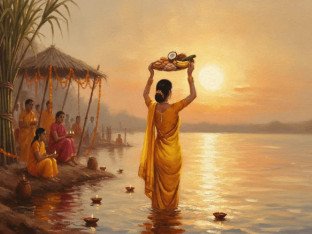
As millions of devoted worshippers gather along riverbanks, lakes, and specially constructed water bodies to offer arghya during the vibrant festival of Chhath, the air resonates with devotional folk songs, incense, and unmatched spiritual fervor. While the four-day ancient festival is universally recognized as a grand celebration dedicated to the Sun God (Surya Dev) and Chhathi Mata, the core rituals hold a deeper cosmic secret.
True completion of Chhath Puja involves honoring not just the solar deity, but his two inseparable divine powers and consorts—Usha and Pratyusha. Understanding the profound mythological and scientific symbolism behind these two celestial entities sheds light on why Chhath is hailed as one of the most intellectually and spiritually sophisticated festivals in Sanatan Dharma.
Who Are Usha and Pratyusha? The Personification of Dawn and Dusk
In ancient Vedic texts, particularly the Rig Veda, celestial forces are beautifully personified to reflect the cyclical rhythms of nature. Usha and Pratyusha are described as the powerful consorts and divine energies of the Sun God, representing the eternal transitions of daylight:
Usha: Revered as the goddess of dawn, Usha personifies the very first, pristine rays of the morning sun. She symbolizes awakening, spiritual enlightenment, fresh beginnings, youth, and the triumphant return of light over darkness.
Pratyusha: Symbolizing the glowing twilight, Pratyusha represents the fading rays of the setting sun. She embodies the peaceful conclusion of the diurnal cycle, contemplation, rest, and the quiet acceptance of the natural order of time.
Together, Usha and Pratyusha govern the delicate transition between night and day, reminding humanity that every ending naturally gives birth to a new beginning.
The Scientific and Ritualistic Significance During Chhath Puja
The unique structure of Chhath Puja—where offerings are made twice, first to the setting sun and then to the rising sun—directly mirrors the invocation of these two divine powers:
Sandhya Arghya to Pratyusha: On the evening of Kartik Shukla Shashthi, fasting devotees offer Sandhya Arghya to the setting sun. In this ritual, they pay respects to Pratyusha, expressing deep gratitude for the energy, sustenance, and life force received throughout the day. It is an acknowledgment of the setting sun, accepting that darkness is merely a precursor to a new dawn.
Usha Arghya to Usha: On the following morning of Saptami Tithi, devotees gather before dawn to offer Usha Arghya to the rising sun. This prayer is directly addressed to Usha, welcoming the first ray of light with folded hands, praying for health, vitality, positive energy, and prosperity for the family.
According to ancient scriptures such as the Markandeya Purana, worshipping the Sun God alongside his divine energies, Usha and Pratyusha, multiplies the spiritual merit and blessings manifold.
Mythological Roots: From Lord Rama to Draupadi
The sanctity of Chhath Mahaparva is deeply embedded in India's epic history. Puranic texts record that when Lord Rama and Mother Sita returned to Ayodhya after their fourteen-year exile, they performed the sacred Chhath fast under the guidance of Sage Vashistha to absolve themselves of earthly burdens and seek divine grace for righteous governance.
Similarly, during the Mahabharata era, Queen Draupadi observed the rigorous Chhath fast during the Pandavas' darkest days of exile. By worshipping the Sun God and his divine consorts with pure devotion, she helped restore their lost kingdom and secured victory in the Kurukshetra war.
Furthermore, scriptural lore notes that Veda Mata Gayatri—the mother of all Vedic hymns—manifested between the sunset of Shashthi and the sunrise of Saptami. Since that primordial era, Kartik Shukla Shashthi has been celebrated as the supreme festival of cosmic gratitude.
Embracing Nature’s Eternal Rhythm
At its core, the veneration of Usha and Pratyusha during Chhath teaches humanity a profound philosophical lesson: balance. Just as nature transitions seamlessly from light to dark and back to light, human life experiences cycles of challenge and triumph. By bowing before both the setting and rising sun, devotees embrace the entirety of existence with grace, resilience, and unwavering faith.