










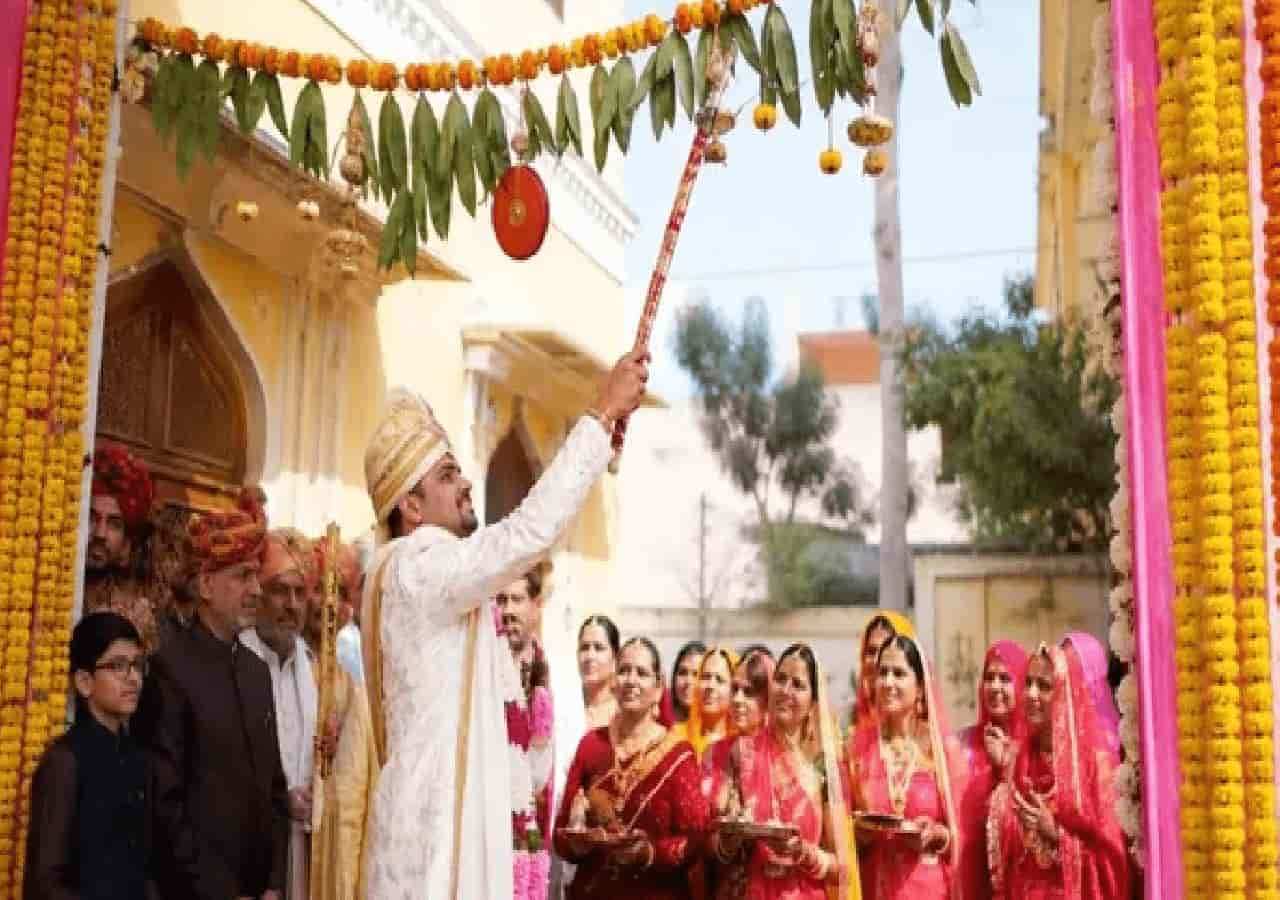
Rajasthani Wedding Rituals: Why Toran Maarna & Padla Matter
With the arrival of Devuthani Ekadashi (Prabodhini Ekadashi) in the Shukla Paksha of Kartik—marking the awakening of Lord Vishnu after four months of Chaturmas and the auspicious reopening of the Hindu wedding season—vibrant marriage traditions take center stage across India. Among the sixteen sacraments (Solah Sanskar) of Hinduism, marriage (Vivah) stands as a lifelong union not merely between two individuals, but between two extended families. In Rajasthan, two deeply symbolic ceremonies—Toran Maarna at the threshold of the bride's home and Padla (Bari Padla) honoring the bride—are regarded as so foundational that a traditional Rajasthani wedding is considered incomplete without them. Across Uttar Pradesh—especially in state capital Lucknow and neighboring cultural hubs such as Unnao, Kanpur, Prayagraj, and Varanasi, where families closely relate to threshold welcome rites like Dwarchar or Dwar Pooja and bridal gift ceremonies during the peak winter wedding calendar—exploring how Rajasthan celebrates these milestones highlights both shared heritage and rich regional color.
Toran Maarna and Padla: Ritual Meaning and Regional Parallels
| Ritual Name | When & Where It Takes Place | Core Symbolism & Regional Equivalents |
| Toran Maarna | At the main entrance of the bride's home or wedding venue when the groom's baraat arrives | Groom touches the decorated wooden arch (toran) hanging over the doorway with a sword or neem branch to ward off negative energy, pledge protection for the bride, and invite marital happiness. Known as Dwarchar / Dwar Pooja in UP and Bihar; Toran in Gujarat and Maharashtra; Toran Maarna / Dwar Rokna in MP; and Milni / Ribbon Katai in Haryana and Punjab. |
| Padla (Bari Padla) | Pre-ceremony or wedding-day blessing when the groom's family formally honors the bride | Groom's side presents traditional garments, jewelry, and bridal adornments (suhaag items), which the bride wears for the main wedding rites—symbolizing full acceptance, respect, and warm bonding between both families. |
Inside 'Toran Maarna': Warding Off Negativity at the Bride's Threshold
When the wedding procession (baraat) reaches the entrance of the bride's home or wedding venue, the celebration pauses for Toran Maarna. Suspended above the doorway is a specially crafted wooden arch (toran), traditionally adorned with auspicious motifs. Stepping forward—often mounted on a decorated mare—the groom gently touches or strikes the toran using a ceremonial sword or a fresh neem twig before being welcomed inside. Beyond its visual grandeur, the gesture carries three layered meanings: dispelling negative energy or misfortune at the threshold, affirming the groom's solemn vow to stand as the bride's protector, and ushering prosperity and harmony into their shared household. While Rajasthan preserves the sword-and-neem threshold custom, parallel doorway welcomes appear across northern and western India—from Dwarchar and Dwar Pooja in Uttar Pradesh and Bihar to Toran in Gujarat and Maharashtra, Dwar Rokna in Madhya Pradesh, and Milni or Ribbon Katai in Haryana and Punjab.
The 'Padla' Ceremony: Welcoming the Bride With Honor and Affection
If Toran Maarna marks the groom's auspicious entry across the threshold, the Padla (widely called Bari Padla across Rajasthan and North India) expresses the groom's family welcoming the bride into their fold with affection and dignity. During this emotional ritual, elders and relatives from the groom's side present trays of traditional bridal attire, jewelry, and auspicious adornments to the bride—which she wears as she steps into the main wedding ceremonies. Far more than a customary exchange of gifts, Padla signifies heartfelt acceptance of the bride as an honored member of her new family and lays an early foundation of mutual respect, warmth, and lifelong kinship between both households.






