










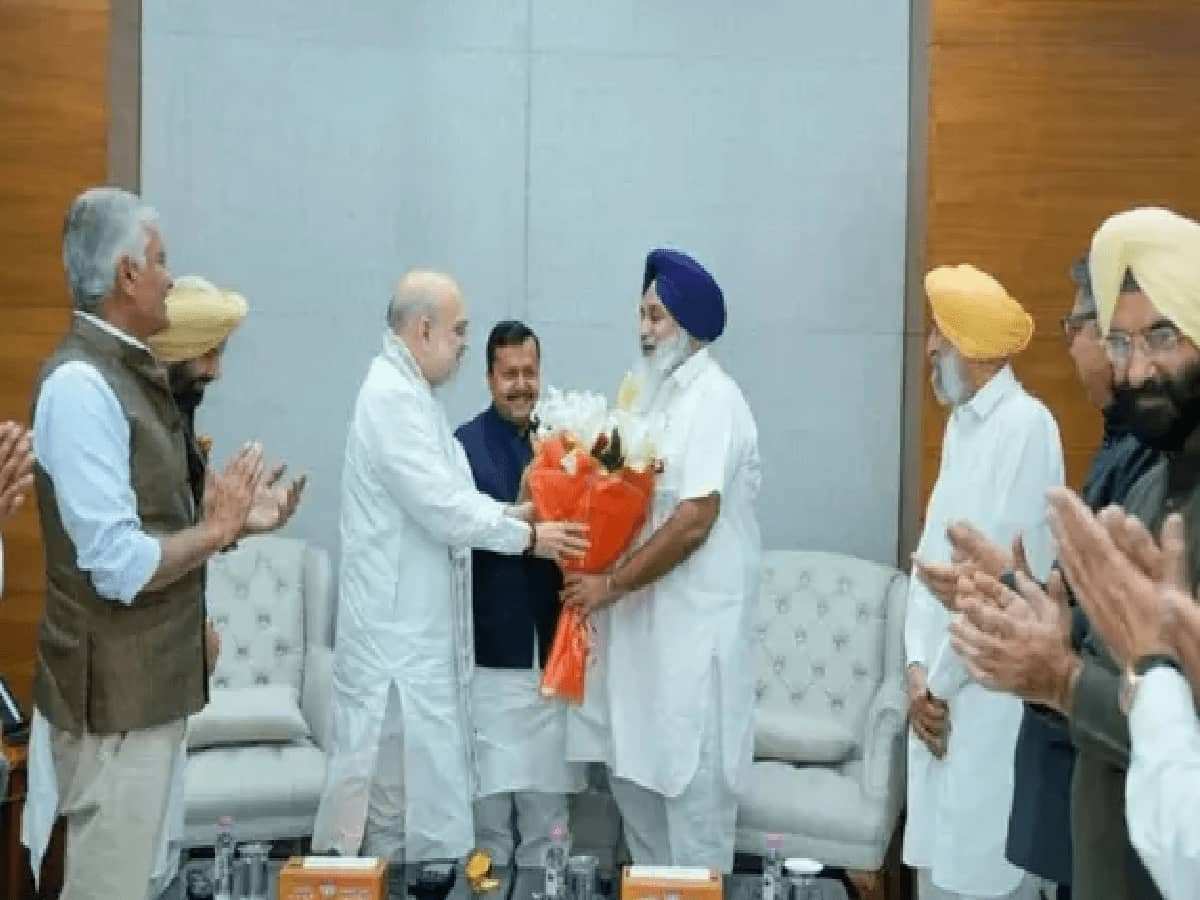
SAD–BJP Alliance Changes Math in Fatehgarh Sahib's 3 Assembly Seats
The formal revival of the alliance between the Shiromani Akali Dal (SAD) and the Bharatiya Janata Party (BJP) on Tuesday, November 24, 2026—announced in New Delhi by Union Home Minister Amit Shah following high-level discussions with SAD president Sukhbir Singh Badal—has immediately altered political calculations across Punjab's historic Malwa belt, most notably in the three assembly constituencies of Fatehgarh Sahib district: Bassi Pathana (Reserved SC), Fatehgarh Sahib, and Amloh. Having parted ways in September 2020 over the now-repealed farm laws, the two former coalition partners are reuniting ahead of the 2027 Punjab Legislative Assembly elections at a moment when twelve years of voting records suggest that a consolidated urban–rural vote transfer can turn one-sided contests into intense triangular battles against the ruling Aam Aadmi Party (AAP) and the Indian National Congress. Yet unlike the pre-2020 era—when the Akali Dal contested all three seats in Fatehgarh Sahib district under the traditional 94–23 seat-sharing formula—ground equations have shifted markedly: bolstered by its solo urban vote expansion in Amloh (home to industrial steel town Mandi Gobindgarh) and Fatehgarh Sahib, the BJP is no longer willing to play the role of "younger brother" and is staking a firm claim to contest at least one or two of the district's three seats. For political observers, election analysts, and readers across northern India—including policy watchers and diaspora-connected families in Lucknow and neighboring Uttar Pradesh cities such as Unnao, Kanpur, Prayagraj, and Varanasi, where the BJP's coalition strategy heading into the 2027 state election cycle draws close national interest—Fatehgarh Sahib illustrates both the arithmetic promise and the organizational challenges of the reunited NDA in Punjab.
Twelve Years of Election Data: How Alliance Unity vs. Split Shaped Fatehgarh Sahib
Between 2012 and 2019, when SAD contested all three assembly segments in Fatehgarh Sahib district—as well as the Fatehgarh Sahib (SC) Lok Sabha seat—with BJP support, the combine consistently commanded a formidable vote base:
| Election Cycle & Format | Fatehgarh Sahib Segment | Amloh Segment | Bassi Pathana (SC) Segment | Key Takeaway |
| 2012 Assembly (In Alliance) | SAD Runner-up (29.9%) | SAD Runner-up (27.2%) | SAD Winner (45.0%) | Strong rural-urban consolidation gave SAD victory in Bassi Pathana and narrow second-place finishes elsewhere. |
| 2017 Assembly (In Alliance) | SAD Runner-up (28.8%) | SAD Runner-up (31.5%) | SAD Runner-up (23.8%) | Even amid a state-wide Congress wave, SAD remained the primary challenger across all three seats. |
| 2014 & 2019 Lok Sabha (In Alliance) | 3rd (27.8%) in 2014 | 2nd (30.1%) in 2019 | 2nd (32.14%) in 2014 | 2nd (33.50%) in 2019 | 3rd (27.67%) in 2014 | 2nd (31.40%) in 2019 | After AAP's 2014 debut surge, the alliance rebounded to finish second across every segment in 2019. |
| 2022 Assembly (Post-Split) | BJP 3rd (11.3%) | SAD 4th (8.7%) | SAD 2nd (24.8%) | BJP 4th (8.3%) | Neither contested directly (left to allies BSP & PLC) | Vote division handed AAP a sweeping victory across all three seats; combined SAD+BJP share still trailed AAP. |
| 2024 Lok Sabha (Post-Split) | BJP 3rd (13.6%) | SAD 4th (7.0%) | BJP 3rd (18.6%) | SAD 4th (14.0%) | SAD 3rd (11.3%) | BJP 4th (8.4%) | BJP overtook SAD in urban-heavy Amloh and Fatehgarh Sahib, while SAD stayed ahead in rural Bassi Pathana. |
Why the BJP Is Staking a Strong Claim on Amloh and Fatehgarh Sahib
Electoral strategists point out that statewide, the SAD–BJP combine polled roughly 30% to 42% of the vote between 2012 and 2019; after separating, their combined standalone shares totaled 24.98% in the 2022 Assembly polls and 31.98% in the 2024 Lok Sabha elections (with BJP polling 18.56% statewide ahead of SAD's 13.42%). That exact pattern played out inside Fatehgarh Sahib district in 2024:
-
BJP's Urban Leverage in Amloh and Fatehgarh Sahib: Driven by industrial and trading centers like Mandi Gobindgarh and Sirhind–Fatehgarh Sahib, the BJP outpolled the Akali Dal by 4.6 percentage points in Amloh (18.6% vs. 14.0%) and nearly doubled SAD's tally in Fatehgarh Sahib (13.6% vs. 7.0%).
-
SAD's Rural Anchor in Bassi Pathana: Conversely, in predominantly agrarian Bassi Pathana (SC), the Akali Dal retained an edge over the BJP (11.3% vs. 8.4%), reinforcing why SAD leaders view rural Panthic pockets as their core domain while BJP leaders demand direct representation in Amloh or Fatehgarh Sahib.
Real Test Ahead: Rural AAP–Congress Hold and Panthic Vote Fragmentation
If the BJP's urban base in Mandi Gobindgarh and Sirhind merges cleanly with SAD's traditional rural cadres—which together represent roughly 20.6% to 32.6% of the 2024 baseline vote across the three seats—the alliance will instantly turn Amloh and Fatehgarh Sahib into knife-edge triangular battles. However, political observers caution that AAP's incumbent welfare machinery, Congress's resilient rural network, lingering farmer-union skepticism in Malwa villages, and competing Panthic factions such as SAD (Amritsar) and rival Akali splinter groups will test whether the revived SAD–BJP alliance can convert arithmetic potential into actual 2027 assembly victories.






