

 Priyanka Tiwari
 Share
Share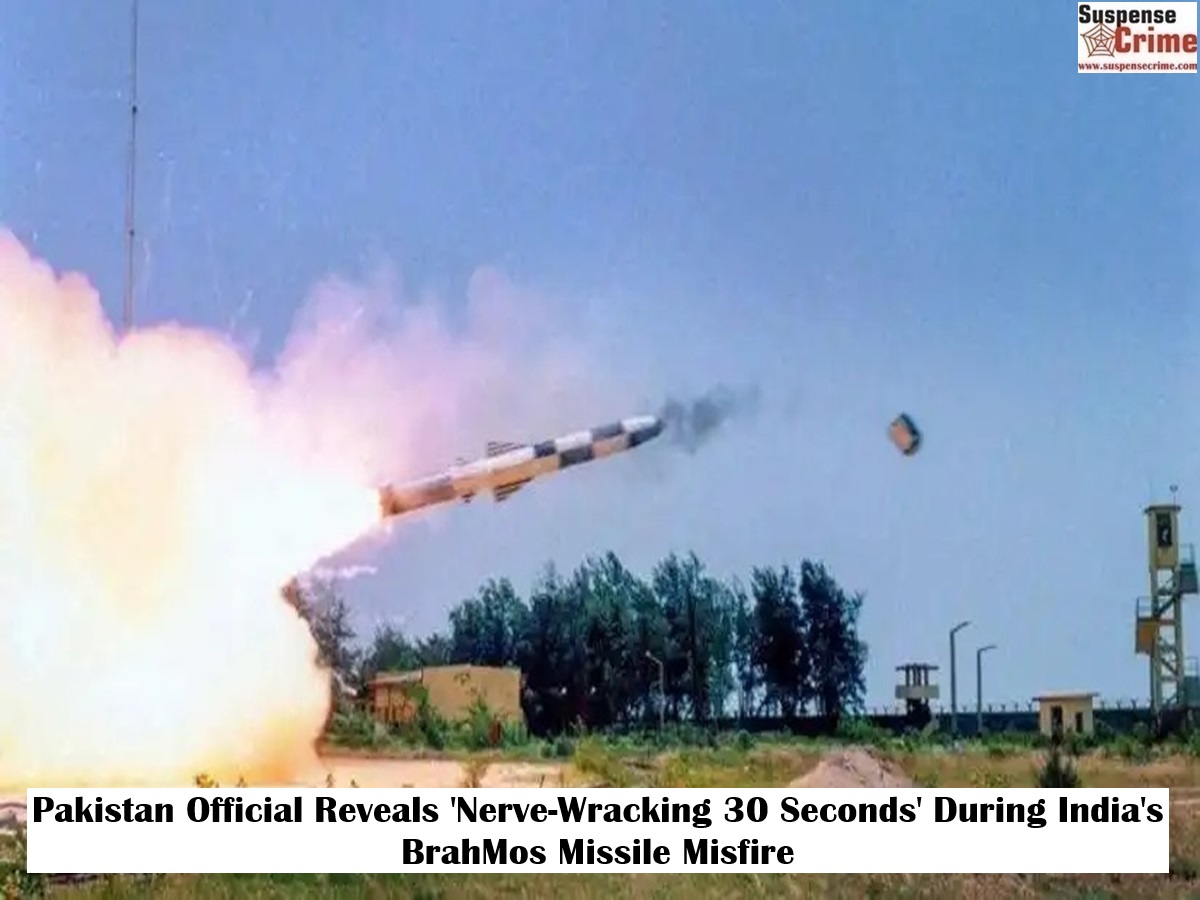
Suspense crime, Digital Desk : In a candid revelation that sheds new light on a tense moment between nuclear-armed neighbours, a top Pakistani official has detailed the chilling sequence of events following India's accidental BrahMos missile launch in March 2022. Tariq Fatemi, a former Special Assistant to the Prime Minister on Foreign Affairs, shared with unflinching clarity how Islamabad faced a perilous 30-second window between detecting the incoming missile and its impact on Pakistani soil, dramatically underscoring the razor-thin margins for error in the highly sensitive region.
Fatemi disclosed that Pakistani air defence systems detected the missile's trajectory, allowing only half a minute before it struck the ground. The BrahMos missile, reportedly unarmed, landed deep inside Pakistan's territory, specifically hitting a cold storage facility within the vicinity of the Nur Khan airbase in Rawalpindi, a major military installation. While India swiftly acknowledged the "technical malfunction" and expressed regret, Pakistan immediately voiced grave concerns, emphasizing the potential for "miscalculation" between two nuclear powers.
The incident, which could have escalated into a major crisis, highlighted the critical need for robust communication channels and de-escalation mechanisms between India and Pakistan. Islamabad had vehemently demanded a joint investigation into the incident, a request that New Delhi subsequently declined, maintaining its internal inquiry was sufficient.
According to Fatemi, the brevity of the warning period — a mere 30 seconds — underscored the inherent dangers of such accidental launches. It implied that had the missile been armed, or targeted differently, or if Pakistan's response had been misinterpreted, the consequences could have been catastrophic, potentially sparking an unintended conflict.
This revelation from a senior Pakistani official serves as a stark reminder of the ever-present risks in a heavily militarized region and the paramount importance of transparency and risk reduction measures to maintain strategic stability. It reinforces the call from international observers for both nations to enhance their bilateral protocols to prevent future missteps from spiraling into uncontrollable crises.
Read More: Pakistan’s Telecom Crisis: Why UAE Giant Etisalat is Planning a Shock Exit from PTCL