

Three Mysterious Buses Arrive Amid INDIA Alliance Lunch Sparking Election Commission March Rumors
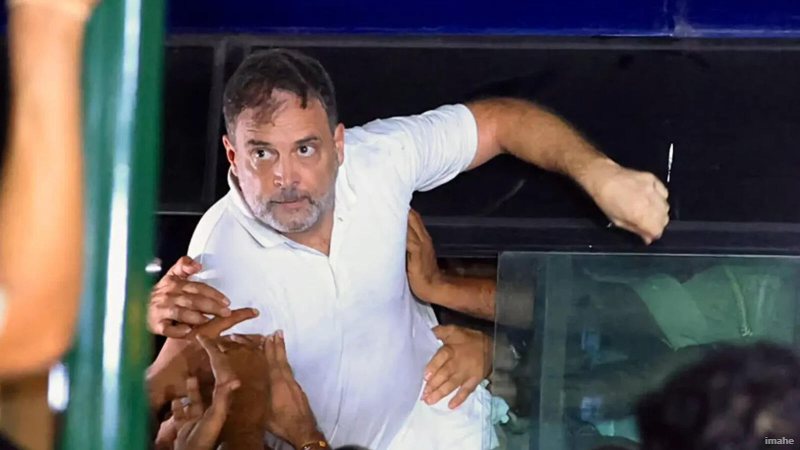
The political corridors of New Delhi are currently abuzz with high-voltage drama and intense speculation following an unexpected and stealthy political maneuver orchestrated by senior Congress leader Rahul Gandhi. Amidst a high-profile luncheon meeting hosted by Congress President Mallikarjun Kharge for key leaders of the opposition INDIA bloc, a sudden and dramatic twist caught security personnel, media crews, and political observers completely off guard. Right in the middle of ongoing discussions regarding national strategies and opposition unity, three mysterious air-conditioned buses abruptly arrived outside Kharge’s official residence. Whispers quickly spread through political circles suggesting that Rahul Gandhi was planning to give authorities the slip and lead opposition MPs directly toward the Election Commission headquarters to stage a massive, unannounced protest. This lightning-fast tactical shift immediately sent Delhi Police and security agencies into a frantic state of high alert, underscoring the aggressive, unpredictable posture the opposition is adopting as political tensions escalate across the national capital.
Behind Closed Doors: The INDIA Alliance Lunch Meeting That Took a Surprising Turn
The dramatic sequence of events began unfolding when Congress President Mallikarjun Kharge invited top leaders and floor leaders of various opposition parties part of the INDIA alliance to his official residence for a strategic afternoon lunch meeting. The gathering was initially intended to review ongoing parliamentary tactics, electoral issues, and unified opposition strategies to challenge the ruling establishment on critical governance fronts. Discussions were reportedly proceeding in a cordial and focused atmosphere with key regional and national figures exchanging inputs on current political challenges. However, as the lunch session reached its final moments, a quiet yet urgent contingency plan was set in motion within the inner circles of the opposition leadership. Without alerting the massive contingent of media personnel stationed outside the gates, arrangements were made to deploy transport vehicles capable of moving a large group of parliamentarians simultaneously, signaling an immediate shift from indoor deliberation to direct street-level political action.
The Masterstroke or Political Bluff: Speculation Mounts Over Election Commission March
Political analysts and commentators have noted that orchestrating a sudden, high-visibility movement using buses filled with opposition lawmakers is a classic pressure tactic designed to catch administrative authorities off guard. Given the opposition's persistent grievances regarding electoral processes, administrative transparency, and institutional accountability, marching directly to the Election Commission office carries immense symbolic and political weight. Although immediate clarity on the ultimate destination of the mysterious buses remained tightly guarded among top insiders, the mere prospect of dozens of opposition MPs descending upon a vital constitutional institution forced security planners into immediate emergency assessments. Whether this bold move culminated in a full-scale institutional protest or served as a strategic pressure maneuver, it successfully dominated national news cycles and demonstrated the opposition's readiness to bypass traditional channels in favor of direct confrontation.
High Alert in New Delhi: Security Agencies and Police Scramble to Secure Key Zones
The sudden appearance of the three buses outside Kharge’s residence instantly triggered a massive security response from Delhi Police and central intelligence units deployed across Lutyens' Delhi. Authorities are well aware that an unannounced march by prominent national opposition leaders toward sensitive zones like the Election Commission or key government secretariats poses a significant logistical and law enforcement challenge. In anticipation of a potential convoy movement, police reinforcements, barricades, and water cannons were rapidly mobilized around critical bureaucratic and constitutional perimeters. Security personnel maintained constant vigil, monitoring every movement of the lawmakers exiting the meeting venue to ensure public order and prevent any unexpected traffic disruptions or security breaches in the heart of the capital.
A New Chapter in Confrontational Politics: What This Bold Strategy Means for the Future
This high-octane episode underscores a clear transformation in modern Indian political tactics, where surprise, mobility, and direct institutional engagement are increasingly utilized to amplify political messaging. By keeping both the media and security establishments guessing about their next destination, opposition leadership under figures like Rahul Gandhi continues to showcase an agile and aggressive approach to political opposition. As the political landscape grows increasingly polarized, dramatic maneuvers of this nature serve notice to the establishment that the opposition is prepared to take its protests directly to the doorsteps of power. Observers and citizens alike remain glued to developments, eager to see how these high-stakes tactical games will influence upcoming parliamentary sessions and electoral dynamics.