Special Parliament Session Likely After Chhath for Women’s Quota Bill
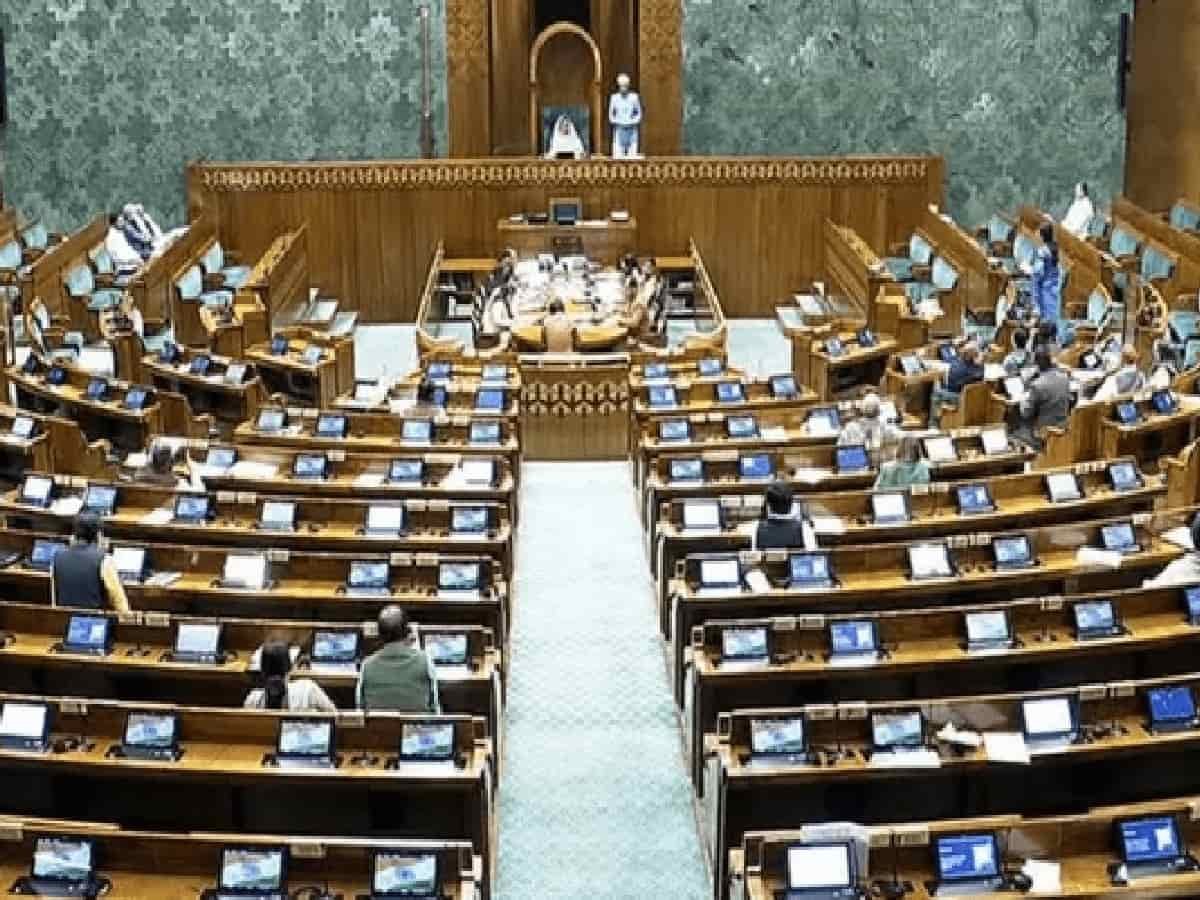
The Union Government is actively gearing up to convene a special sitting of Parliament shortly after the conclusion of the Chhath festival to secure passage of two landmark constitutional measures: implementing 33 percent reservation for women in the Lok Sabha and state legislative assemblies, and executing a nationwide delimitation exercise projected to expand Lok Sabha seats by roughly 50 percent. According to senior government functionaries in New Delhi on Thursday, November 12, 2026, ruling alliance strategists are confident of having assembled the requisite two-thirds majority in the Lower House—claiming the backing of 15 to 18 Members of Parliament above the constitutional threshold.
This renewed legislative push comes nearly seven months after a similar Constitution Amendment Bill fell short of the special majority mark during a heated sitting in April 2026. With political realignments shifting floor arithmetic in the Lok Sabha over recent months, top government sources indicate that an official announcement summoning the special sitting could be issued any day once Chhath Puja concludes on November 16 and Prime Minister Narendra Modi returns from his scheduled foreign visit.
Constitutional Mechanics: Why the Unprorogued Monsoon Session Matters
A key procedural detail enabling the Centre to summon Parliament at short notice lies in the current parliamentary calendar. Both the Lok Sabha and the Rajya Sabha, which were adjourned sine die (indefinitely) on August 13, 2026, at the end of the Monsoon Session, have not yet been formally prorogued by the President. Having remained unprorogued for a record 91 days—surpassing the previous 87-day benchmark set in 2008—the existing Monsoon Session can be reconvened as an extended special sitting with a minimum notice of just two days, whereas summoning a brand-new session requires at least 14 days' prior notice.
Senior leaders clarified on Thursday that the proposed special sitting will be conducted as part of the ongoing Monsoon Session itself, after which the session will be formally prorogued. Adhering to the standard parliamentary convention of maintaining a 15-day interval between sessions, the regular Winter Session is expected to convene in the second week of December and conclude ahead of the Christmas break. Notably, the timing also intersects with high-level diplomatic calendars: Prime Minister Modi is scheduled to travel abroad from November 16 to 17, while Leader of the Opposition Rahul Gandhi is slated to visit the United States between November 16 and 19.
Decoding the Numbers: How the Government Claims an 18-MP Cushion
Passing a Constitution Amendment Bill under Article 368 requires both a simple majority of the total membership of the House and a two-thirds majority of members present and voting. In the current 543-member Lok Sabha—where three seats are presently vacant, bringing effective strength to 539 or 540—a full-house two-thirds threshold stands at roughly 360 to 361 votes.
Back in April 2026, when 534 MPs were present and voting, the bill garnered 298 votes in favor against 234 opposing votes, falling well short of the special majority required. However, ruling coalition managers point to significant shifts in floor dynamics that tilt the arithmetic decisively in their favor:
New Allies and Realignments: Twenty MPs who separated from the Trinamool Congress to form the Nationalist Citizens Party of India have aligned with the National Democratic Alliance (NDA) in backing the legislation. Additionally, six Shiv Sena MPs who previously voted against the measure in April have since joined the NDA-aligned Shiv Sena.
Potential Opposition Support and Abstentions: Political observers note that the Nationalist Congress Party (Sharadchandra Pawar) faction—comprising eight MPs—may extend support to the women's quota legislation, following positive signals from party leader Supriya Sule. Furthermore, floor managers anticipate that several opposition lawmakers may choose to abstain during voting, effectively lowering the two-thirds threshold of members present and voting.
Assuaging Southern States: The 50% Seat Expansion Formula
The proposed legislation aims to operationalize one-third reservation for women ahead of the 2029 general elections by linking it to an expanded Lok Sabha capacity—potentially raising the maximum strength of the Lower House from 543 to 850 seats. Historically, southern states such as Tamil Nadu, Kerala, Karnataka, Andhra Pradesh, and Telangana have voiced concern that delimitation based purely on updated population figures would penalize states that successfully stabilized population growth while disproportionately increasing parliamentary representation in northern states like Uttar Pradesh, Bihar, Madhya Pradesh, and Rajasthan.
To address these regional anxieties and build broader national consensus, government sources indicate the revised legislative framework proposes increasing Lok Sabha seats across all states proportionally by 50 percent, while preserving the existing inter-state seat ratios anchored to the 1971 Census. While opposition leaders—including Congress general secretary K. C. Venugopal and Priyanka Gandhi Vadra—have accused the government of delaying prorogation to maneuver floor numbers and demanded immediate implementation of women's reservation without waiting for delimitation, the Centre appears determined to test its bolstered majority on the floor of Parliament immediately after Chhath.