PM Modi on Changing Media: News Experts Now in Every Street
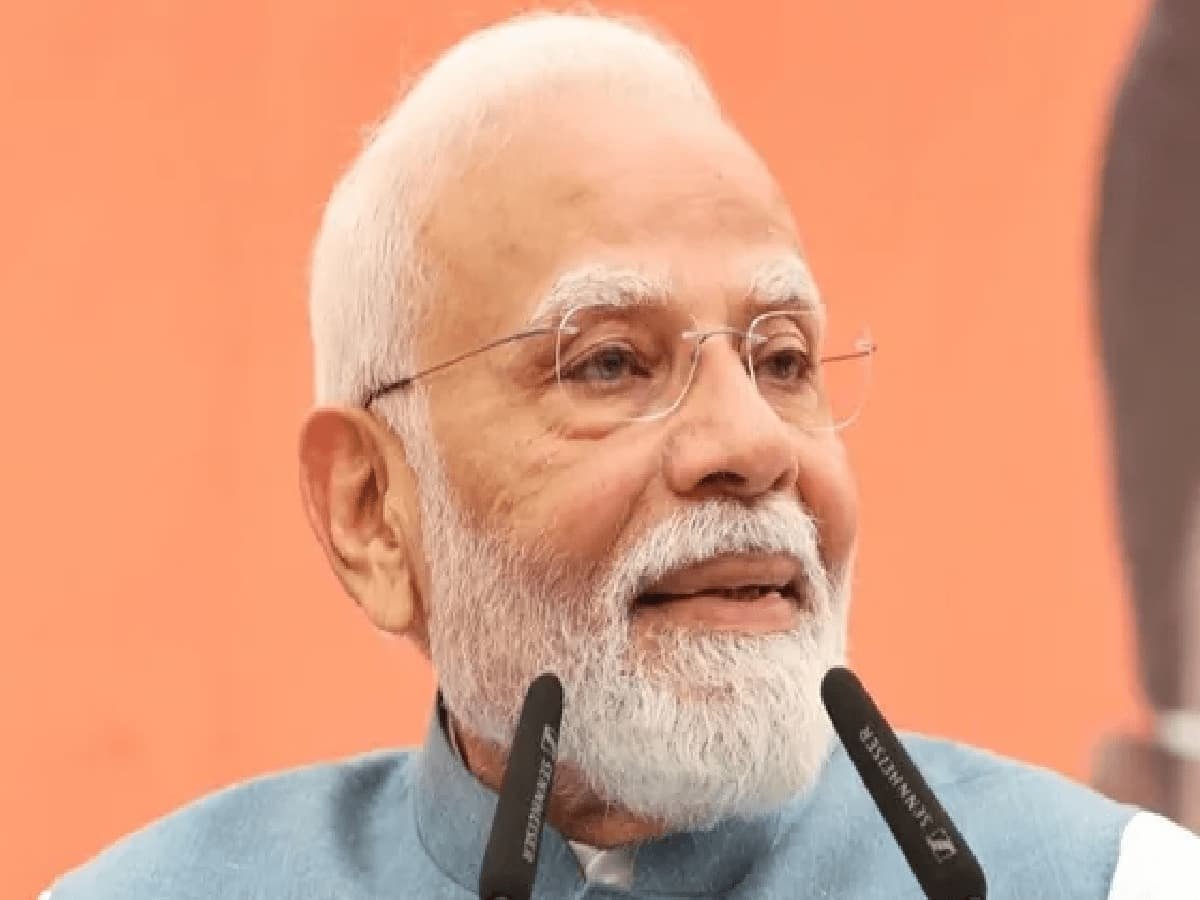
Addressing a lively gathering of journalists, editors, digital creators, and senior cabinet colleagues at the Bharatiya Janata Party (BJP) central headquarters in New Delhi on Thursday, November 12, 2026, Prime Minister Narendra Modi offered an insightful, witty reflection on how rapidly India’s media landscape has transformed over the past two and a half decades. Speaking at the party’s annual Deepawali Milan function—attended by BJP National President Nitin Nabin, Defence Minister Rajnath Singh, Home Minister Amit Shah, and Information and Broadcasting Minister Ashwini Vaishnaw—the Prime Minister remarked that today, "experts on every piece of news are available in every street". Blending humor with thoughtful observation, he noted that while technological democratization has put broadcasting tools in every citizen's pocket, diverse opinions remain the lifeblood that keeps Indian democracy vibrant.
Recalling his early organizational days at the party's former Ashoka Road office in New Delhi—when he personally arranged chairs for visiting reporters in an era of limited cameras and printed press releases—Prime Minister Modi traced the journey from traditional print and broadcast journalism to today’s hyper-connected digital age. He playfully welcomed the assembled journalists as "people of breaking news arriving at a non-breaking news gathering," setting a warm, conversational tone for the afternoon.
‘Mobile Phone Has Become the OB Van’: How Technology Democratized News
Illustrating the seismic shift in news gathering and public commentary, Prime Minister Modi pointed out how modern smartphones have dismantled traditional broadcasting barriers. "There was a time when news organizations competed fiercely over who owned the largest Outdoor Broadcasting (OB) van," the Prime Minister observed. "Today, the mobile phone itself has become the OB van. Every individual now runs their own platform, their own channel, and their own podcast."
Drawing a quintessentially Indian cultural parallel, Modi compared today's ubiquitous news commentators to street-corner cricket analysts. "Earlier, people used to say that cricket experts were found in every alley across India—someone standing in a village lane would confidently explain what technical mistake Sachin Tendulkar made," he remarked to laughter from the audience. "In the exact same way, experts on every news story are now found in every street." Quoting the traditional Hindi proverb "Jitne muh, utni baatein" (as many mouths, as many opinions), the Prime Minister acknowledged that while unverified commentary on social media can occasionally pose challenges, the sheer plurality of voices across India’s states and cities strengthens democratic accountability.
Saluting Field Reporters Who Risk Lives Amid Disasters and Crises
Even as digital creators and armchair commentators multiply online, Prime Minister Modi reserved special admiration for dedicated on-ground journalists who uphold the core ethos of public service reporting. Emphasizing that nothing is considered impossible in the world of professional journalism, he praised reporters who routinely rush toward danger when ordinary citizens flee to safety.
"Whether a major accident occurs, an earthquake strikes, or devastating floods sweep through a region, the rest of the world runs away from that spot," the Prime Minister said. "Yet the ones who swim against the tide are our field reporters. Putting aside personal safety and family worries, they reach ground zero to bring truth to the nation. Such dedication is rarely witnessed, and I have always admired this spirit."
Power of Deadlines and the Mission for Viksit Bharat by 2047
Drawing a parallel between newsroom discipline and national governance, Prime Minister Modi highlighted how strict deadlines drive urgency and excellence in media houses. "Whether it is the deadline to print a morning newspaper or broadcast a prime-time bulletin, every task in journalism runs on a clock," he noted. "Without deadlines, a casual attitude creeps in—people start thinking there is plenty of time and things will somehow get done."
Applying that same deadline-driven urgency to nation-building, the Prime Minister reiterated his government’s overarching target of transforming India into a developed nation (Viksit Bharat) by 2047—marking a century of independence. Highlighting transformative milestones achieved over the past twelve years since 2014—including India’s emergence as the world’s largest real-time digital payments ecosystem via UPI, rapid railway electrification, and the lifting of 50 crore citizens out of multidimensional poverty—Modi expressed confidence that India could achieve its developed-nation goals even ahead of 2047 through collective positive engagement.
A Call to Spotlight India’s Success Stories and Build a Drug-Free Nation
Concluding his address, Prime Minister Modi urged Indian media organizations across print, television, and digital platforms to dedicate greater editorial space to grassroots innovation and India’s developmental success stories driven by scientists, entrepreneurs, farmers, and youth. Recalling how constructive media participation previously accelerated nationwide public awareness movements—from Swachh Bharat (Clean India) to Beti Bachao, Beti Padhao—he called upon journalists to channel that exact same energy toward a vital new social mission: building a drug-free India (Nasha Mukt Bharat) to safeguard the nation’s youth and future generations.