










Parliament Session Suspense: Delimitation Bill Row & BJP's 3-Day Plan
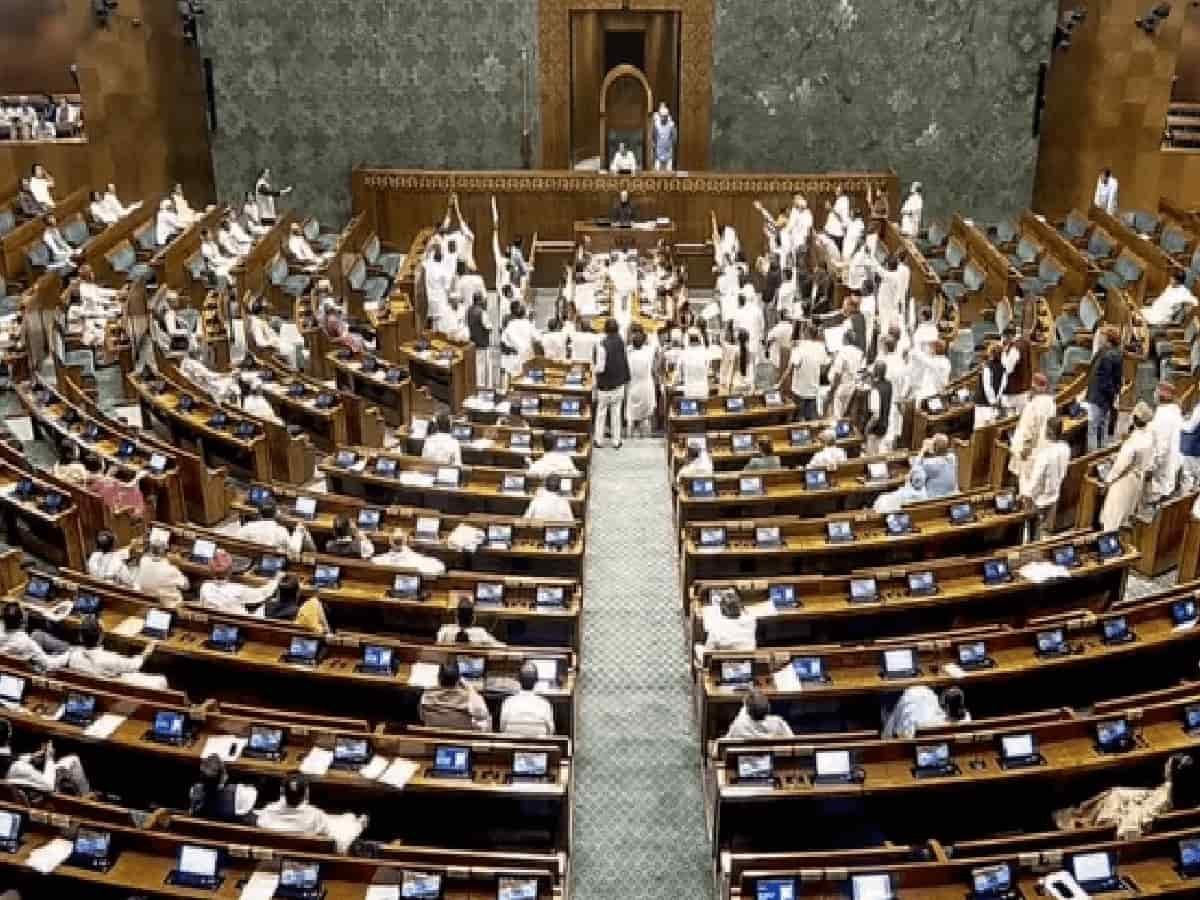
Political suspense in New Delhi has reached a boiling point after Parliament's Monsoon Session crossed a historic 100-day stretch since being adjourned sine die without formal prorogation, eclipsing the previous 87-day record set in 2008. Keeping the session technically open allows the Union government to reconvene the House on short notice—rather than issuing the standard 14-day summons required for a fresh session—as intense backchannel talks swirl around reintroducing the Delimitation Bill alongside legislation linked to 33 percent women's reservation in the Lok Sabha and state assemblies. For voters, political observers, and civic readers across northern India—including citizens in Uttar Pradesh constituencies such as Unnao, Kanpur, Lucknow, Prayagraj, and Varanasi, where any expansion of Lok Sabha seats carries major electoral consequences—the standoff pits constitutional arithmetic against deep federal and partisan disagreements.
Inside the BJP-Led Government's Three-Day Legislative Strategy
Sources within the BJP-led National Democratic Alliance (NDA) indicate that while no separate special session is currently planned, intense speculation has circulated around a potential three-day sitting—and strategists now point toward reconvening in the second week of December 2026 for roughly a dozen sittings. Under the ruling coalition's blueprint, the government aims to table and push through the Delimitation Bill and connected constitutional amendments within the first three days of the reconvened sitting.
Government planners anticipate that proceedings later in December could face sharp disruptions as political parties pivot toward upcoming Assembly elections in Uttar Pradesh, Punjab, and three other states scheduled for early 2027. Time is also a critical factor: unless the legislation clears Parliament in December, there will be insufficient runway for a Delimitation Commission to redraw boundaries ahead of the 2029 Lok Sabha elections.
Congress, DMK, and AAP Put Forward Four Key Demands
While the government links the operationalization of the Women's Reservation Act, 2023 (Nari Shakti Vandan Act) to fresh delimitation, the Congress—broadly backed on core principles by the DMK and Aam Aadmi Party (AAP)—has insisted that women's representation must not be held conditional on redrawing constituencies. Opposition leaders have crystallized their position around four specific demands:
-
Keep Lok Sabha Strength Unchanged: Maintain the total number of Lok Sabha seats at 543 without any expansion or reduction.
-
Preserve Existing State Quotas: Ensure every state retains its current share and absolute count of Lok Sabha seats so states that stabilized population growth do not lose political weight.
-
Immediate 33% Women's Reservation: Implement the Nari Shakti Vandan Act right away within the existing House, reserving 182 seats for women out of 543.
-
25-Year Constitutional Freeze: Freeze the current seat-allocation framework for the next 25 years through a constitutional amendment.
Congress leaders, including Jairam Ramesh and party president Mallikarjun Kharge, have accused the Centre of bypassing structured all-party consultations while warning against constituency gerrymandering. The government, conversely, contends that blocking the package delays women's empowerment and prevents needed expansion of public representation.
Lok Sabha Number Game: How Close Is the Two-Thirds Majority?
Because amending constitutional provisions on seat allocation requires a two-thirds majority of members present and voting in the Lok Sabha, floor management sits at the center of Delhi's political calculations. Back in April 2026, the government suffered a rare legislative setback when its earlier delimitation-linked amendment fell 54 votes short of the required two-thirds threshold.
Since then, shifting alignments have altered the floor arithmetic. Depending on House attendance, strategists estimate the two-thirds mark around 360 votes. The NDA counts roughly 319 firm MPs—anchored by 241 BJP members, alongside allies including the Telugu Desam Party (16), Eknath Shinde's Shiv Sena (13), Janata Dal (United) (12), Lok Janshakti Party (Ram Vilas) (5), and two MPs each from Janata Dal (Secular), Jana Sena, and Rashtriya Lok Dal, plus support from a 20-MP breakaway group that split from the Trinamool Congress into the NCPI.
Political equations in Tamil Nadu and Maharashtra add further intrigue. Following shifts in opposition alliances after the May 2026 Tamil Nadu Assembly elections, the government has watched whether the DMK (22 MPs)—which has yet to commit on Home Minister Amit Shah's earlier assurance of a uniform 50 percent seat increase—or Sharad Pawar's NCP (SP) (8 MPs) might soften their stance. While NCP (SP) leader Supriya Sule has signaled openness if seat increases are applied uniformly across states without regional discrimination, she has firmly ruled out merging with Ajit Pawar's NDA-aligned faction. Even if both blocs leaned in, the tally would hover near 350, still leaving roughly 10 votes to secure from unaligned MPs.
What the Draft Delimitation Bill Proposes
Under the government's proposed legislative framework—encompassing the Constitution (131st Amendment) Bill, 2026 and the Delimitation Bill, 2026—the maximum strength of the Lok Sabha would expand from 543 to 850 seats (comprising 815 from states and 35 from Union Territories), with one-third (around 283 seats) reserved for women on a rotational basis. Crucially, the draft empowers the Centre to initiate constituency redrawing using the 2011 Census or another notified census rather than waiting for the completion of the 2027 Census. With both sides dug in ahead of December, whether compromise emerges or another high-stakes floor test unfolds will define Parliament's winter calendar.






