No More Translation Errors in UGC NET & JEE Main: NTA Revamps System
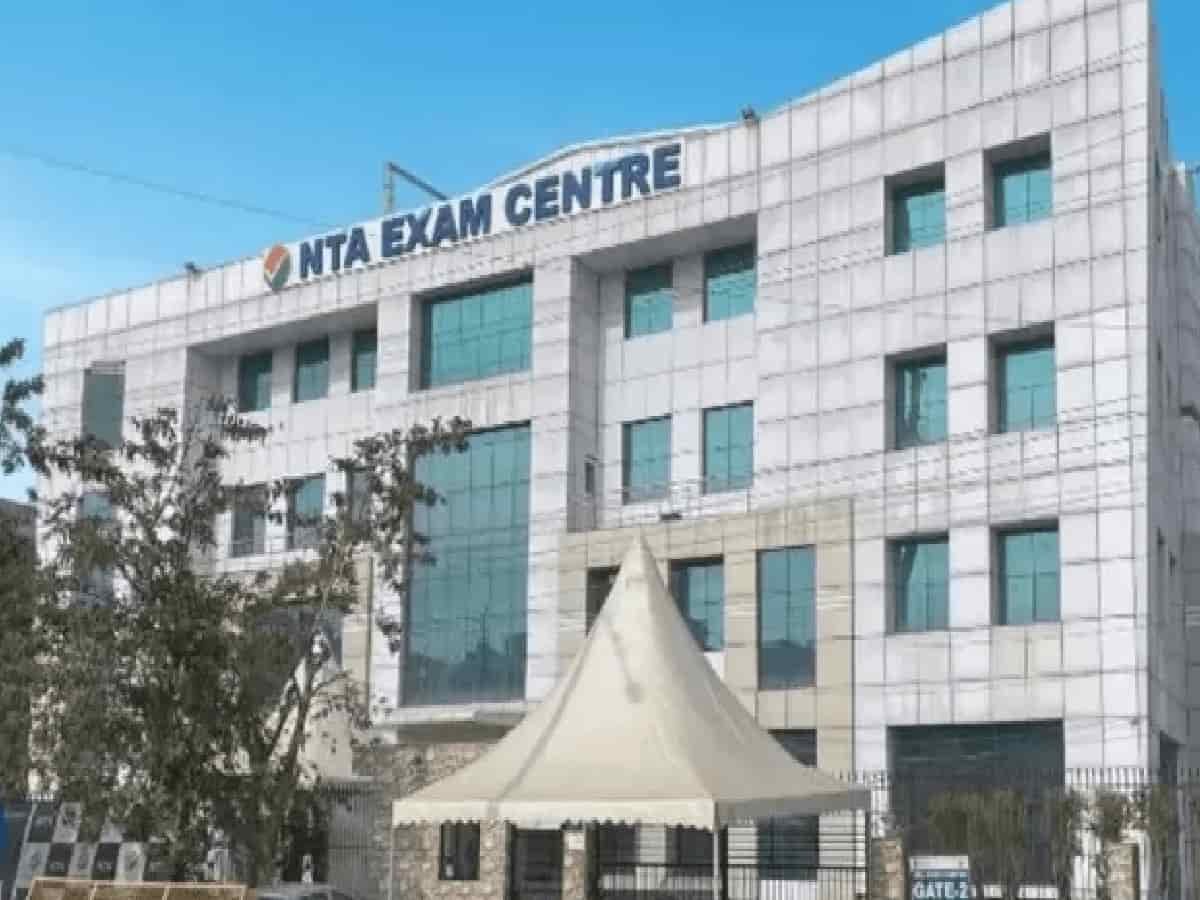
Millions of competitive exam aspirants across India—from engineering hopefuls preparing in Kota, Hyderabad, and New Delhi to doctoral and assistant professor candidates studying in Lucknow, Prayagraj, Patna, and Kolkata—have long voiced frustration over ambiguous translations, typographical slips, and factual discrepancies in national-level entrance tests. Taking decisive action to restore student confidence ahead of upcoming examination cycles, the National Testing Agency (NTA) has overhauled its entire question paper creation and bilingual review architecture. Under the newly enforced protocol, every single question and its regional language translation for flagship exams such as UGC NET, JEE Main, NEET-UG, and CUET will undergo a rigorous four-tier verification check before reaching test centers.
Senior officials in New Delhi confirmed on Thursday, November 12, 2026, that the agency is operating on heightened alert to ensure that upcoming computer-based tests—including the UGC NET December 2026 session and JEE Main 2027—are completely free of the linguistic and technical lapses that previously triggered answer key disputes, bonus mark controversies, and costly re-examinations.
How the New Four-Level Question and Translation Review Works
Previously, mechanical or poorly vetted translations from English into Hindi and regional languages frequently distorted technical terminology, placing non-English medium students at an unfair disadvantage during high-stakes exams. To eliminate such disparities at the root, the NTA’s revamped four-stage quality assurance pipeline scrutinizes every test item across four critical parameters:
Factual and Conceptual Accuracy: Independent subject-matter specialists verify that the core academic premise of every question aligns strictly with prescribed syllabi and standard reference textbooks, eliminating out-of-syllabus or ambiguous prompts.
Linguistic Precision and Translation Parity: Dedicated bilingual domain reviewers cross-check Hindi and regional language translations against the master English text—working alongside upgraded AI-assisted translation verification tools—to ensure technical terms, negative phrasing, and nuances carry identical meaning across all mediums.
Answer Key and Option Integrity: Reviewers independently solve each problem from scratch to confirm that at least one unambiguously correct option is present among the four choices and that multiple-choice distractors do not overlap.
Formatting and Typographical Audit: A final pre-publication proofread checks mathematical symbols, chemical equations, diagrams, and grammar to ensure zero typographical errors or formatting glitches appear on candidate screens.
600 Veteran Experts Removed as NTA Builds a Confidential Question Bank
The structural overhaul follows intense scrutiny faced by the testing agency earlier this year. In August 2026, widespread factual, grammatical, and translation mistakes discovered in three subjects of the UGC NET examination—English, Commerce, and Sociology—forced the NTA to cancel those papers and conduct fresh re-tests in September. Coupled with earlier controversies surrounding the NEET-UG examination, the Ministry of Education directed an immediate top-to-bottom institutional audit.
As part of this sweeping cleanup, the NTA removed nearly 600 long-serving external subject experts whose prior work had been flagged during quality audits and initiated a transparent, nationwide recruitment drive to onboard fresh academic talent. Just days ago, on November 7, 2026, the agency also issued a revised notification inviting continuous applications for empaneling specialized Translation Reviewers across multiple Indian languages under strict Non-Disclosure Agreements (NDAs). Simultaneously, a newly vetted team of specialists is confidentially compiling a large, pre-validated centralized question bank, allowing exam setters to draw verified, error-free questions rather than rushing paper assembly at the eleventh hour.
What These Reforms Mean for Students Preparing Across India
For lakhs of students preparing in coaching hubs and university towns across Uttar Pradesh, Bihar, Rajasthan, Maharashtra, and southern states, the NTA’s updated system promises a fairer, more predictable testing experience without altering existing exam patterns or syllabi. By catching translation mismatches and flawed answer keys inside secure review rooms before exam day, the agency aims to eliminate post-exam litigation, prevent sudden paper cancellations, and ensure that a candidate's final percentile reflects genuine academic merit rather than linguistic confusion.