Monsoon Intensifies in Uttarakhand: IMD Sounds Orange Alert for Nainital and Bageshwar as Debris Briefly Halts Char Dham Yatra Routes
_67700164.jpg)
The southwest monsoon is rapidly gaining momentum across the Himalayan state of Uttarakhand, prompting meteorological authorities to issue critical weather advisories. Following the official arrival of the monsoon currents on June 30, the India Meteorological Department (IMD) has stepped up its warning system, placing the picturesque hill districts of Nainital and Bageshwar under an 'Orange Alert' for Friday. Regional weather scientists predict intense precipitation cycles that can trigger localised flash floods and rapid mudslides, keeping state emergency response teams on high alert.
Hilly Terrain Faces Yellow Alerts as Rainfall Intensifies Across the State
Beyond the primary orange alert zones, a broader 'Yellow Alert' remains active for several other key districts, including the state capital, Dehradun, as well as Tehri, Pauri, Uttarkashi, Rudraprayag, and Chamoli. The advancing weather system has already dumped rain of varying intensities across diverse topographies. In the agricultural plains and foothills, Khanpur recorded a significant 41.5 mm of rainfall, closely followed by Laksar at 33 mm and the institutional hub of Roorkee at 21 mm. Meanwhile, higher elevations also experienced consistent showers, with Thalisain logging 19 mm, Ranikhet 18 mm, Champawat 15 mm, and the tourist hotspot of Mussoorie receiving 12.3 mm.
This heavy rainfall has introduced a sharp contrast in regional temperatures. While the plains experienced normal seasonal daytime temperatures, the hilly regions saw the mercury plunge two to three degrees below the usual average for early July. For instance, while Dehradun hovered at a slightly warm 30.4 degrees Celsius, the higher altitudes of Mukteshwar and New Tehri recorded maximums of just 24.5 degrees and 20.1 degrees Celsius, respectively.
Landslides and Falling Debris Briefly Disrupt Sacred Char Dham Pilgrimage Routes
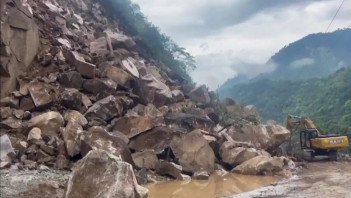
The sudden surge in monsoon activity caused immediate structural challenges along the fragile mountain highways, briefly interrupting the ongoing Char Dham Yatra. Heavy boulders and thick sheets of mud cascaded down the slopes, blocking vital transit points on the sacred Badrinath and Kedarnath routes. A major landslide was reported near Gulabkoti village—strategically located on the arterial stretch between Chamoli and Joshimath—triggering massive traffic gridlock on the Badrinath National Highway, stranding hundreds of pilgrims travelling toward or returning from the holy shrines of Badrinath and Hemkund Sahib.
In response to the infrastructure blockages, the State Emergency Operation Centre directed all district magistrates and administrative officials to remain on standby for immediate disaster mitigation. Utilising heavy machinery and JCB earthmovers, disaster management teams led by Rudraprayag District Disaster Management Officer Nandan Singh Rajwar launched rapid clearance operations. Thanks to the swift field response, the heavy debris was successfully cleared from the tarmac within hours, allowing the smooth and safe movement of pilgrim convoys to resume across the national highways.




_1587178762_351x234.jpg)
_305727748_351x234.jpg)