India Scripts History As Skyroot's Vikram 1 Privatized Rocket Launch Sparks Massive $100 Billion Space Economy Boom
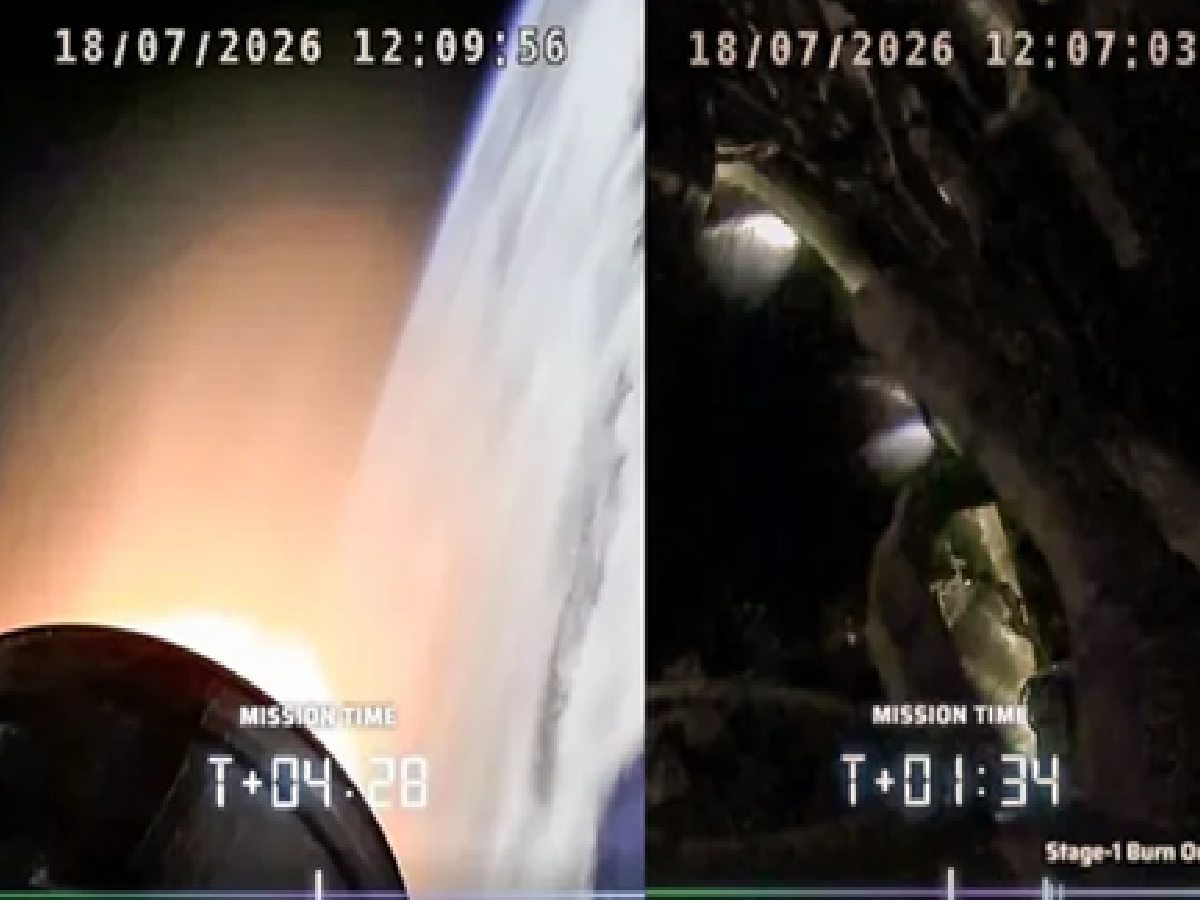
In a historic technological milestone that firmly establishes India as a global aerospace superpower, the nation has successfully executed the launch of Vikram-1, its first privately developed orbital-class rocket. Developed by Skyroot Aerospace, this structural achievement marks a paradigm shift for the country’s space sector, which has expanded rapidly since opening to private investment in 2020. The Department of Space confirmed that India is simultaneously driving aggressive goals across deep-space exploration, human spaceflight, and advanced orbital infrastructure, drawing massive global capital to a commercial ecosystem that already boasts over 400 highly active space tech startups.
Deep Space Dominance: Tracking Chandrayaan Milestones, Solar Aditya Missions, And Upcoming Venus Orbits
India’s interplanetary footprint has grown rapidly since 2014, when it became the very first Asian nation to successfully reach Martian orbit. Following the historic 2023 Chandrayaan lunar landing that established India as the fourth nation ever to safely deploy a rover on the Moon, ISRO is systematically pacing its next frontier operations. A sample-return Chandrayaan-4 mission is officially scheduled for 2027, followed closely by a dedicated Venus orbiter in 2028. Simultaneously, the active Aditya solar spacecraft continues to monitor the Sun's outermost atmospheric layers, while the domestic 'Matsya' deep-sea submarine project readies a historic six-kilometer ocean descent by 2027 to extract rare earth elements.
Commercial Satellite Market Expansion: New Spaceports Capitalize On Massive Global Launch Demands
Leveraging a globally celebrated reputation for executing highly cost-effective missions, India is rapidly capturing the commercial satellite launching market. ISRO has successfully launched over 430 foreign satellites, generating more than $600 million in external revenue alongside deploying 144 indigenous spacecraft. To manage this massive commercial influx, the government is expanding its primary launchpad infrastructure at Sriharikota in Andhra Pradesh while aggressively constructing a strategic second spaceport at Kulasekarapattinam in Tamil Nadu. These systemic expansions support administrative projections indicating that India's space economy will grow from its current $8.4 billion valuation to $44 billion by 2033, ultimately reaching a massive $100 billion by 2040.
Private Sector Innovations: How Skyroot, Pixxel, And Agnikul Are Revolutionizing Aerospace AI
The rapidly evolving private sector is introducing deep technological disruption, utilizing advanced AI and next-generation manufacturing to lower orbital access barriers. While Skyroot Aerospace focuses on deploying small satellites into low-Earth orbit via the Vikram-1 platform, Pixxel is building highly complex hyperspectral Earth observation constellations to revolutionize global agriculture and environmental monitoring. Concurrently, Bellatrix Aerospace is pioneering cutting-edge satellite propulsion mechanics, while Agnikul Cosmos is capturing global attention by developing custom small-satellite launch vehicles powered entirely by sophisticated 3D-printed rocket engines, showcasing India's immense private manufacturing maturity.
Military Synchronization: Civil Space Technology Integrates With DRDO And BrahMos Programs
India’s civil space advancements remain structurally intertwined with its national defense architecture, creating a powerful dual-use technology pipeline. Private and public aerospace firms are concurrently supplying avionics, specialized guidance systems, and heavy propulsion modules to both ISRO and the government’s Defence Research and Development Organisation (DRDO). This highly coordinated engineering synergy directly benefits the prestigious Indo-Russian joint BrahMos missile project and the country's expanding military drone initiatives. Defense-related industrial orders have surged exponentially following the geopolitical security strains of 2025, ensuring that space-grade innovations instantly fortify national security frameworks.
Road To Gaganyaan: Manned Spaceflights And PM Modi’s Bold 2035 Space Station Roadmap
Human spaceflight stands as the next immediate horizon for the nation, with the flagship Gaganyaan mission scheduled to initiate the first of its three uncrewed test flights by late 2026. The final crewed flight will safely propel three Indian astronauts into a 400-kilometer low-Earth orbit for a three-day scientific deployment. As a crucial precursor, Indian Air Force pilot Shubhanshu Shukla will board a SpaceX Dragon spacecraft in 2025 to become the first Indian to reach the International Space Station. Looking even further ahead, Prime Minister Narendra Modi has officially announced that India will operationalize its own sovereign space station by 2035, paving the definitive path for an Indian astronaut to walk on the Moon by 2040.



_293714903_351x234.jpg)
_1623010077_351x234.jpg)
_131135672_351x234.jpg)
_1191630014_351x234.jpg)