‘Constitution in Their Pockets’: PM Modi’s Sharp Dig at Rahul Gandhi
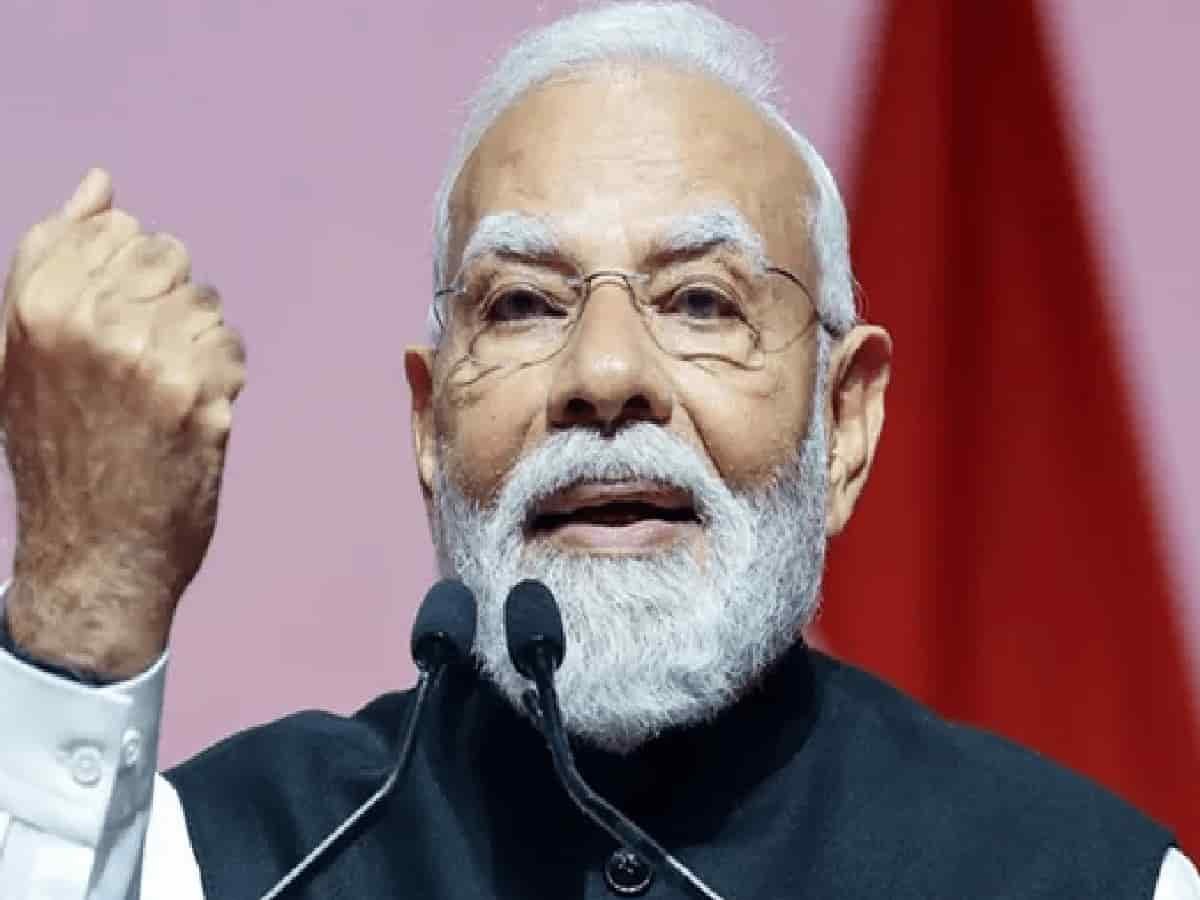
Addressing the plenary session of the Kisan Tak Bharat Agriculture Conference 2026 in New Delhi on Thursday, November 12, Prime Minister Narendra Modi launched a pointed political attack on the opposition—taking a thinly veiled swipe at Congress leader Rahul Gandhi, who routinely holds up a red-bound pocket copy of the Indian Constitution at public rallies and parliamentary events. Without naming any individual or party directly, the Prime Minister accused opposition leaders of treating India’s foundational charter and democratic values as personal possessions while conveniently forgetting their own record in governance.
"Nowadays, some people pull the Constitution out of their pockets and imagine that the nation’s Constitution and democracy reside inside their pockets," PM Modi remarked before an audience of farmers, agricultural scientists, policymakers, and industry leaders. "Even while sitting out of power, they remain under a peculiar intoxication of authority. Yet what was their actual conduct when they held the reins of government?"
Recalling the Gujarat Economic Ranking Row During His Tenure as Chief Minister
To substantiate his critique, Prime Minister Modi recounted an episode from his tenure as Chief Minister of Gujarat, alleging that the then-ruling establishment in New Delhi attempted to suppress independent economic research simply because it praised Gujarat’s performance. According to the Prime Minister, a reputed economic research institution—ironically named after a former Prime Minister of India—had ranked Gujarat as the nation’s top-performing state in an economic assessment.
"Those seated in power in Delhi could not stomach the recognition bestowed upon Gujarat," PM Modi stated. "They went after the very researchers who compiled the study and issued formal instructions barring them from publishing any future reports without prior government clearance. That was their true face when in power—and today, the exact same people deliver sermons on tolerance and democracy."
Historic 4% Agricultural Growth and 50 Crore Lifted Out of Poverty
Turning to his government’s agricultural and rural development track record, Prime Minister Modi underscored that building a Viksit Bharat (Developed India) is impossible without modernizing farming practices and empowering smallholders. He highlighted that India’s agricultural sector has recorded an average annual growth rate exceeding 4 percent over the past decade—marking the first ten-year span since Independence to achieve that sustained benchmark.
Citing World Bank findings, PM Modi noted that 50 crore Indians have moved out of poverty over the past 12 to 13 years, with the sharpest decline occurring in rural areas—signaling rising resilience among marginal farmers and agricultural laborers. Linking farming to India’s cultural fabric during the ongoing Chhath Puja festivities, as well as regional harvest celebrations such as Bihu, Pongal, Onam, Baisakhi, Sarhul, and Pola, he reiterated that agriculture remains one of the seven core pillars of national progress outlined from the Red Fort.
Shielding Farmers From Global Shocks: ₹43/Litre Diesel Cushion and Subsidized DAP
Detailing how the Centre insulated Indian cultivators from volatile international commodity spikes triggered by conflicts in West Asia and the Gulf region, PM Modi revealed that when global crude oil surged from $70 to $122 per barrel within weeks, domestic economic calculations warranted a diesel price hike of at least ₹50 per liter.
"While neighboring nations raised fuel prices by 40 to 50 percent, our government limited the diesel increase to just ₹7 per liter—absorbing the remaining ₹43 per liter burden ourselves," the Prime Minister explained, noting that the Centre has borne an ongoing fiscal outflow of roughly ₹14,000 crore per month to protect citizens and farmers. Similarly, despite global supply disruptions, a 50-kg bag of DAP fertilizer priced around ₹5,000 internationally is supplied to Indian farmers for ₹1,300 (and urea worth ₹3,000 for under ₹300), backed by ₹16 lakh crore in fertilizer subsidies over 12 years.
Turning ‘Annadatas’ Into ‘Agri-Entrepreneurs’ Through Solar Power and Drones
With India’s annual agricultural exports crossing ₹4 lakh crore—and the country ranking first globally in milk, pulses, jute, rice, and coarse grains, and second in wheat, cotton, fruits, vegetables, and fisheries—PM Modi outlined a forward-looking roadmap to convert traditional annadatas (food providers) into modern agri-entrepreneurs. He pointed to 12 lakh solar irrigation pumps installed under the PM-KUSUM scheme, which slash power expenses while enabling farmers to generate and sell surplus solar electricity, alongside his vision for solar-powered farm machinery and rural women leading precision farming as Namo Drone Didis.