Amit Shah: "Visit Indian Villages, Not Foreign Lands"
In the dynamic and often high-stakes arena of Indian politics, ideological battles rarely remain confined to domestic electoral campaigns. As political parties gear up for future electoral showdowns, national leaders have increasingly locked horns over how India is represented on the global stage. Leading a fierce counter-offensive against the opposition, Union Home Minister Amit Shah delivered a blistering critique of Congress leader Rahul Gandhi, accusing him of intentionally tarnishing India’s democratic reputation, economic progress, and institutional integrity at international forums.
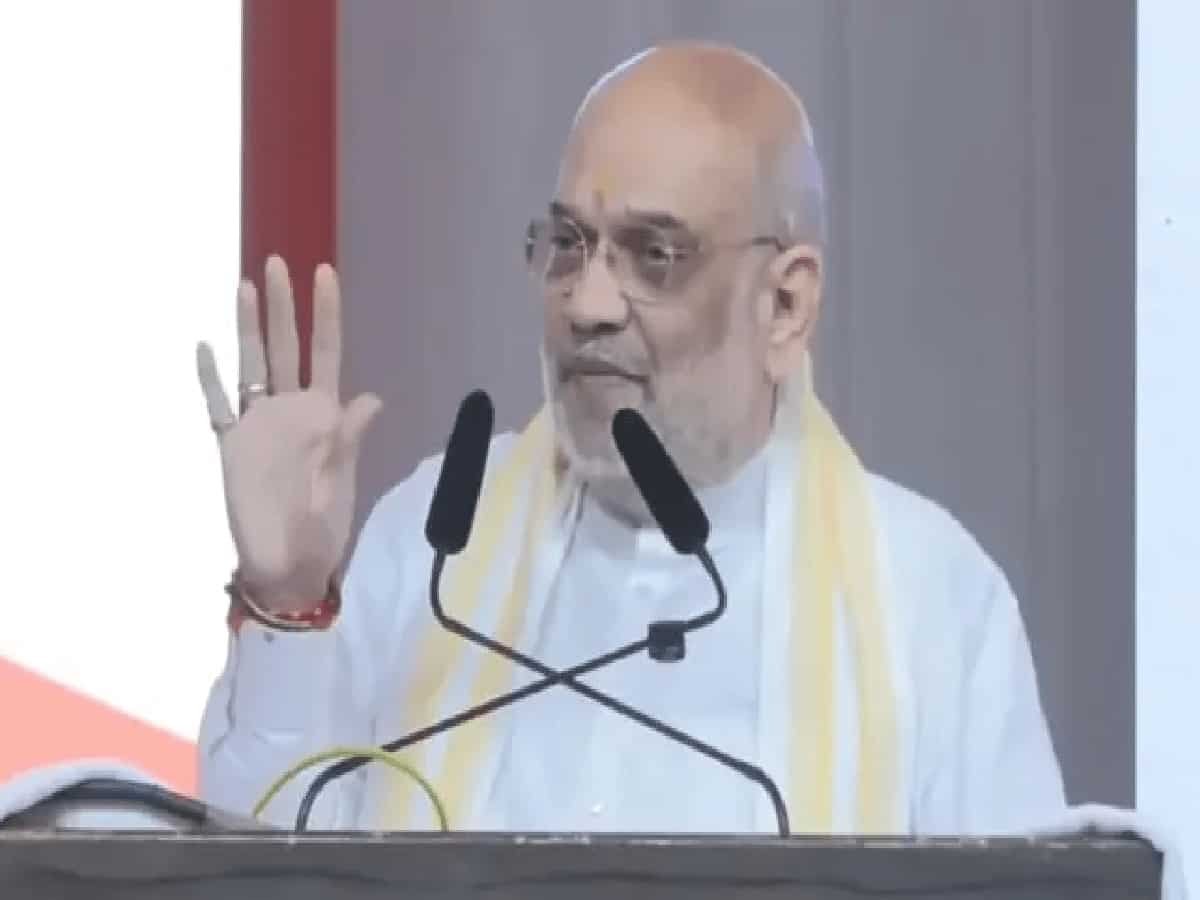
Speaking in Pune during a high-profile public engagement following the laying of the foundation stone for the National Heavy Engineering Cooperative Revival Initiative, Shah did not mince words. He challenged the opposition's political strategy, asserting that running down the nation on foreign soil will never translate into electoral success at home.
The Pune Address: Condemning International Criticisms of India
Addressing an enthusiastic gathering of party workers, intellectuals, and cooperative sector leaders, Amit Shah trained his guns on the recent political events organized by the opposition. He specifically referenced the recently concluded 'India Summit' held in Hyderabad under the aegis of the Telangana government, where various international delegates, left-leaning thinkers, and opposition figures converged.
Shah alleged that the Congress leadership used the international platform not for constructive domestic policy debate, but to project a distorted picture of Indian democracy to foreign audiences. "The Congress prince attended this conference, where he denigrated the country internationally by expressing anti-India views," Shah stated forcefully.
Emphasizing that political rivalries must have clear boundaries, the Home Minister posed a fundamental question about national responsibility: "Political differences should not hinder India's image and credibility in international forums. Whether it is the ruling party, the opposition, or any other political party, can it be justified to defame India and its Prime Minister before an international audience?" He urged voters across the nation to take note of these narratives, suggesting that the electorate should respond decisively through the ballot box.
"To Win Power, Go to Villages": Shah’s Advice to the Opposition
Offering a sharp political assessment of the grand old party's electoral struggles, Amit Shah advised the opposition leadership to fundamentally alter their grassroots engagement strategy instead of seeking foreign validation.
"He should understand that defaming India on international platforms will not help him gain power. He should stop traveling abroad and start visiting villages to gain power," Shah remarked.
Challenging Congress workers to introspect regarding their persistent electoral defeats, the Home Minister warned that maintaining their current political approach could keep the party out of power for decades. He stressed that political legitimacy in a vibrant democracy like India is earned by walking the dusty lanes of rural India, understanding agricultural realities, and connecting with everyday citizens—not by staging intellectual seminars in foreign capitals.
Contrast in Governance: 12 Years of Corruption-Free Rule
Shifting focus to the performance and governance record of the central administration, Amit Shah contrasted the current political dispensation with the UPA era. He highlighted that electoral victories and defeats are ultimately judged by executive performance and economic delivery.
Recalling the political landscape prior to 2014, Shah stated: "Congress had the opportunity to rule the country for 10 years from 2004 to 2014, but during its tenure, corruption worth ₹12 lakh crore occurred. Ultimately, the people ousted the party from power and brought Narendra Modi to the Prime Minister's Office."
In stark contrast, the Home Minister highlighted that the Modi government's 12-year tenure has remained entirely free of systemic financial scandals. "Not even a small allegation of a penny of corruption has been leveled against the Prime Minister," Shah asserted, pointing out that long-pending administrative reforms—such as establishing a dedicated separate ministry for the cooperative sector—have finally been fulfilled under the present government. He underscored that India has achieved remarkable, accelerated progress across agriculture, industrial manufacturing, space exploration, digital startups, railway modernization, aviation infrastructure, and higher education.
Local Political Friction in Pune
Meanwhile, Amit Shah's visit to Pune also drew a localized political reaction from the opposition camp. Ahead of the high-security event, the Pune unit of the Congress party voiced sharp protests against local police administration.
City Congress chief Prashant Jagtap released a video message alleging that local party workers were arbitrarily detained by law enforcement agencies during the Home Minister's two-day itinerary, despite no official agitation having been announced. Condemning the alleged detentions as an authoritarian reflex, local Congress leaders warned that such administrative measures would face democratic pushback in the future.
Despite local political friction, Amit Shah's overarching message resonated nationally, setting the tone for an intense ideological battle over nationalism, economic governance, and India's image abroad.