










131st Amendment Bill Explained: Delimitation & Women's Quota Link
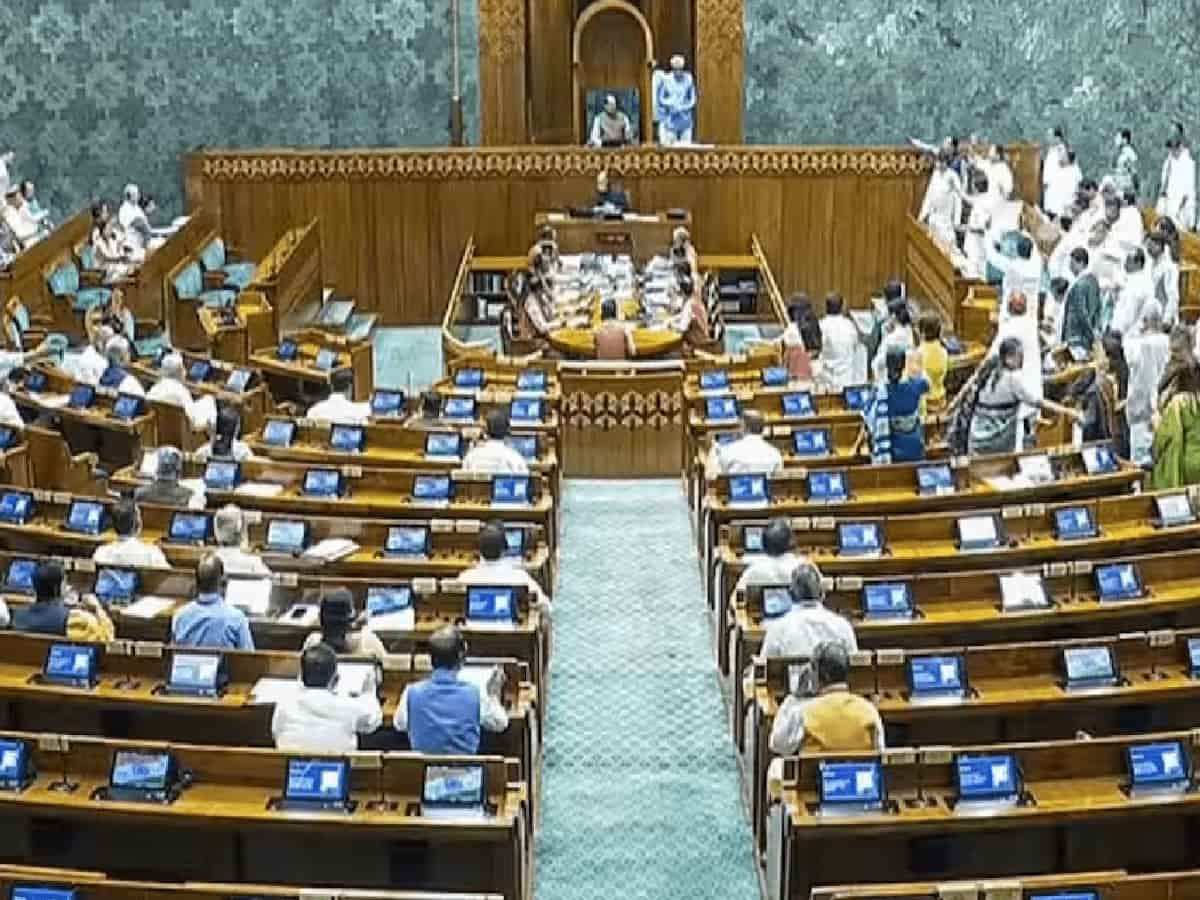
With Parliament set to reconvene on Monday, November 30, 2026, amid intense political maneuvering over constituency redrawing and parliamentary arithmetic, constitutional debates have returned sharply to the Constitution (131st Amendment) Bill, 2026—the pivotal legislation that fell short in the Lok Sabha earlier this year. Introduced in April 2026 alongside the Delimitation Bill, 2026 and the Union Territories Laws (Amendment) Bill, 2026, the 131st Amendment sought to solve a major constitutional bottleneck: enabling 33% reservation for women in the Lok Sabha and State Legislative Assemblies in time for the 2029 general elections by carrying out a fresh delimitation exercise based on the 2011 Census and expanding the maximum strength of the Lok Sabha to 850 seats. However, when put to a division in the Lok Sabha on April 17, 2026, the bill secured 298 votes in favor and 230 against—falling 54 votes short of the 352-vote two-thirds majority required among the 528 members present and voting, forcing the government to withdraw the two companion bills. For voters, political observers, and citizens across Uttar Pradesh—including readers in Lucknow and neighboring centers such as Unnao, Kanpur, Prayagraj, and Varanasi, where both parliamentary seat redistribution and 33% women's legislative representation carry profound electoral significance—understanding how the 131st Amendment connects the Nari Shakti Vandan Adhiniyam, Article 334A, and the decades-old 1971 Census freeze explains why this legislative battle remains at the center of Indian politics.
Key Provisions and April 2026 Vote Summary of the 131st Amendment Bill
| Constitutional / Legislative Aspect | Key Facts & Numbers |
| Official Title | The Constitution (One Hundred and Thirty-First Amendment) Bill, 2026, introduced with the Delimitation Bill, 2026 and Union Territories Laws (Amendment) Bill, 2026. |
| Proposed Lok Sabha Expansion | Sought to raise the maximum strength of the Lok Sabha to 850 seats (up from the current 543 elected seats). |
| Census Basis & Freeze Removal | Proposed lifting the constitutional freeze anchored to the 1971 Census (imposed by the 42nd Amendment, 1976 and extended by the 84th Amendment, 2001) to permit delimitation using 2011 Census population figures. |
| Link to Women's Reservation | Designed to operationalize the 33% women's quota (under the 106th Constitutional Amendment / Nari Shakti Vandan Adhiniyam, notified in force on April 16, 2026) ahead of the 2029 Lok Sabha polls rather than waiting until after the 2027 Census. |
| April 17, 2026 Lok Sabha Vote | Received 298 Ayes and 230 Noes out of 528 MPs present and voting—missing the 352-vote special majority under Article 368 by 54 votes, prompting withdrawal of the two allied bills. |
Why Women's Reservation Needed Another Amendment Under Article 334A
Although Parliament passed the 106th Constitutional Amendment Act (Nari Shakti Vandan Adhiniyam) in 2023—and the Centre brought it into force on April 16, 2026—Article 334A of the Constitution stipulates that the 33% reservation for women in the Lok Sabha and State Assemblies will take effect only after a delimitation exercise is conducted following the first Census published after the Act's commencement. With the next national Census scheduled for 2027, completing enumeration, data publication, and constituency redrawing meant women's reservation would realistically not be implemented before 2034. The 131st Constitutional Amendment Bill, 2026 sought to bridge that timeline by authorizing an immediate delimitation using already published 2011 Census figures so the one-third quota for women could apply by 2029.
The Political Clash: 'One Person, One Vote' vs. Southern States' Concerns
Supporters of the bill argued that ending the 1971 Census freeze—which has kept state-wise Lok Sabha seat allocations unchanged for over five decades despite dramatic demographic growth—is essential to uphold the democratic principle of "one person, one vote, one value" while expanding total seats to 850 so existing state tallies are not reduced. Opposition parties, particularly from southern states, countered that pure population-based delimitation penalizes states that successfully stabilized population growth through public health and family-welfare programs. Insisting that women's reservation should be delinked from delimitation rather than bundled together, opposition MPs voted against the package in April—setting the stage for renewed negotiations as Parliament prepares to reconvene on November 30, 2026.






