Dhanbad’s Eco-Shift: Mini Home Ghats Redefine Chhath Puja
The four-day festival of Chhath Puja—an ancient celebration steeped in raw devotion, rigorous austerity, and deep reverence for nature—is undergoing a quiet yet profound evolution in the coal capital of Jharkhand. Traditionally, the heart of Chhath has beaten beside natural water bodies. Devotees walk miles carrying heavy bamboo baskets (soop) filled with offerings, wading knee-deep into rivers, lakes, and communal ponds to offer arghya (oblation) to the setting and rising sun.
However, in rapidly urbanizing districts like Dhanbad, environmental concerns, unhygienic conditions in aging water bodies, and swelling urban crowds have prompted a major shift. To preserve the purity and sanctity of the rituals, residents across apartments, housing colonies, and private homes are redefining how the festival is celebrated by constructing temporary mini ghats and artificial water tanks right on their doorsteps.
The Push for Purity: Why Devotees Are Moving Away From Traditional Ponds
For generations, water bodies such as Loco Tank and various local ponds served as the epicenter of Chhath celebrations in Dhanbad. Over recent years, however, rapid urban expansion, industrial runoff, and civic neglect have left many of these traditional water bodies heavily silted, polluted, and choked with weeds. Standing in contaminated water during the rigorous 36-hour fast has become a major health and aesthetic concern for aging devotees and families.
Recognizing that cleanliness (pavitrata) is the absolute cornerstone of Chhath rituals, families have begun seeking sustainable alternatives. Rather than compromising on hygiene or battling chaotic crowd surges at congested public water banks, urban residents are bringing the riverbank to their neighborhoods.
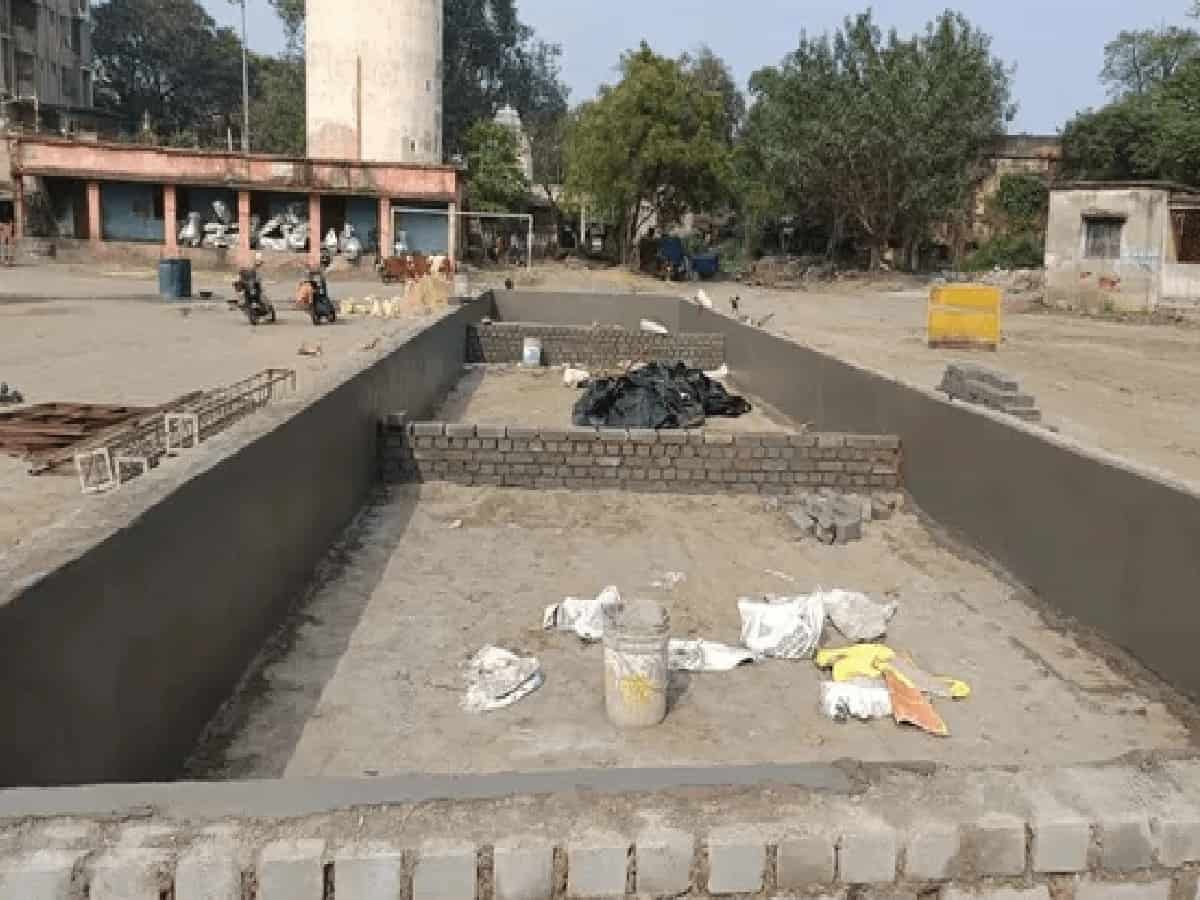
Temporary brick-and-cement basins are being rapidly constructed across apartment complexes, while local community associations are funding large-scale artificial reservoirs to ensure clean water access for all residents.
Jharkhand Maidan and Navadih Lead Community-Level Innovations
At the community and neighborhood level, this year’s celebrations have witnessed unprecedented grassroots engineering. Speaking on the shifting trends, local resident Vikas Saav highlighted a major community initiative: due to the deteriorating condition of the historic Loco Tank, a massive temporary pond measuring approximately 60 feet long and 12 feet wide is being constructed for the first time on the grounds of Jharkhand Maidan.
To manage crowds and ensure smooth rituals, this large artificial reservoir has been ingeniously divided into three distinct sections, allowing local families to offer prayers in clean, filtered water without overcrowding.
Similarly, commercial and recreational spaces are stepping up to support community faith. The swimming pool at Wedding Bells in Navadih has undergone extensive scrubbing, chlorination, and ritualistic purification to serve as an immaculate alternative ghat. Similar artificial setups have been organized within the Housing Colony and the Shambhu Ram Dharamshala complex in Manaitand, transforming urban concrete spaces into serene hubs of devotion.
Rooftops and Courtyards Transform Into Private Sanctuary Ghats
While community pools are gaining traction, the most striking manifestation of this cultural shift is happening inside private residences. Across Dhanbad’s bustling neighborhoods, balconies, courtyards, and concrete rooftops are being converted into sacred ritual zones.
Many homeowners are constructing permanent or semi-permanent brick-and-cement mini tanks on their roofs, waterproofed and lined for the festival. Meanwhile, local markets are experiencing a massive surge in demand for large, heavy-duty plastic tubs, foldable water pods, and inflatable pools. Families fill these containers with pristine groundwater, decorating the edges with fresh banana stalks, sugarcane shoots, marigold garlands, and glowing clay lamps (diyas).
For elderly family members and working women balancing strict fasting with modern routines, these rooftop and courtyard ghats offer unmatched safety, privacy, and absolute cleanliness. Women can perform the delicate evening and morning arghya rituals under the open sky while maintaining rigid ritualistic purity.
Preserving the Soul of Chhath in a Changing World
Critics sometimes argue that shifting away from natural rivers alters the ancient character of the festival. However, cultural historians and local priests emphasize that the core essence of Chhath lies not in the geographical location of the water body, but in the unshakeable devotion, cleanliness, and sincerity of the worshipper's heart.
By embracing eco-friendly artificial tanks and home-built mini ghats, the people of Dhanbad are demonstrating that faith can successfully adapt to modern urban realities. As the sun sets and rises over rows of glowing rooftop water basins this season, Dhanbad’s innovative celebration proves that true devotion always finds a way to shine.