PM Surya Ghar Scheme Accelerates: Millions Benefit from Zero Electricity Bills and Government Subsidies
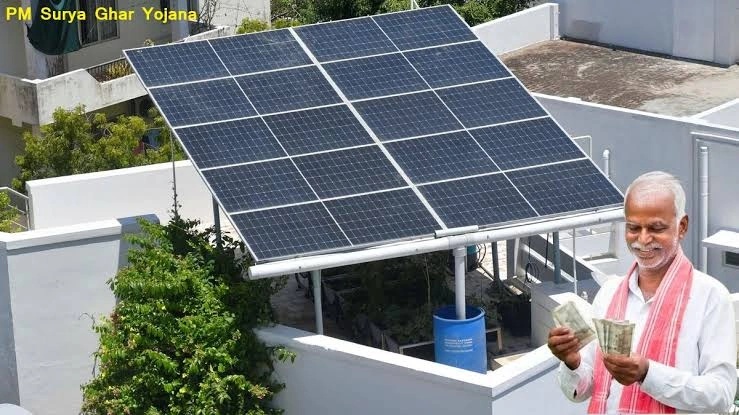
The PM Surya Ghar Muft Bijli Yojana, launched in February 2024, has rapidly proven to be a game-changer for millions of Indian households. Designed to promote the adoption of residential solar power, the scheme has seen remarkable success in a short period, drastically reducing electricity bills and accelerating India's transition to clean energy.
During a recent Lok Sabha session, the Union Minister for New and Renewable Energy, Pralhad Joshi, provided compelling statistics highlighting the scheme's rapid expansion and significant impact.
The Power of Zero: Millions Experience Relief
One of the most striking outcomes of the PM Surya Ghar scheme is its direct financial benefit to consumers. According to the government, approximately 1.89 million families who installed rooftop solar panels under this initiative successfully achieved a zero electricity bill for at least one billing cycle.
The pace of adoption is incredibly fast. The government reported that the time taken to install one lakh solar panels has dropped significantly, with a recent milestone of adding one lakh installations in just about seven days. As of mid-July 2026, the scheme has benefited over 4.7 million households, with more than 4 million rooftop solar systems successfully installed.
Maharashtra Leads the Charge
Data from power distribution companies reveals that Maharashtra is currently leading the nation in scheme adoption. Of the families experiencing zero electricity bills, Maharashtra accounts for the highest number, with 4.17 lakh households benefiting. Kerala follows closely behind with 1.91 lakh families, demonstrating the scheme's wide geographical appeal.
Understanding the Financial Benefits: Subsidies and ROI
The PM Surya Ghar Yojana offers highly attractive central government subsidies, typically covering 40% to 60% of the total installation cost.
1 kW system: ₹30,000 subsidy
2 kW system: ₹60,000 subsidy
3 kW system: ₹78,000 subsidy (Maximum central subsidy)
Additionally, several states provide further financial assistance. For example, Uttar Pradesh offers an additional state subsidy of ₹30,000, significantly lowering the initial out-of-pocket expense for consumers.
Cost Recovery Example:
If a family installs a 3 kW solar system (costing approximately ₹1.8 lakh) and utilises the maximum ₹78,000 central subsidy, their out-of-pocket cost becomes ₹1.08 lakh.
Assuming a monthly electricity consumption of 900 units at a tariff of ₹8 per unit, the monthly bill would be roughly ₹7,200. A 3 kW system generates about 250-300 units per month. If it generates 275 units, the family saves ₹2,200 monthly, or ₹26,400 annually. At this rate, the entire initial investment of ₹1.08 lakh is fully recovered in just over four years, providing decades of virtually free electricity thereafter.
Future Targets and the ULA Model
The government remains highly ambitious, targeting the installation of rooftop solar systems in 1 crore (10 million) households. Minister Pralhad Joshi announced a near-term target to reach 75 lakh (7.5 million) households by December 2026.
To achieve this, the government has introduced the Utility-Linked Aggregation (ULA) model, which involves power utilities more closely in the implementation process to accelerate adoption, particularly among underserved households.



_174136323_351x234.jpg)
_1264800509_351x234.jpg)