


No Sugar Shortage in India: Industry body ISMA says 35 lakh tonnes stock buffer
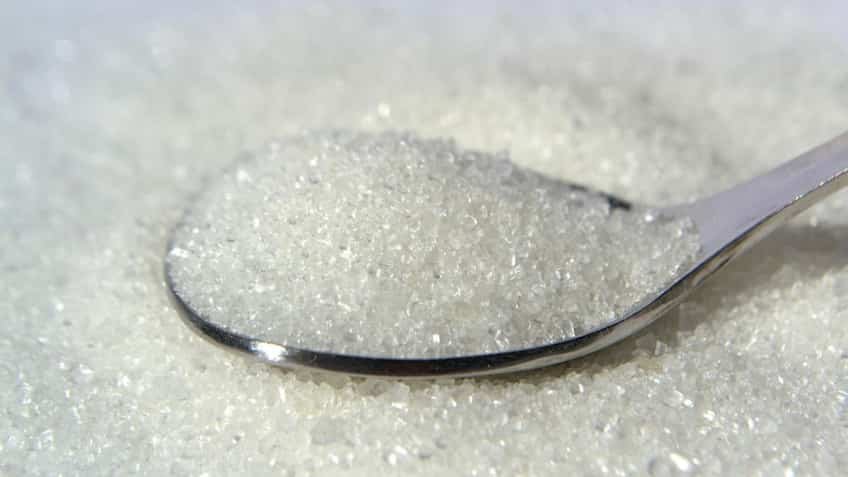
India has no sugar shortage, and the country has a healthy buffer against normal domestic demand, even after accounting for the sugar, which is diverted to ethanol, confirmed the industry body, the Indian Sugar Mills Association (ISMA).
Comments from Niraj Shirgaokar, President of the Indian Sugar Mills Association (ISMA), come as reports regarding concerns of sugar shortages across the country are circulating, especially ahead of the festival season beginning with Navratra.
"...For 2025-26, the net sugar production is estimated at around 279 lakh tons, with a projected closing stock of roughly 35 lakh tons. That is a healthy buffer against normal domestic demand, even after accounting for the sugar, which is diverted to ethanol," Shirgaokar said in the press conference.
Explaining the rationale behind a rise of about 16 per cent in sugar retail prices from around Rs 48 per kg in July to roughly Rs 55-56 per kg in August, Shirgaokar said the rise reflects several factors coming together, not a single cause.
"Domestic output for the season came in below the initial projections, revised to around 309 lakh tons, mainly due to the weather-related effects, lower cane yield, and lower recovery, including a higher crush rate in Maharashtra and red rot-related varietal issues in Uttar Pradesh," he added.
On international prices, ISMA President explained that lower estimated sugar production in Brazil has tightened supplies and pushed international prices from around 474 dollars a ton in June to around 552 dollars a ton in August.
He said the biggest issue regarding the apparent sugar shortage and artificial tightness is speculative behaviour. "This has been happening for the last few weeks, and due to this, what's happening is that some of the bulk buyers, who would normally procure just in time, have begun stocking, and due to the stocking, which is happening for a month and a half or two in advance, that behavior has pulled sugar out of circulation, and it stays in the go-downs, creating an artificial tightness, which has nothing to do with actual availability," he said.
No impact on sugar stock due to diversion for ethanol production
Deepak Ballani, Director General, ISMA, clarified that the recent price increase should not be attributed to ethanol. He explained that only after the government confirms that there is sufficient sugar for domestic consumption is sugar diverted for ethanol production.
The Indian government is promoting ethanol blending in petrol under E10 and E20, with blends going as high as E85, to reduce the burden of crude oil imports and promote renewable fuels across the country. The government's efforts have intensified recently as the country faces an energy supply issue amid the West Asia crisis.
Ballani reiterated that the country has sufficient sugar stocks and will close the season with 35 lakh tonnes of sugar.
"With early crushing set to begin, I think we will have enough sugar for October, November and beyond. So, there is absolutely no shortage of physical sugar stocks in the country. Ethanol has only helped ensure timely payments to farmers and maintain adequate stocks, so that the viability of the entire ecosystem remains paramount. Therefore, I don't think ethanol should be blamed for any increase in sugar prices," he added.
Govt may cap sugar prices.
According to Zee Business sources, the government may consider imposing a cap on the maximum price of sugar as part of a broader set of measures to curb hoarding and profiteering. The impact of the Centre's crackdown has already begun to be reflected in wholesale markets.
Wholesale sugar prices have declined by up to Rs 500 per quintal amid increased government scrutiny of stock levels and action against alleged hoarding and profiteering, according to sources at Zee Business.
The Centre has also sent teams to 10 states to monitor the situation on the ground. State governments are expected to begin physical verification of sugar stocks, adding another layer of oversight across the supply chain.


_1959090640_351x234.jpg)
_1687693200_351x234.jpg)
_521844406_351x234.jpg)
_1527655550_351x234.jpg)