


New E-Cycle and Low-Speed EV Norms: Government Proposes Exempting Low-Power Two-Wheelers from Motor Vehicle Rules
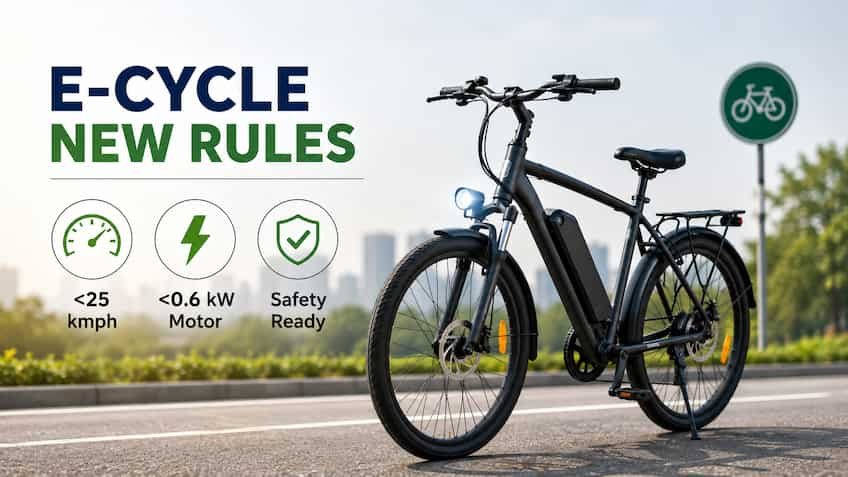
The Ministry of Road Transport and Highways (MoRTH) has introduced game-changing draft norms under the Central Motor Vehicles Rules, 1989, to clarify the legal status of low-power electric two-wheelers and e-cycles. Set to come into force from October 1, 2026, these proposed regulations seek to exclude specific low-speed, battery-operated personal mobility devices from stringent motor vehicle classifications, providing much-needed regulatory clarity for manufacturers, everyday commuters, and urban eco-friendly transport enthusiasts across India.
Core Technical Thresholds for Exemption
Under the newly notified draft framework, a two-wheeled battery-operated vehicle or pedal-assisted e-cycle will not be categorised as a traditional motor vehicle subject to heavy RTO registration, provided it satisfies strict performance benchmarks. Key technical criteria include:
Motor Power Output: The electric motor must feature a 30-minute power rating of less than 0.6 kW (600W).
Speed Limitation: The maximum design speed must remain strictly below 25 kmph.
Smart Cut-Off Systems: For pedal-assisted models equipped with an auxiliary electric motor, the power output must progressively reduce and automatically cut off once the vehicle hits 25 kmph, or immediately if the rider stops pedalling.
Mandatory Safety Compliance: All vehicles qualifying under this exemption framework must rigorously comply with standard safety requirements outlined under AIS-049 (Rev.1).
Balancing Urban Mobility with Road Safety
While the proposed exemptions are expected to significantly boost clean, last-mile urban transport and make affordable green commuting more accessible, transportation and road safety experts have highlighted the importance of clear safeguards. Industry analysts note that balancing the push for hassle-free micro-mobility with critical considerations such as helmet awareness, responsible youth operation, and insurance clarity will be vital to ensuring sustainable and safe expansion on Indian roads.



_783811168_351x234.jpg)
_65263946_351x234.jpg)