Bihar Enters High-Speed Era: Cabinet Oks Delhi-Style Rapid Rail (RRTS) Across Four Major Corridors
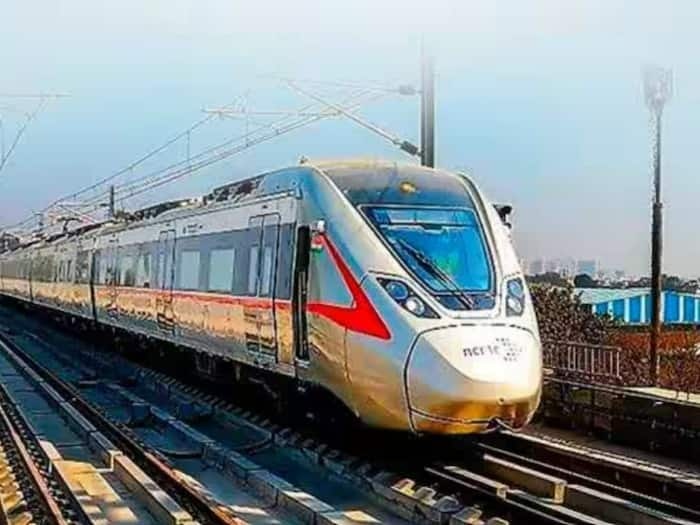
In a landmark decision set to revolutionise urban mobility across eastern India, the Bihar Cabinet has officially greenlit the development of a high-speed Regional Rapid Transit System (RRTS). Following the successful National Capital Region (NCR) mass transit framework between Delhi and Meerut, this premium project will build a network of semi-high-speed commuter trains to connect Patna with key surrounding urban centres and upcoming satellite townships.
NCRTC Appointed to Map Out ₹31.59 Crore Project Blueprints
The state cabinet, during a high-powered meeting chaired by Chief Minister Samrat Choudhary, accorded in-principle approval to prepare the mandatory Alternative Analysis Report (AAR) and Detailed Project Reports (DPRs) for the venture.
The preliminary planning and structural design phase is estimated to cost ₹31.59 crore. The state has formally entrusted this project to the National Capital Region Transport Corporation (NCRTC) through a nomination, recognising its proven technical experience in building India's first rapid rail lines. Additional Chief Secretary Arvind Kumar Chaudhary said the eco-friendly commuter lines are engineered to provide maximum safety, top-tier reliability, and robust last-mile connectivity.
The Four Approved Mega Transit Corridors
The primary network strategy focuses on establishing rapid corridors originating from Patna, with routes purposefully laid out to slash commuting windows down to under 40 minutes where traditional trains currently trudge for hours:
Patna to Gaya Ji Corridor: Connecting the political core with the international spiritual hub.
Patna Airport to Begusarai Corridor: Linking the central aviation base directly with the state's largest industrial manufacturing zone.
Patna–Hajipur–Proposed Sonepur Airport–Muzaffarpur Corridor: A massive multi-city transit route sweeping across northern sub-hubs to bridge the Ganga river divide efficiently.
Patna Airport to Ara Corridor: Expanding fast commuter transport pathways to the western urban periphery.
Urban Impact: Alongside the transit network, the government has selected the CEPT Advisory Foundation from Ahmedabad to structurally guide the planned execution of 12 new greenfield satellite townships alongside the rail corridors.
Healthcare, Education, and Solar Infrastructure Cleared in Sweep
The RRTS clearance was part of a larger administrative push that saw the cabinet approve 22 key developmental agendas. To significantly boost regional healthcare capacity, the state granted immediate administrative approval for a ₹348.90 crore land acquisition project. This will use 26.76 acres of land in Mauja-Bhusaula, Danapur, to expand AIIMS Patna into a unified, super-speciality healthcare campus.
In the education and energy sectors, the cabinet cleared the immediate creation of 76 advanced teaching faculties across 10 state engineering colleges and the Bihar Engineering University to strengthen postgraduate M.Tech programs. Under the Jal Jeevan Hariyali Abhiyan, a policy was approved to deploy 500 MW of grid-connected rooftop solar power plants on government buildings by 2030, with private sector participation.


_487203557_351x234.jpg)