Priyanka Tiwari
 Share
Share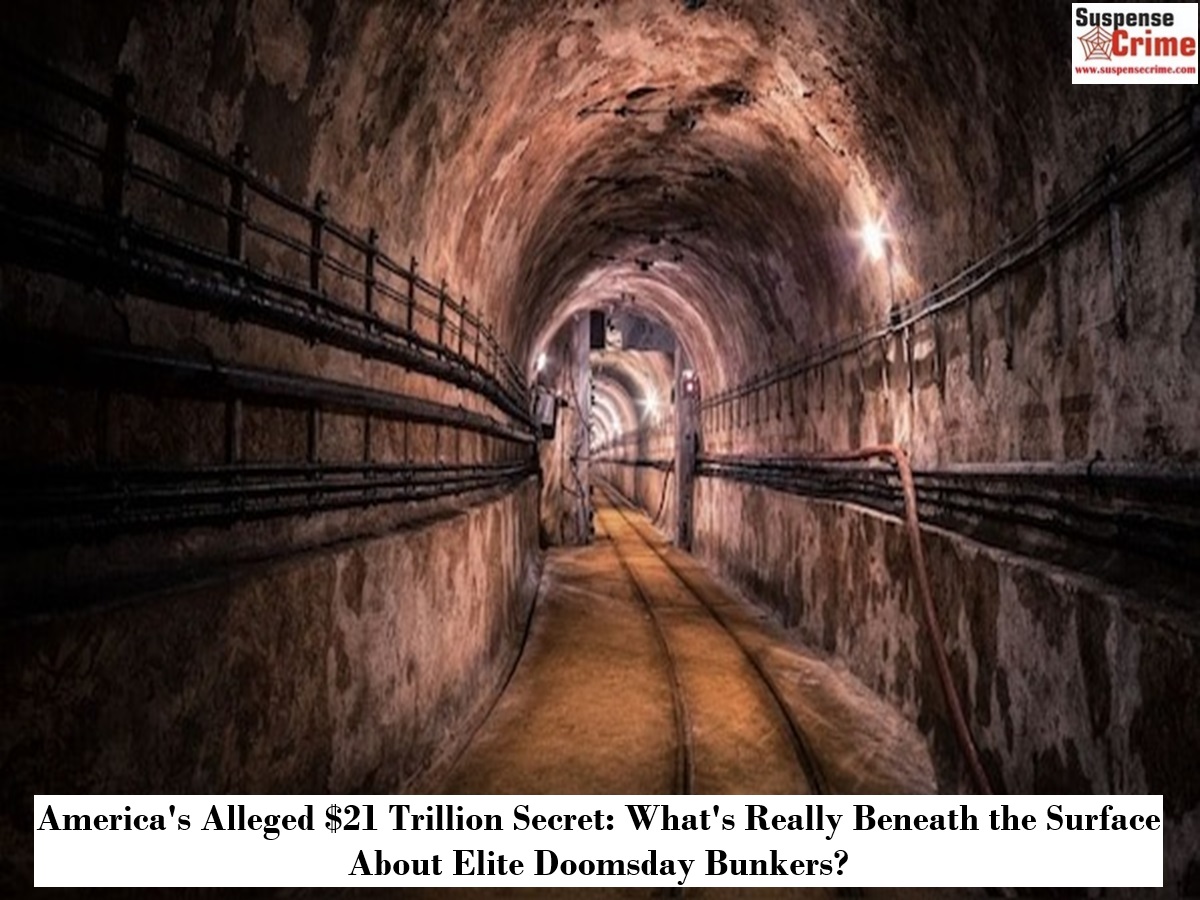
Suspense crime, Digital Desk : A staggering figure has been circulating in certain research and online communities: the claim that the United States government has spent an astronomical $21 trillion on a covert network of "doomsday" bunkers, designed to protect the elite in the event of a cataclysmic global event. This explosive assertion, often tied to discussions about unaccounted-for government spending, raises profound questions about national priorities, secrecy, and who gets saved when disaster strikes.
The $21 trillion number gained prominence largely through the work of researchers like Professor Mark Skidmore and former Assistant Secretary of Housing Catherine Austin Fitts. They pointed to trillions in "unsupported accounting adjustments" within the budgets of the Department of Defense (DoD) and the Department of Housing and Urban Development (HUD) over several years. While these figures represent documented accounting anomalies, the leap to them being specifically for secret underground bunkers is where the narrative enters more speculative territory.
The theory posits that this vast sum has been funneled into constructing and maintaining a labyrinthine system of deep underground military bases (DUMBs) and luxurious survival shelters. These aren't your average storm cellars; proponents of the theory envision highly advanced, self-sustaining complexes equipped to ensure the continuity of government and the survival of a select few – political leaders, billionaires, and influential figures – while the rest of the world faces potential annihilation.
While the existence of some secure government facilities, like Raven Rock Mountain Complex or Mount Weather, is publicly known and acknowledged for continuity of government purposes, the scale and cost suggested by the $21 trillion figure imply a far more extensive and clandestine operation.
Skeptics argue that attributing all unaccounted-for federal spending to secret bunkers is a significant stretch, and that such vast construction projects would be nearly impossible to keep entirely secret given the logistics, manpower, and resources required. Official government channels, unsurprisingly, offer no confirmation of such expenditures or projects on this massive scale.
Nevertheless, the idea of elite doomsday bunkers taps into deeper societal anxieties about inequality, government secrecy, and disaster preparedness. The lack of transparency in certain areas of government spending, combined with a historical precedent of classified projects, fuels the imagination and allows such theories to persist. Whether a multi-trillion-dollar underground world for the chosen few truly exists or is merely the product of financial enigmas and conspiratorial thinking remains a potent and unsettling question for many.
Read More: Strait of Hormuz Crisis: Three Ships Targeted in Fresh Gunfire, Global Energy Supply at Risk

_1646667941_100x75.jpg)
_133712142_100x75.jpg)