





'Look at India': Trump Praises 7% Growth, Slams US Fed Over Rates
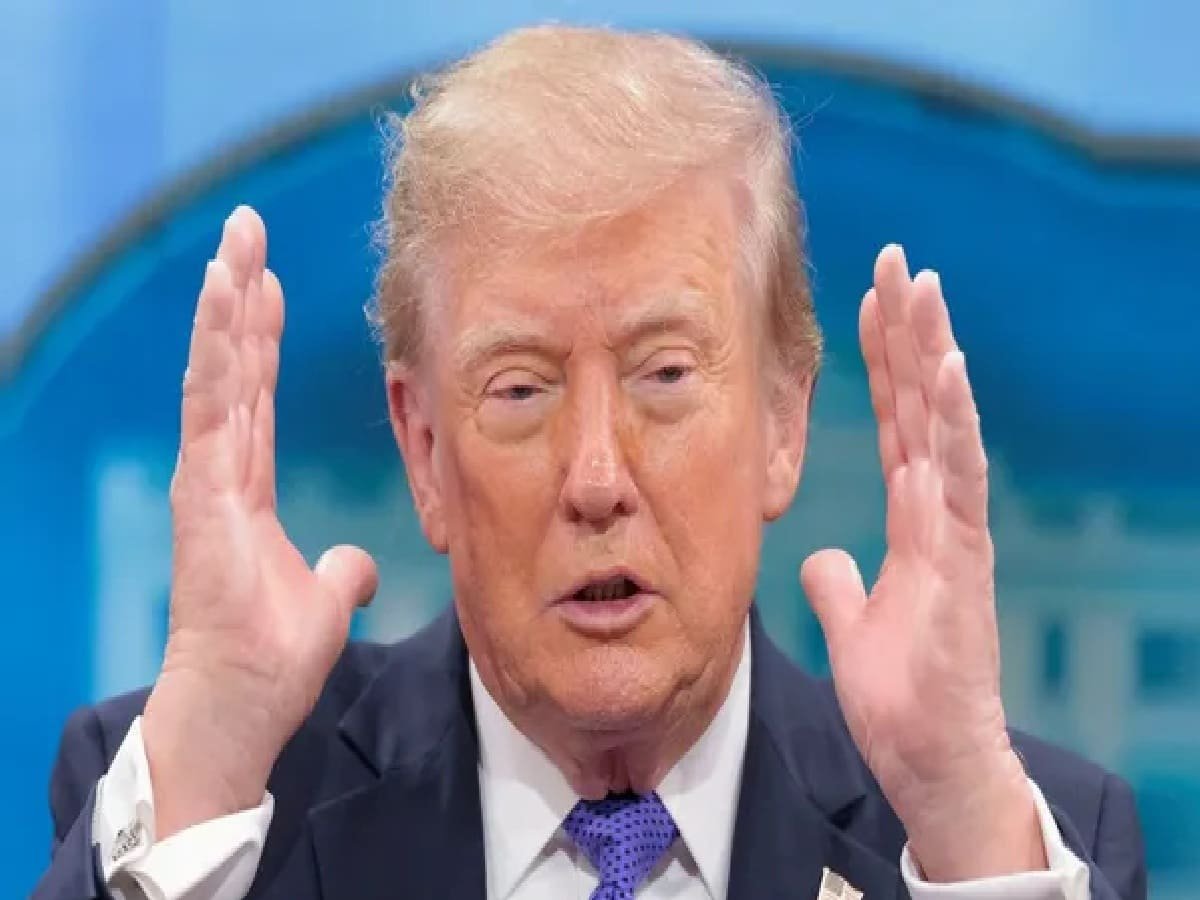
Holding up India's 7 percent economic growth as a benchmark for American monetary policymakers, United States President Donald Trump has launched a blistering attack on the US Federal Reserve, accusing the central bank of acting out of political bias and keeping borrowing costs artificially elevated. Addressing reporters at the White House on Friday, November 20, 2026—shortly after returning from his four-day diplomatic tour of Asia and in remarks widely covered across Indian and global financial circles on Saturday, November 21, 2026—Trump argued that Washington's economy could expand at 14, 15, or even 20 percent instead of 4 percent if the Federal Reserve cut interest rates whenever strong economic data arrived. "If you look at India, they have low interest rates, and they have a 7 percent GDP. We'd have a 14 percent, 15 percent, maybe even a 20 percent GDP," Trump declared, blaming what he called a "very political Fed" rather than individual leadership for tightening credit when growth indicators improve. Invoking former Federal Reserve Chairman Alan Greenspan as an example of a central banker who lowered rates in response to strong economic performance and improved national creditworthiness, Trump asserted that higher interest rates slow down his administration's ability to pay off the US national debt. However, central bank records from both countries add important nuance to the President's comparison: while India remains the fastest-growing major economy at roughly 7 percent, the Reserve Bank of India (RBI) actually raised its benchmark policy repo rate by 25 basis points to 5.50 percent on October 7, 2026, whereas the US Federal Reserve—led by Chairman Kevin Warsh—held its federal funds target range at 3.75 to 4.00 percent (with an effective rate around 3.88 percent) in its October 28 decision amid persistent US inflation above its 2 percent goal. For investors, economists, exporters, borrowers, and readers across Unnao, Lucknow, Kanpur, Mumbai, Bengaluru, Hyderabad, New Delhi, New York, and Washington, Trump's remarks highlight the widening tension between White House growth ambitions and independent central banking on both sides of the globe.
India vs. US Monetary Policy & Growth (Nov 2026): Trump's Claim vs. Central Bank Data
To bring together President Donald Trump's exact remarks at the White House alongside the latest verified interest rate, inflation, and GDP figures from the Reserve Bank of India and the US Federal Reserve, the table below summarizes the key facts:
| Economic / Policy Metric | President Donald Trump's Statement (Nov 20, 2026) | Verified Central Bank & Macro Data (Nov 2026) |
| India's Growth & Borrowing Costs | Praised India directly: "If you look at India, they have low interest rates, and they have a 7 percent GDP". | India's GDP expansion stands around 7 percent+; however, the RBI Monetary Policy Committee hiked the policy repo rate by 25 bps to 5.50% on October 7, 2026 (with SDF at 5.25% and MSF/bank rate at 5.75%) amid 6.09% October CPI inflation. |
| US Interest Rates & Fed Stance | Claimed US rates are far too high due to a "very political Fed" that raises rates whenever strong economic numbers are released, rather than lowering them as Alan Greenspan once did. | The US Federal Reserve maintained its federal funds target range at 3.75%–4.00% (effective rate 3.88%) on October 28, 2026—1.50 to 1.75 percentage points lower than India's benchmark repo rate—under its statutory dual mandate of price stability and maximum employment. |
| US GDP Potential & Debt Reduction | Argued that cutting US interest rates in response to strong economic data and improved creditworthiness would lift US GDP from 4 percent to 14, 15, or 20 percent and rapidly pay down federal debt. | Mainstream economists note that mature developed economies rarely sustain double-digit real GDP growth without triggering severe inflation, with September US PCE inflation at 3.6% (core PCE 3.1%). |
| Upcoming Central Bank Outlook | Maintained pressure on the Fed ahead of year-end policy meetings, insisting America should enjoy the lowest borrowing costs globally. | Fed Governor Michael Barr recently noted further rate hikes remain possible if inflation persists, while over 90% of economists in a November 2026 Reuters poll expect the RBI to raise its repo rate to 5.75% in December. |
Inside Trump's Critique of the Federal Reserve and Tribute to Alan Greenspan
During Friday's wide-ranging White House press briefing, Donald Trump framed high interest rates as the primary brake preventing the United States from unlocking explosive economic expansion. Taking care to state that he was targeting institutional politics rather than solely the chair—"I'm not blaming the chairman, I'm blaming the fact that we have a very political Fed"—Trump contended that central bank officials instinctively tighten monetary policy whenever his administration publishes upbeat economic statistics. Contrasting today's policy approach with the tenure of Alan Greenspan, who led the Federal Reserve from 1987 to 2006, Trump argued that strong economic numbers strengthen America's credit profile and should therefore be rewarded with lower borrowing costs rather than rate hikes. In Trump's view, reversing that approach would propel US GDP from 4 percent to 15 or 20 percent, generate surging federal revenues, and accelerate national debt repayment.
Fact-Checking the 'Look at India' Comparison: RBI Repo Rate vs. Fed Funds Rate
While Trump's "Look at India" remark served as a vivid rhetorical flourish to press the Federal Reserve for rate cuts, central bank data reveal a more nuanced picture between the two economies. India's 7 percent-plus GDP growth indeed outpaces every other major global economy, yet its benchmark borrowing rate is actually higher—not lower—than that of the United States. Following a 25-basis-point hike on October 7, 2026, the Reserve Bank of India's policy repo rate stands at 5.50 percent—sitting 1.50 to 1.75 percentage points above the US Federal Reserve's 3.75 to 4.00 percent federal funds target range. Moreover, both central banks remain focused on containing price pressures: with US personal consumption expenditures (PCE) inflation running at 3.6 percent (and core PCE at 3.1 percent) against a 2 percent target, and India's retail inflation recently touching 6.09 percent, monetary policymakers in Washington and Mumbai alike continue to prioritize inflation control over aggressive rate cuts.